


 Francais
 Deutsch
 Italiano
Refine Your Search
M4-training stock footage and images
- Showing 7681 to 7686 of 8218 results more
more Hide
Hide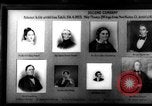
Museum Photo portraits of American pioneer settlers of Hawaii, in the 1820s.
Photographic portraits,in a museum, showing with names and travel information about early American pioneer settlers in Hawaii. Includes photographs of the so-called "Pioneer Company" that arrived at Kailua, on the Brigantine Thaddeus, after 164 days at sea, from Boston, Massachusetts, landing at Monolala, April 19, 1820. Likewise, photos of settlers in the "Second Company" are shown. They arrived on the Schooner Aclife, from Tahiti, on February 4, 1823, and other who arrived on the Ship Thames, sailing 158 days from New Haven, Connecticut, arriving at Honolulu. Among pioneers identified are: Samuel Ruggles and his wife, Nancy; Artemas Bishop and Mrs Della (Stone) Bishop; and Mrs Clarissa Richards.
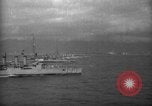
A woman photographs four U.S. Destroyers underway in waters off Hawaii.
Views taken from a commercial vessel, of the U.S. 4-stack Wickes Class Destroyers, USS Montgomery (DD-121); USS Breese (DD-122); USS Gamble (DD-123); and the USS Ramsay (DD-124), as they steer parallel courses beside a ship, in waters off Hawaii. Woman photographer holding a camera is shown briefly. The four flushdeckers were all reclassified in 1930 upon re-commissioning as 'light minelayers' and each displays here the circular emblem of the navy's mine force next to its hull number.
U.S. film designed to boost national morale during World War II. Numerous scenes of American forces engaged in combat.
Several American school children, including one in a Boy Scouts of America uniform, recite the pledge of allegiance during World War 2. Scene broadens to encompass a school yard filled with elementary school students reciting the pledge in front of an American flag flying high on a pole. As scene fades images appear of battleships firing guns; an F4F airplane taking off from an aircraft carrier; landing craft approaching a beach; American soldiers fighting with small arms and a flame thrower, in jungles of New Guinea; a U.S. gun crew firing heavy artillery; and a U.S. P-38 aircraft on a rainy runway, spraying water as it takes off, in the Aleutian Islands. U.S. troops firing automatic weapons on a Pacific Island. A B-17 pilot wearing an oxygen mask in his cockpit, flying in a formation creating contrails at high altitude over Germany. Waist gunner firing at an attacking German fighter plane that explodes in air. U.S. troops in jeeps moving over jungle road. U.S. ski troops on snow in Iceland heading downhill toward their tents in the snow. American troops during amphibious landing in the Philippines. U.S. troops aboard army halftracks on desert in Iran. American paratroopers dropping from C-47 aircraft over France. U.S. soldiers marching through two large gates with cadre of Chinese soldiers in China. American troops fighting in Italy and firing a 155mm howitzer. U.S. infantry following a sherman tank over a war-torn landscape with shells bursting nearby. Crowded, busy street scenes of traffic and pedestrians in Manhattan, New York City, and Chicago, Illinois. Army tanks being manufactured by war production workers in a Detroit war production plant or factory. A Los Angeles shipyard filled with workers at shift change. Closeups of individual American soldiers in combat helmets. U.S. troops descending rope nets from transport ships to board landing craft, and approaching the beaches of Normandy, France, under fire, on D-day, June 6, 1944. Views of the Statue of Liberty, including closeups.
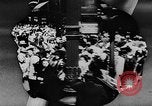
Montage of images reflecting life in 20th century America up to World War II
Streets of Manhattan New York City crowded with pedestrians prior to World War II. Views of Americans at work: miners; farmers; factory workers; office workers. A drafting room. Montage of inventions in America: lightning rod atop roof; cotton gin in operation; telegrapher using a key; anesthetists in operating theater; rotary newspaper printing press; a telephone; an arc welder; early incandescent lamp; early submarines; steam turbine; 4-engine high wing airliner; early X-ray tube; gyroscope compass; singer sewing machine; early television; farmer hooks cows to mechanical milking machine, cat expresses dismay at not getting milk; architectural draftsmen at work; rows of apartment buildings; automobiles crowding roads; sanitation street sweeper truck at work; eggs and dairy products in refrigerated case; Surgical team in an operating theater; Scenes in a modern U.S. hospital; children being cared for, and in schools and colleges; Soldiers marching during World War I; U.S. soldiers marching in World War II; people relaxing on crowded beach; recreational hunting and fishing activity; A football game in progress; a baseball game; horseracing; track & field events; a rodeo; a basketball game; golfing; Ten pin bowling; boys play marbles; frog jumping contest; skiing; springboard diving; motorboat racing; water skiing;ice skaters with sails; Joe Louis boxing with Max Schmeling in 1938; auto racing with cars crashing; Railroad timetables in a rack; Henry Dreyfuss Commodore Vanderbilt New York Central locomotive and interior of dining car; 1935 Chevrolet sedan pulling a trailer; Road sign "Arizona welcomes you"; Motorcycle policeman pulls driver over; roadside motor hotel; girl serving at drive-in diner; signs for hot dogs, beer, cheesburgers; workers preparing sandwiches, pancakes,bacon and eggs, coffee and coca cola, using some machinery; Customers eating at a lunch counter; Welcome sign at Van Nuys California with symbols for Kiwanis, American Legion, Rotary; a Delta Sigma Phi fraternity building. Scene of a person's hand signing a membership certificate document for the Calibou Lake Mountain Club.
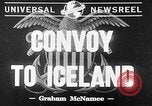
A convoy of United States troops and supplies to Iceland prior to U.S. entry into World War II.
United States Naval convoy underway at a sea en route to Iceland, prior to U.S. entry into World War 2. Heavy seas flooding deck of troop transport ship. Soldiers on the deck of a ship. U.S. destroyer escorts are seen, including a 4-stacker. A U.S. flag flutters from ship's bridge. Supplies are unloaded and placed in military vehicles. Cartons of caned food and other provisions being piled up on the docks. American soldiers climb rope ladder from small boats to the dock. Sailors toss some of the supplies from small boats to others on the dock. Commander of Allied forces in Iceland, British Major General Henry Osborne Curtis, escorts U.S. Major General, Charles H. Bonsteel, in review of a unit of British soldiers. Buildings along the sides of a street in the Icelandic Capital City, Reykjavík. Civilians walk on the streets. U.S. sailors walking on sidewalks of the city. A British Hawker Hurricane aircraft landing on airstrip. A machine gun emplacement at side of the runway. Military quarters surrounded by mud. A soldier walks from row of Quonset Huts. An air alert sounds. British troops respond in armored cars equipped with mounted antiaircraft guns. Soldiers taking up positions in trenches and manning a large antiaircraft gun. A soldier aircraft spotter wearing headset and talking on radio. Beside him are charts of aircraft identification silhouettes. A formation of aircraft overhead. Waterfront scene with boats in water. A camouflaged machine gun emplacement. A sentry on duty.
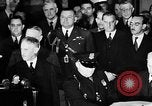
U.S. President Franklin Roosevelt announces the first few serial numbers as they are drawn in the 1940 draft lottery
The first draft lottery conducted under the 1940 Selective Service Act. . U.S. President Franklin Roosevelt standing at a podium in the Andrew W. Mellon Auditorium at 14th Street and Constitution Avenue, in Washington DC. Members of his cabinet standing nearby. People seated on chairs. A glass container filled with encapsulated draft numbers sits on a table. An official blindfolds Henry L. Stimson, Secretary of War, who then draws the first draft number from the glass container. Secretary of Treasury, Henry Morgenthau, Jr. draws the second number, which the President reads aloud, as number 192. Blindfolded next is Attorney General, Robert H. Jackson, who picks the number 8,239, which is read aloud by President Roosevelt. Finally, Secretary of the Navy, Frank Knox, picks the third number (6,620) which the President also reads aloud. A large blackboard displays the first 25 numbers as they are drawn, beginning with the first (158) and ending with the 25th (4,861). Members of the audience applaud.
CRITICALPAST.COM: About Us | Contact Us | FAQs - How to Order | License Agreement | My Account | My Lightboxes | Shopping Cart | Advanced Search | Featured Collections | Website Terms & Conditions | Privacy Policy ©2026 CriticalPast LLC.
License Agreement |
Terms & Conditions |
Privacy Policy
©2026 CriticalPast LLC.