


 Francais
 Deutsch
 Italiano
Refine Your Search
M4-training stock footage and images
- Showing 7951 to 7956 of 8248 results more
more Hide
Hide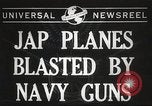
United States naval guns down Japanese torpedo airplanes in the Pacific Ocean during World War II.
A U.S. convoy underway in the Pacific Ocean heads for a raid on the Marshall Islands during World War II. F4U Corsair fighter airplanes with wings folded on the deck of a U.S. carrier underway. U.S. anti-aircraft guns down two Japanese torpedo airplanes. A Japanese airplane in flames falls in the ocean off the stern of the ship. A sailor lies down on the deck of the U.S. carrier as the flaming airplane passes. Another Japanese aircraft crosses behind the ship and also crashes in flames.
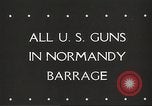
U.S. artillery pieces fire on enemy positions in Normandy, France during World War II.
Supreme Allied Commander General Dwight Eisenhower visits American troops in Normandy, France on 3rd July, 1944 during World War II. U.S. Army Lieutenant General Omar Bradley walks with Eisenhower. They tour units and division commands. Eisenhower meets U.S. Army General Joseph Lawton Collins on a field. U.S. soldiers load shells and fire artillery on 4th of July. U.S. Independence Day is celebrated in a French town and children sing 'America'.
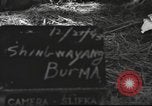
U.S. General Joseph Stilwell meets a Chinese officer in Burma during World War II.
Commander of U.S. forces in the Southeast Asian Theater General Joseph Stilwell returns to Burma during World War II. Commander of 38th Division of Chinese Army Lieutenant General L.J. Sun gets out of a United States Army Air Force L-4 Grasshopper aircraft. General "Vinegar Joe" Joseph Stilwell deplanes from Stinson L-5 serial number 42-98113 of the 71st Liaison Squadron. General Stilwell, wearing his famous campaign hat, shakes hands and talks with the Chinese officer.
United States soldiers walk in jungle to water point during Operation Francis Marion in Pleiku area, South Vietnam.
Activities of the United States Army 1st Battalion, 22nd Infantry, 4th Infantry Division soldiers during Operation Francis Marion in the Central Highlands in Pleiku area, South Vietnam. Soldiers walk in jungle to a water point during the Vietnam War. They fill canteens at a stream. A soldier on guard. Soldiers walk through the dense foliage on return to camp with canteens.
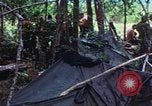
United States soldiers relaxing in the jungle camp in Pleiku area, South Vietnam during the Vietnam War.
Activities of the United States Army 1st Battalion, 22nd Infantry, 4th Infantry Division soldiers during Operation Francis Marion in the Central Highlands in Pleiku area, South Vietnam. Pup tents and lean-tos of jungle camp. Two soldiers relax at shelter, one writes a letter. Improvised shelter set up for the night.
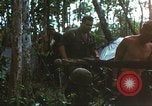
United States Army UH-1D Iroquois helicopter lands for evacuation of soldiers in South Vietnam during the Vietnam War.
Activities of the United States Army 1st Battalion, 22nd Infantry, 4th Infantry Division soldiers during Operation Francis Marion in the Central Highlands in Pleiku area, South Vietnam. Soldiers walk with a sick soldier in the jungle during the Vietnam War. United States Army UH-1D Iroquois helicopter in flight in the far background. The helicopter lands for evacuation of sick soldiers. Sick soldier having malaria is led to the helicopter. He is helped aboard the helicopter and takes off.
CRITICALPAST.COM: About Us | Contact Us | FAQs - How to Order | License Agreement | My Account | My Lightboxes | Shopping Cart | Advanced Search | Featured Collections | Website Terms & Conditions | Privacy Policy ©2026 CriticalPast LLC.
License Agreement |
Terms & Conditions |
Privacy Policy
©2026 CriticalPast LLC.