


 Francais
 Deutsch
 Italiano
Refine Your Search
M4-training stock footage and images
- Showing 1327 to 1332 of 8223 results more
more Hide
Hide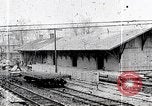
Train passing by and on bridge in Ohio, United States.
Railroad train operations in South Charleston Ohio and Glen Jean (Waverly) Ohio. View of railway cart on tracks and a building. Steam locomotive passes by the building pulling a passenger train. View of Charleston train station building. View from last train caboose or bogey shows a Ford Model T milk van carrying milk cans cross the railway tracks. Train on bridge and view of bridge from last train caboose at it crosses the bridge.
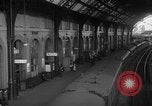
Trains arrive and leave a railway station
Trains operating through a railway station in France. A train at the railway platform. A man stands near a large steam locomotive engine. A freight train passes through the station. People stand on the railway platform. A train arrives. Engine and wheels of the train in view. Steam rises up from the train.
Combat fatigued U.S. soldiers are interviewed and sent for treatment in the Training and Rehabilitation Center, Italy.
Psychiatric procedures for United States soldiers in combat areas during World War 2 suffering stress following trauma of battle. Battle scenes: Strong and courageous soldiers sent for fight. They attack enemy and fire rifles from hidden places. Smoke rises. They face danger in battle day after day. View of wounded, burned and dead soldiers in battle. Strongest soldiers of the army maneuver over field. Soldiers seated facing the stress of combat and become psychiatric casualties. Chart depicts fighting front and its three levels: division, army and base. Soldiers are sent to battalion aid station and back to clearing stations for treatment. Medical van brings the wounded soldiers and psychiatric casualties to battalion aid station. One officer checks the ID card of soldiers. ID card reads: '1st battalion, 168 infantry regiment, yes incurred in Italy'. Chart shows training and rehabilitation center (T& R center) near clearing station. Soldiers reach to training and rehabilitation center. A Sign of 'Training and Rehabilitation Center'. Combat fatigue cases are reconditioned by battle training. A psychiatrist interviews a soldier suffering from reactive depression and asks about troubles and feelings faced by him when he got wounded. After interview soldiers are send to clearing center. Soldier enters into tent at camp. They take rest, make social contacts with other soldiers, write letter, get shaved and eat food. Two days later, soldier is re-interviewed about improvement after relaxation in training center. He shows improvement and is encouraged. Recovered soldiers fill the artillery outside the tent near training center. (Modern equivalent - PTSD or post traumatic stress disorder treatment)
French civilians and U.S. Army engineers repair and salvage railroad yards, bridges and trains in France (WWII)
United States army engineers help French civilians in repairing railroads, France during World War II. French train runs again rebuild by Allied engineers. Views of wreckage and destroyed railway tracks, trains, twisted steel structure and broken stones of monuments after bombarding. Destroyed bridges. French civilians remove debris and repair bridge over river. Under the supervision of Army engineers, trained American salvage group rebuild a railway and work at dynamite bridge. French use partially destroyed equipment and attach nuts and bolts to locomotives. They repair locomotives. Tank locomotive is ready to run. Locomotives are replaced by crane. Supplies train cross through the bridge and provide aid to army. French civilians and engineers restore ruin railway and work on it. Railway sections are completed, and train passes away. Hospital train carrying wounded people cross away.
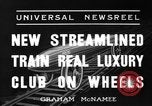
People read newspaper and at tables for a meal aboard a luxurious train in Chicago, Illinois.
A new streamlined luxury train in Chicago, Illinois. Buildings in the background. Luxury railroad train on tracks in Chicago. Illinois. People seated inside the train. They read newspapers. Some people look outside the train. Bar in the train and it also serves as a dining room. Waiters serve food. African American bartender uses a shaker and mixes drinks on board the train. People seated at tables as men serve food to them.
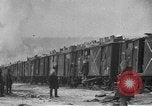
Railroad train carrying Russian troops in snow of Northern Russia.
Events during World War I. Russian troops aboard a troop train in the snow. Supplies and baggage is loaded on roofs of train cars. Several ot the soldiers wave as the train passes slowly past. smoke and steam rises from the rail cars. A stove pipe seen emerging from the side of a train car. Soldiers on the ground watch as the train moves past. A black dog walks along beside the train track.
CRITICALPAST.COM: About Us | Contact Us | FAQs - How to Order | License Agreement | My Account | My Lightboxes | Shopping Cart | Advanced Search | Featured Collections | Website Terms & Conditions | Privacy Policy ©2026 CriticalPast LLC.
License Agreement |
Terms & Conditions |
Privacy Policy
©2026 CriticalPast LLC.