


 Francais
 Deutsch
 Italiano
Refine Your Search
M4-training stock footage and images
- Showing 2041 to 2046 of 8223 results more
more Hide
Hide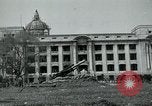
82nd Field Artillery Battalion fires 155m Howitzers from an emplacement next to the capitol building in Seoul South Korea
U.S. Army soldier of 82nd Field Artillery Battalion loads and fires from a bagged emplacement next to the Capitol building in Seoul, South Korea. (Korean War period.)
82nd Field Artillery Battalion loads and fires 155m Howitzers from several emplacements near the capitol building in Seoul.
U.S. Army soldiers of 82nd Field Artillery Battalion fire howitzers from several locations near the capitol building in Seoul, South Korea, during the Korean War. A soldier is seen digging another emplacement nearby.
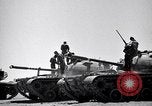
U.S. Troops demonstrate routine cleaning and adjustment of M-48 Patton tanks
U.S. soldiers work on various parts of a tank in the United States. They sweep treads and clean tank gun barrels with long rods. Soldiers tighten parts of a tank. They lubricate parts of a tank. They tighten a clamp on the barrel.
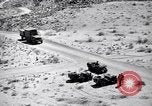
M-48 Patton tanks on maneuvers in desert. Field support and refueling
U.S. tank crews and support personnel on demonstration maneuvers in desert terrain. Support truck and personnel respond to tank out of fuel. They throw fuel cans down from truck and tank crew refuels from jerry cans using tank-installed hand-pump. After refueling, the tank moves out.
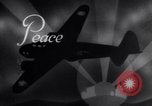
U.S. President sends 6 U.S. B-17 bombers to express American good will to President-elect Roberto M. Ortiz, of Argentina
Six B-17 Flying Fortresses in flight from Washington,DC, United States to Buenos Aires, Argentina. One is seen above snow-capped mountain. The American goodwill squadron brings a message of peace from the U.S. President. They are feted by the Argentines. A parade with Argentine soldiers on motorbikes and the U.S. B-17s flying overhead. Honor guard of Argentine soldiers stand on the street, as U.S. Ambassador and American and Argentine dignitaries ride in an open carriage. Scene shifts to the return of the B-17s as they are greeted on Langley Air Field, Virginia.
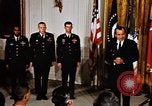
President Richard M Nixon awards Medal of Honor to Sergeant Zabitosky at White House, Washington DC.
Stanley R Resor, Secretary of Army reads citation during Medal of Honor award ceremony at White House, Washington DC. Sergeant Zabitosky standing. President Nixon awards medal to Sergeant Zabitosky.
CRITICALPAST.COM: About Us | Contact Us | FAQs - How to Order | License Agreement | My Account | My Lightboxes | Shopping Cart | Advanced Search | Featured Collections | Website Terms & Conditions | Privacy Policy ©2026 CriticalPast LLC.
License Agreement |
Terms & Conditions |
Privacy Policy
©2026 CriticalPast LLC.