


 Francais
 Deutsch
 Italiano
Refine Your Search
M4-training stock footage and images
- Showing 511 to 516 of 8248 results more
more Hide
Hide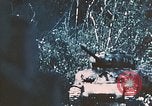
U.S. Marines of 7th Regiment ride tanks in advance toward Japanese enemy through jungle at Peleliu Island in WWII
7th Marine Regiment troops ride M4 Sherman tanks of the Army, 710th Tank Battalion, as they advance towards Japanese positions on Peleliu Island, Palau during World War 2, in Pacific. Tank advances towards Japanese enemy through jungle area. Marines walk in front of the tank.
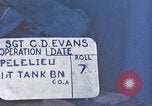
1st Marine Division establishing beachhead on Peleliu Island during World War II
1st Marine Tank Battalion with U.S. 1st Division marines in the battle of Peleiu Island, during World War 2. A 1st Battalion M4A2 tank fitted with an M1A1 Dozer Kit, moves along the sand near marine infantrymen on the beachhead. Marines move forward to take cover near the tank. Brief partial glimpse of a wounded marine stumbling along the shore toward a beached Landing Vehicle Tracked (LVT). Group of marines in the sand, partially sheltered by an LVT. Camera pans left over beach, showing marines in battle gear along with some stacked rifles and boxes and equipment. View toward the water shows a burning LVT and several damaged vehicles. A bulldozer is operating on the shore, as well as a truck and a small mobile crane holding an artillery piece. Marines work around LVTs
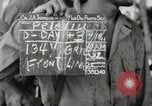
Battle of Peleliu Island, Palau, during World War II.
Film begins showing captured Peleliu airfield, with smoke rising in far background. Scene shifts to Major General William H. Rupertus and other United States Marine Corp officers seated inside tent discussing enemy situation map. Closeup of map showing disposition of Japanese forces on the island. Glimpse of Seabees from the 33rd and 73rd Naval Construction Battalions operating bulldozers to repair the captured Peleliu airfield. U.S. marines carrying a wounded on a litter. They place it on the ground as a column of M4 Sherman tanks approaches.
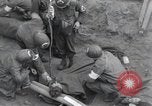
Medics attend to wounded U.S. soldiers on shore during invasion of Normandy, France in World War II.
Wounded United States soldiers on shore lying on stretchers in Normandy, France, during World War 2. Team of Medics attend to them. Harbor crowded with Landing craft unloading Army trucks, DUKWs (amphibious vehicles), Sherman tanks, M4 high speed tractors with AA equipment, and other military vehicles. Several French civilians walking along with United States army soldiers up sand road from beachhead. U.S. Infantrymen wade from ship towards beach.
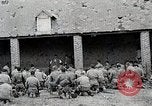
Allied drive through Normandy to Saint Lo, France, in World War II
Battle-weary American soldiers attend an open air chuch service by a barn in Normandy. U.S. gunners commence a concerted artillery barrage before tanks and infantry advance toward Saint Lo, France, in World War 2. Various artillery and tanks are seen, including one M4 Sherman Crab Tank (Mine sweeper). P-47s, flying low altitude close support missions, bomb a critical target, and troops move ahead on the way to Saint Lo. Two German soldiers run to surrender. Saint Lo falls. Scenes of the devastation in the city.
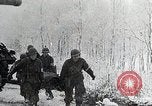
U.S. Army operations in Germany in World War II, including battle of the bulge and difficult snow and winter weather conditions
Medical Corpsmen carry a wounded U.S. soldier on a stretcher across snow covered battlefield, in World War 2. U.S. infantry firing small arms at German enemy on snow covered battlefield.They run across the field and occasionally take cover, lying down in the snow with close-up views of soldiers firing from prone position. U.S. troops on the march single file and running along path in woods in fog and snow. Troops in winter clothing, with snow encrusted, suffer wind and snow as they try to clear roadway using shovels. A tractor with a snow blade sits nearby. Snow covered U.S. troops enter a town. U.S. artillerymen fire 240mm howitzer and 155mm long tom gun, under camouflage nettings. Troops moving single file up a mountain roadway. M4 high speed tractors pulling 155mm guns along a snow covered road, shrinking Nazi progress in the Battle of the Bulge. Troops ride a tank through snow. Some soldiers wear white camouflage coveralls. Two U.S. soldiers ride in jeep over rainy muddy road with snow on roadside. "Ogden, Utah" painted on bottom of windshield. U.S. troops wade through mud and water. German prisoners of war being marched single file through a woods. Jeeps and an ambulance mired down in mud. Formation of U.S. C-47 aircraft flying low and air dropping ammunition and supplies to American forces on the ground. Soldiers rush to an air dropped bundle and distribute its contents.German prisoners of war march along a path. Four carry a wounded comrade on a stretcher. Temporary U.S. field cemetery with white wooden crosses. A temporary field cemetery with German crosses. Group of U.S. soldiers reading letters from home, and then looking up as a group to watch a formation of B-17 bombers leaving contrails at high altitude overhead. View from a B-17 as bombs explode on target below. Views from U.S. fighters strafing and firing rockets at German ground targets.View from bomber of incendiary bombs creating fires at night in Germany. A B-24 Liberator bomber seen from the ground, as it flies through smoke and flak.
CRITICALPAST.COM: About Us | Contact Us | FAQs - How to Order | License Agreement | My Account | My Lightboxes | Shopping Cart | Advanced Search | Featured Collections | Website Terms & Conditions | Privacy Policy ©2026 CriticalPast LLC.
License Agreement |
Terms & Conditions |
Privacy Policy
©2026 CriticalPast LLC.