


 Francais
 Deutsch
 Italiano
Refine Your Search
M4-training stock footage and images
- Showing 5551 to 5556 of 8221 results more
more Hide
Hide
Demonstration of the use of war paint to camouflage or disguise soldiers with white skin fighting in Asia (WW2)
A World War II U.S. Army training film titled, 'War Paint', demonstrates the use of war paint to disguise soldiers with white skin fighting in jungles against the Japanese. View of civilians from many different Asian countries, with skin tones that the narrator describes as ranging from almost black to light tan. Faces of different races of men found in the Burmese are such as Korean, Kachin, Chinese, Burmese, Nagas, and Japanese. Their skin tone is compared. Dramatization shows a Japanese sniper observes from behind a tree. He takes aim with his rifle on an oncoming group of American troops. He views a soldier with obvious white skin and fires a shot at him. The soldier falls. The narrator says that the soldier with an obvious white facestands out like a bulls eye, making him an easy target. Hand of the downed soldier. Stream of blood flows near the hand. Paint powder on a table. War paint is put in a mortar and mixed properly using a pestle. A parachute trooper descends into jungle terrain. Soldiers dissolves color powder between his palms and rubs it quickly on his hands. Other men, who are native student agents watch him apply the paint to darken his white skin. The agents are working with the OSS (Office of Stragegic Services, which was the precursor to the Central Intelligence Agency or CIA) to assist American OSS agents and soldiers in the jungle.
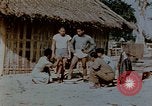
Soldiers demonstrate the application of war paint to disguise while fighting jungles of Burma (WW2)
A World War II Office of Strategic Services (OSS) training film titled, 'War Paint', demonstrates the use of war paint to disguise or camouflage American soldiers and OSS agents (precursor to Central Intelligence Agency or CIA) with white skin fighting in the Far East jungles, so they are less obvious to the Japanese enemy. American and a native Burmese soldier apply war paint on their legs. Burmese man looks in a mirror and applies color paint on his face. Soldiers apply war paint on their bodies. A soldier applies hair dye on the hair of another soldier. Kachin and White troops move in field. An experienced American commando demonstrates application of paint on the body to darken skin of white man. He gears up, smiles and poses for the camera. Narrator asks "are you going to use it" (the paint). The man seems to shake his head answering no. Next is a dramatized scene showing a soldier in a tree being shot. His helmet with blood on it falls to the ground. Implication is that he was not using camouflage paint to change the tone of his white skin, which made him a more obvious target.
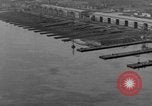
Aerial view of Navy Yard, factories, via duct river bridge, industrial and suburban areas in Philadelphia, Pennsylvania.
Aerial views of the Philadelphia Navy Yard; factories and plant yards; ships at shipyard and at docks; industrial and suburban areas; vehicular and viaduct bridge on river; traffic on highway, train running on tracks and other views. Of the surroundings.
American 8th Air Force fighters strafe enemy installations and attack German aircraft in Germany during World War II.
Gun camera footage of American 8th Air Force fighter operations in Germany during World War II. Lieutenant Butler of 435th Squadron and Lieutenant RC Haworth of 338th Squadron in action. View of the fighter aircraft, bombing enemy installations on ground. View of damage to moving trains, enemy aircraft and other ground installations.
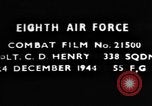
Lieutenant C D Henry of 338th Squadron of U.S. 8th Air Force attacks German ME-109 in Germany.
American 8th Air Force fighter operations in Germany during World War II. Pilot Lieutenant C D Henry of 338th Squadron in action. Aerial gun camera footage of American aircraft strafing German railroad train moving on ground. Fighter plane in action and attacking a German airplane.
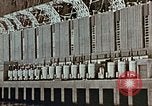
View of a hydroelectric power plant, oil refinery, steel mill in United States.
Industrial development in United States. Electronic machinery in a factory. View of a hydroelectric power plant. Man operates plant machinery. View of the plant from a moving train. Worker turns out molten steel in steel mill. An oil refinery. Men lay oil pipelines at the refinery.
CRITICALPAST.COM: About Us | Contact Us | FAQs - How to Order | License Agreement | My Account | My Lightboxes | Shopping Cart | Advanced Search | Featured Collections | Website Terms & Conditions | Privacy Policy ©2026 CriticalPast LLC.
License Agreement |
Terms & Conditions |
Privacy Policy
©2026 CriticalPast LLC.