


 Francais
 Deutsch
 Italiano
Refine Your Search
M4-training stock footage and images
- Showing 5917 to 5922 of 8218 results more
more Hide
Hide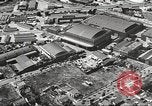
Men work in an art department and army artists act in films in Culver City, California.
Activities of the First Motion Picture Unit of the United States Army Air Forces in Culver City, California during World War II. A high altitude view of the area. Buildings of the unit sound stages. The stages are sound proof and air conditioned. Buildings along the sides of a street. Cars drive past on the street. A sign outside a building reads: 'Stage 5'. Men work on a training film project. Artists act in the film. Army artists and set designers work in the art department. They work for the conversion of scripts into sketches and models. The model of a squadron department. Men act in a film for the squadron department and discuss about army airplanes and officers.
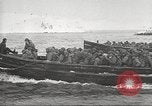
Centers for distribution of U.S. Army films throughout the world in World War II.
Scenes of U.S. troops training in amphibious assaults and manning and firing antiaircraft guns. Animated map showing U.S. Army film distribution centers in various countries during World War 2.

Men loading the wheels of freight cars onto ships for their shipment to the Philippine Islands, United States.
A film titled 'Hannibal Victory' on the sea voyage of the victory ship Hannibal Victory from San Francisco to the Philippine Islands during World War II. Steam boat underway at Mississippi river. A man at the controls of the boat. Bridges over the river. A statue of Mark Twain amidst the ground. Two girls arrive near the statue. 'Samuel Langhorne Clemens Mark Twain' engraved on a plaque. Another statue amidst the ground. Cars passing on the street. Buildings along the sides of the street. People walking. Trains passing on railroad stations. Aerial view of the town of Hannibal. Wheels of the freight cars on the ground. Men standing nearby. Animated map locates Hannibal and San Francisco. The wheels are loaded onto ships on the docks of San Francisco.
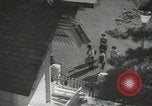
School children attending classes in a large urban city in Japan
Five Japanese girls, on their way to school, stop to bow at a shrine, Next three Japanese school boys also pause respectfully at the shrine. The next scene shows many children on the roof and in the large courtyard of a school building in the heart of a large Japanese city. An electrified railroad train runs nearby behind the school building. A very large group of children is seen in the school courtyard (or playground). The gradually assemble themselves into an ordered formation, while teachers stand at the periphery. The students all bow toward their teachers, in unison. The children break from their formation and begin to enter the school..View from above of girls entering the building. View of girls working at sewing machines inside a classroom. Girls seated around an instructor teaching them how to perform a traditional Japanese tea ceremony (temae). Students in a classroom learning arithmetic with the use of an abacus. Closeup of a boy moving counters on an abacus. The teacher ask a question and most students raise their hands to volunteer the answer. The teacher chooses a student from the girl's side of the classroom and writes the sum of a large column of numbers as the girl reads her result.
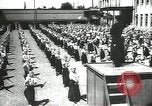
Japanese students practice Japanese martial arts (Kendo) focused on sword fighting
Opening scene shows instructor on a raised platform drilling students in preliminaries for Kendo training. Next, the students divided into two large teams, charge each other in combat exercise. The students wear protective armor (Bogu) and wield wooden swords (Bokken).
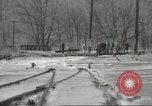
Wrecked vehicles and flooded streets due to Saint Patrick's Day Flood in Johnstown, Pennsylvania
Damage in Johnston Pennsylvania due to a massive flood on March 17 and March 18, 1936, known as the Saint Patrick's Day Flood. Men crossing a pontoon bridge over the Conemaugh River or the Stony Creek River. A railroad near the flooded waterway. A train car on the railroad track. A wrecked car outside a building. The exterior of the Johnstown Station building for the Pennsylvania Railroad. People gather outside the building. The flooded streets in the area. Vehicles in water. Buildings along the sides of the flooded streets. People walking on the street. Wrecked cars and other vehicles in the area. The destroyed houses and rubble in the street.
CRITICALPAST.COM: About Us | Contact Us | FAQs - How to Order | License Agreement | My Account | My Lightboxes | Shopping Cart | Advanced Search | Featured Collections | Website Terms & Conditions | Privacy Policy ©2026 CriticalPast LLC.
License Agreement |
Terms & Conditions |
Privacy Policy
©2026 CriticalPast LLC.