


 Francais
 Deutsch
 Italiano
Refine Your Search
Melville Rhode Island 1943 stock footage and images
- Showing 2785 to 2790 of 6726 results more
more Hide
Hide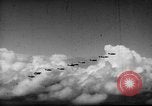
P-47s of the U.S. 318th Fighter Group return to the Aslito Airfield, Saipan, after Tinian raid in World War II
Twelve P-47 Thunderbolt aircraft, of the USAAF 318th Fighter Group, returning to Aslito Airfield (Insley Field) after completing strike missions over Tinian Island. Airfield showing dispersal area for the aircraft buildings surrounding area. New runway under construction at airfield. Aircraft spotter looking through binoculars. P-47s approaching airfield for landing. P-47s landing on airfield.

Charles Lindbergh takes off from Roosevelt Field for his famous solo flight from New York to Paris.
People gathered early on a misty morning at Roosevelt Field, Long Island, New York, to watch as Charles Lindbergh attempts to make a solo flight across the Atlantic Ocean in his airplane, The Spirit of St. Louis. The plane starts its takeoff role between groups of spectators, raising dust. The spectators move to get a better view as the plane continues, out of sight in the fog and mist. It is not clear where the plane is, although engine sound has changed. Spectators strain to see it through the mist. Then, some cheers are raised when the crowd realizes that Lindbergh has successfully taken off in his heavily laden airplane. The opening caption refers to Curtiss Field, where the Spirit of St. Louis was test flown and reportedly maintained in Hanger 16. there, from May 12th through the 20th. However, for the Paris flight, the plane was towed a mile to Roosevelt Field where, heavily loaded with fuel, it could take advantage of the longer runway for takeoff. (Note: Both fields were originally part of the old Hempstead Plains Field renamed Hazlehurst Field when taken over by the U.S. Army in 1917. U.S. Geological survey maps of 1918 show three areas named, respectively, Hazelhurst Aviation Field No. 1; Aviation Field No. 2; and Camp Albert L. Mills, abutting it. Field No. 2 was renamed Mitchel Field on July 16, 1918. The eastern part of Field No. 1 was dedicated as Roosevelt Field, on September 24, 1918. After the war, the western part of Field No. 1 became known as Curtiss Field, associated, as it was, with the Curtiss Aeroplane & Motor Company located there.)
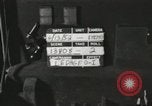
Women, children and hostesses walk on a canopied gangplank on ship USNS Barrett (T-AP-196) in New York.
Sailors and people on United States Navy Ship Barrett (T-AP-196) in Staten Island, New York. Empty bunks in a troop compartment. Dependent women and children walk. Hostesses walk on a canopied gangplank. Some children are assisted by sailors. .
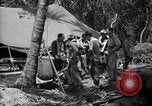
Royal New Zealand Air Force P-40 aircraft operating on Torokina Air Strip, Bougainville in World War II
Allied flight operations at Torokina Air Strip on Bougainville Island during World War 2. Pilots of the Royal New Zealand Air Force (RNZAF) gather near a tent on Bougainville, Papua, New Guinea, during World War 2. Two drink cups of water from a canvas Lister bag. View of control tower silhouetted against light sky background with tents clustered on ground below. A P-40, with RNZAF markings, taxis past the camera and is then seen on the active runway. A ground crewman waves on three more RNZAF P-40s as they taxi.

U.S. rocket experimenters launch the world's first liquid fueled rocket in the United States.
Launching of first liquid fuel rocket on a Staten Island New York beach in 1933. U.S. rocket experimenters including George Edward Pendray launch the first liquid fuel missile. They prepare for launching of the rocket and fill fuel of rocket which is powered with gasoline and liquid oxygen. Missile being launched and its fuel tank explodes due to over heating. Rocket crashes down on beach. Experimenters stand with pieces of the broken rocket. From a November 10, 1958 newsreel recounting events 25 years earlier.
U.S. Marines inspect Japanese flag and unload LCVT in Bougainville, New Guinea during World War II.
United States Marines in Bougainville, New Guinea during World War II. Three Marines inspect a Japanese flag. A Marine attaches a bayonet to Japanese rifle and fires the rifle. Wounded marine on a stretcher being unloaded from a jeep. Marine being carried to a medical center. Another Marine lights up a cigarette for him. Landing area, lagoon and off shore islands. LVT-3 (Landing Vehicle Tracked) off shore as Marines unload a LCVT (Landing Craft Vehicle Tracked) in the foreground.
CRITICALPAST.COM: About Us | Contact Us | FAQs - How to Order | License Agreement | My Account | My Lightboxes | Shopping Cart | Advanced Search | Featured Collections | Website Terms & Conditions | Privacy Policy ©2026 CriticalPast LLC.
License Agreement |
Terms & Conditions |
Privacy Policy
©2026 CriticalPast LLC.