


 Francais
 Deutsch
 Italiano
Refine Your Search
Miami Beach Florida USA 1963 stock footage and images
- Showing 12847 to 12852 of 26838 results more
more Hide
Hide
President Richard Nixon delivers "Nixon Shock" speech dealing with the economic crisis in the United States.
President Richard Nixon gives a speech on the economy from the White House in the United States. Nixon addresses the nation on the need to create more jobs, stop the rise in the cost of living, control price inflation, relieve economic stagnation, and control speculation. He announces the Job Development Act of 1971. He talks of eliminating excise taxes on automobiles and speeding up availability of some exemptions in personal income taxes. He charges Congress to introduce incentives for research and development. He orders federal spending cuts including a postponement of pay raises, a 5 percent cut in government personnel, and a 10 percent cut in foreign economic aid. He notes need to open ways for the young people entering job markets. Nixon orders a freeze on all prices and all wages in the United States for 90 days, and he calls on corporations to extend the freeze to dividends. He announces a Cost of Living committee within the government. He calls for voluntary cooperation of all Americans to control price increases after the 90 day period ends. He talks of the need to protect the strength of the American dollar and prevent international money speculation. He announces that the dollar will be defended. He announces the suspension of the convertibility of the dollar to gold, except in certain circumstances. (Later this speech was called the Nixon Shock and also the speech closing the gold window.) He says he wants to "lay to rest the bugaboo of what is called devaluation." He states the goal is stability in the dollar. Regarding trade balances, he announces a temporary 10 percent tax increase on goods imported into the United States, valid until unfair exchange rates are eliminated. He reflects on success of post World War 2 relief measures offered by the U.S. to foreign countries, increased competition with those nations, and need for less U.S. relief to them. He asks the public of America to work together to crush unemployment and economic problems.
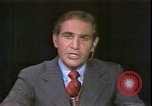
Irving R Levine and Paul Duke report and discuss the proposals stated by U.S. President on economic problems.
News analysis following Richard Nixon's speech on economy crisis from Washington DC, United States. Reporter discusses the speech with journalists Irving R. Levine and Paul Duke. Group reviews the proposal of President Nixon to end unemployment and economy crisis. The proposals to end unemployment by Nixon are 90 day wage-price freeze, additional action on wages and prices, temporary suspension of full convertibility of dollar into gold (later called the "Nixon shock"), investment of tax credit, temporary surcharge of 10% imports, repeal of excise tax on automobiles, speeding of personal tax exemption to get more money in pocket and reduction of federal expenditure. Journalists Irving and Paul Duke also question why the President made the proposal now when the graph of dollar and unemployment begins to fall after sitting on President's seat for two years.

Paul McCracken, an American economist, comments on the economic speech by U.S. President Nixon in the United States.
Discussion and analysis following U.S. President Nixon's speech on the economic crisis from the White House, United States. Reporter Bill Gill sits with Bob Clark, a White House correspondent, and economic advisor Paul McCracken. Both the reporters ask Paul McCracken to make a comment on the proposals of President Nixon dealing with the American economy (a speech later known as the "Nixon shock" speech). Paul McCracken speaks on the advantages of the 90 days wage-price freeze. He tells how to secure cost price level, how to control unemployment and inflation. He states the 90 days wage-price as the strongest economy program and how it will give foundation to more companies. He also speaks on dollar rate and foreign exchange and how to maintain its position, and the closing of the gold window.
U.S. President Richard Nixon address' s the American citizens on the nation's economy in Washington, D.C.
News correspondent covers the President's address on the nation's economy in Washington, D.C. From the White House office the President shares his thoughts with the citizens upon the country's economy. He talks about the 3 subjects of public interest- the job, income and cost of living. He briefly talks about the problems that the nation is facing and the reasons behind them. He introduces the program which deals with these problems. The first step involves the recognition of problem. There exists a transition between the peacetime economy and a wartime economy. Labors and the businessmen prefers the peacetime economy. He states that his government takes the responsibility to cut down the expenditure in order to strongly restrain current economy, this would in turn raises the price gradually and thus not affect the businessmen, common men and industry badly. They have also decreased the Federal spending as per the previous years figures and will do the same in coming years as well. He talks about his actions against the inflation. They include- to appoint the National Committee on productivity to check how well the resources are being used, has instructed the Counsel of economic advisers to prepare a periodic inflation alert, establishment of purchasing and review board to review all the government actions. The President briefly talks about the actions he will take and those which he wont take. He states that at this time the Congress and the President should co-operate each other on the common welfare programs. He requests the Congress to help him by passing the legislation related with people's job and cost of living and to act on the one which have been already submitted to it by the President. He asks the Congress to join him on the way of cutting down the government spending. He also talks upon the significant happenings taking place in the American economy. The President believes that in the next 5 years the American consumer will be able to buy 20% more than what he does today.

U.S. President Richard Nixon's speech on the Watergate incident in Washington DC.
U.S. President Richard Nixon's speech on the Watergate scandal in Washington DC. The White House in Washington DC. President Nixon in his office. The President speaks about the charges against his administrative officials and top-aides members on their involvement in the Watergate issue. He learns that his re-election committee members were also blamed. He orders for investigation and charges are put against 7 defendants. He also receives continuous assurance regarding the non-involvement of any White House official in the issue. The President does not receive any information on the possibility of some charges being correct. He orders the investigating officers to report to him directly. He orders his officials to co-operate with the FBI (Federal Bureau of Investigation), the prosecutor and the grand jury and also to testify before Senate committee. He accepts the resignation of Haldeman and Ehrlichman. The President finds this step being essential in guarding the nation's integrity and to restore public confidence in their President. He states the appointment of new Attorney General and discusses the additional responsibility he has given to him. The President assures citizens of a fair justice.
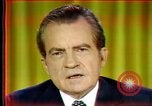
U.S. President Richard Nixon's speech on the Watergate scandal in Washington DC.
U.S. President Richard Nixon addresses U.S. citizens on the Watergate scandal in Washington, DC. The President questions upon the occurrence of the Watergate scandal and whom should one blame. He finds 1972 as the year of crucially important decisions, of intense negotiations and of new directions in achieving goals for bringing peace to United States. He states that the Presidency stands before politics. He has limited his appearances in campaigns. He believes that the culprits must bear the liability and pay the penalty. He finds it cowardly to blame his sub-ordinates, to whom he had delegated the responsibility, for the improper actions that took place within his campaign organization. Instead he accepts all the charges as he believes that the man at the top of an organization is the one who is responsible for all. The President takes a pledge to ensure a fair justice in the Watergate scandal.
CRITICALPAST.COM: About Us | Contact Us | FAQs - How to Order | License Agreement | My Account | My Lightboxes | Shopping Cart | Advanced Search | Featured Collections | Website Terms & Conditions | Privacy Policy ©2026 CriticalPast LLC.
License Agreement |
Terms & Conditions |
Privacy Policy
©2026 CriticalPast LLC.