


 Francais
 Deutsch
 Italiano
Refine Your Search
Miami Beach Florida USA 1963 stock footage and images
- Showing 2239 to 2244 of 26839 results more
more Hide
Hide
Malcolm Pope's rocket boat, "Dixie Torpedo", suffers loss of control from uneven rocket propulsion.
American rocket boat tests. Malcolm Pope fits a rocket booster into an assembly on the back of his boat. . The boat moves under a bridge and Pope ignites the rockets, which accelerate the boat unevenly, so he loses control and the boat moves in a circle. Pope and his boat emerge from cloud of smoke unhurt. 'Dixie Torpedo' written on the boat.
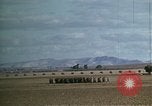
United States troops unload vehicles from a Landing Craft in North Africa.
United States troops in formation march onto field carrying the American flag in North Africa. Hills in the background. Old buildings on a hill with trees in the foreground. View of ships and boats in a harbor and the adjacent area. A Landing Craft on a beach. Soldiers in the craft unloading vehicles. Soldiers get onto military motorcycles. Natives and children observe a half track being driven off craft. Transport ships off shore. (World War II period).
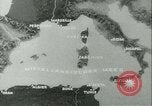
German and Italian units mobilize and occupy Southern France in World War II
A map shows countries bordering the Mediterranean Sea. German army and Italian army motorized units occupy Southern France during World War 2. German and Italian soldiers, tanks, and artillery move along on a road. Many German Quad 20mm anti aircraft guns (Flakvierling 38) in the Port of Marseilles, including some by the Marseille Basilica, high above the port . Ocean liners in the port. German soldiers sit around a truck. Sailors prepare equipment and guns. French officers explain the port facilities to German officers. Civilians in the city. Motorists, cyclists and pedestrians on the streets. Sign for the town of Cerbere. Motorized columns including German tanks proceed to the border with Spain. German and Spanish troops fraternize. Soldiers greet each other and interact. Fortifications are constructed on the South France coast. Axis soldiers camouflage artillery on the beach.
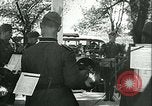
German soldiers play and relax in occupied France.
German soldiers relax in occupied France during World War 2. Soldiers play music directed by a conductor. Soldiers play leap frog on a beach. German soldiers splash around and swim in a lake. Soldiers relax with nurses at a hospital. Nurses among soldiers. German soldiers relax at an outdoor cafe here (with no sign of any French people around) and they drink draft beer poured by two women. A German soldier talks to a little boy. German soldiers observe the view over a river and ravine from an elevated position.
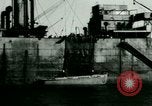
French Foreign Legionnaires climb down landing nets from a transport into a Landing Craft during practice landings.
French Foreign Legionnaires during practice landings under U.S. Navy supervision in North Arfica. Soldiers climb down landing nets from a transport into a Landing Craft. U.S. Navy sailors and French soldiers in Landing Crafts. Soldiers seated in the crafts. The Landing Crafts head towards the beach. (World War II period).
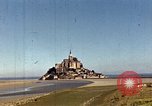
American troops and war correspondents at Mont Saint Michel and Saint Malo in France during World War II
American troops and war correspondents in France, during World War 2. They visit Mont Saint Michel, a small rocky island at the mouth of Couesnon River in Normandy, separating Normandy and Brittany. View of the island with a monastery at the top. War correspondent Robert Capa (of Life and of Time Magazines) looks on and takes pictures. Military jeeps leave the island. Madam Poulard stands under a sign at her Hotel Poulard. Sign for the Hotel and its reputed omelette. Soldiers on the street. Shops and French flags. GIs at the Benedictine Abbey and steepled church. An old French man points. U.S. Soldiers take a tour of the monastery with a woman guide. Steeples, towers, arches and other architectural features of the abbey and monastery. War correspondents including Charles Collingwood, Chicago Daily News' Helen Kirkpatrick, New Yorker Magazine's Joe Liebling (Abbot Joseph Liebling) and Warden Becker. Helen and Charles pose for the camera. Ernest Hemingway, covering for Colliers Magazine, drinks and talks to Bill Walton. War correspondents including Bill Stringer seated and walking on the street. They visit the monastery and take pictures. Civilians on the streets. Tall sticks in sand placed by German forces around the island to prevent Allied planes from landing at low tide. Three war orphan brothers whose parents were killed at the battle of St Lo, play on the beach as their grandmother looks on. Views of the island and patterns on the sand around the island from the receding waters of low tide. St. Malo, Brittany: Field near Saint Malo. American soldiers bathe and swim in a lake. They fool around in the water, taking a break from battle.
CRITICALPAST.COM: About Us | Contact Us | FAQs - How to Order | License Agreement | My Account | My Lightboxes | Shopping Cart | Advanced Search | Featured Collections | Website Terms & Conditions | Privacy Policy ©2026 CriticalPast LLC.
License Agreement |
Terms & Conditions |
Privacy Policy
©2026 CriticalPast LLC.