


 Francais
 Deutsch
 Italiano
Refine Your Search
Mig-15 stock footage and images
- Showing 415 to 420 of 682 results more
more Hide
Hide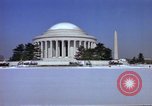
The Jefferson Memorial and the Washington Monument in Washington DC.
Monuments in Washington DC. Jefferson Memorial (16 E Basin Dr SW, Washington, DC 20242, United States) with the Washington Monument (2 15th St NW, Washington, DC 20024, USA) on its right. View of the Washington Monument. Snow covered ground and trees in front of the monument. Officer in uniform.
Combined operations of: U.S. Army, Air Force, and Navy, during Inchon Landing, in the Korean War
A B-52 strategic bomber aircraft takes off. A flight of B-52s in formation. Higgins boat landing craft motoring toward shore in the amphibious assault and landing at Inchon, during the Korean War (also spelled Incheon). A U.S. Landing Craft Tank (Rocket), LCT(R), firing rockets at shore during the assault. Wider view of the assault with rockets being fired and smoke obscuring much of scene. General of the Army Douglas MacArthur, Commander-in-Chief, Far East Command, is seen seated aboard the USS Mount McKinley (AGC-7) during the Inchon Korea landings, September 15,1950. Behind him is Rear Admiral James H. Doyle, U.S. Navy, Commander of Task Force 90 and Major General Edward M. Almond, U.S. Army, Commander, Tenth Corps (looking through binoculars). More scenes of the amphibious landing including view of Landing vehicle Tracked (LVT) in the surf. Infantrymen clambering ashore. An M4 Sherman tank in action. Smoke and fire. North Korean soldiers surrendering with white flags and taken captive as prisoners of war. American tanks passing through captured North Korean town.
Major General W Austin Davis presents a large facsimile launch key to Lieutenant General Archie J Old at Malmstrom Air Force Base, Montana.
Many photographers crowd together to take pictures. Scene shifts to the subject: Major General W Austin Davis, Ballistic Systems Division Commander, presenting ,what appears to be a large facsimile missile launch key, to Lieutenant General Archie J Old, 15th Air Force Commander at a ceremony. View from behind photographers, taking pictures. Next, General Old is seen presenting launch keys to a pair of Nuclear and Missile Operations Officers, dressed in white flight suits. Closeups of the recipients, showing their missile badges, aviator wings, and their missile launch keys on chains around their necks.
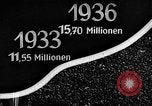
Growth of Nazi Party in Germany. Hitler sends troops to occupy demilitarized zone of the Rheinland (Rhineland).
Nazi propaganda extolling the growth of the Nazi party from 11.55 million in 1933 to 15.7 million in 1936. Remilitarization of Germany in lead up to World War 2. Mobilized German troops enter the demilitarized zone of the Rhineland and, as slate suggests, reoccupy their old garrison there. Triumphant scenes of German soldiers marching into Frankfurt, Karlsruhe, and Cologne, to the enthusiastic cheers of the residents. Hitler and Goering and others in open car as crowds cheer them in Berlin. Hitler on a balcony reviewing a torchlight parade of SA and SS troopers. Brief glimpse of Hermann Goering in civilian clothes. Euphoric crowds greet Hitler on Heroes Memorial Day, March 7, 1936, the same day he ordered German troops into the Rhineland.
Aftermath of Viet Minh attack on outpost at Bai-Thao Indochina.
Scene of a Viet Minh attack on the Bai-Thao outpost in Indochina. View of Improvised French military camp site located 15 km from Sept-Pagodes and 8 km from Bentam. A French radio operator seated at a table alongside his equipment. French troops stand nearby and use binoculars to survey the camp area. A crowd gathered around corpses. Feet of one are tied together. Bullets lie near a corpse on the ground. Fly infested corpses after the attack. A sign post reads 'Bai-Thao'. An ambulance truck makes its way past the sign on a dirt road. French Officers talk with a Vietnamese boy. A French soldier stands near an artillery piece and looks out at a winding river. Vietnamese woman rides in a bicycle rickshaw and a man pulls a hand cart in front of French soldiers in parked Sherman tank. Three soldiers look out of the tank hatches. An officer stands atop the tank.
Japan extends its empire into Manchuria, Mongolia, and China in 1931 and 1932
Brief opening scenes show ships being engulfed in flames and smoke from Japanese attack on Pearl Harbor, December 7, 1941 in World War 2. Focus is primarily on the USS Arizona. Scene shifts to Japanese troops assembling on a pier and boarding troop transport ships bound for Manchuria and China, following the Mukden Incident of September, 1931. Japanese troops are then seen marching into Manchuria on September 18, 1931. A formation of Japanese soldiers presents arms. In another formation, they shoulder swords. Closeup of a Japanese soldier in a steel helmet with chin strap in place. A steam locomotive pulls a train into the Chin Hsien station on the South Manchurian Railway. A Japanese train on that line had been dynamited, triggering a Japanese push into Mukden. View from behind a train leaving Chin Hsien on the South Manchurian Railway. Japanese battalions place bundles of straw across a stream to facilitate troop crossing. A column of Japanese troops is seen crossing the water on the makeshift straw crossing. Japanese troops advancing along with supplies carried by pack animals. Troops traverse a sandy berm past an abandoned two-wheel cart. A formation of 12 Japanese G3M bombers flies overhead in a "V" formation en route to bomb Mukden. View of Chinese population running for shelter from the bombing. Chinese walk past some civilian casualties lying in a street. The League of Nations headquarters in Palais Wilson, Geneva, Switzerland. A memorial to Woodrow Wilson at the Palais Wilson reads: "A La Memoire De Woodrow Wilson President des Etats-Vnis,Fondatevr DL La Societe Des Nations, La Ville de Geneve." A car driving away from the entrance of the League Headquarters. Closeup of doorway with sign identifying it as the entrance for delegates and members of the Press. League delegates are seen inside its meeting hall. Japanese warships are seen next, attacking 15 miles from Shanghai with naval gunfire.Three Mitsubishi 2MR4 (Type 10)Reconnaissance biplanes are seen in flight above the barrel of a large naval gun. Japanese troops marching into Shanghai, as people on the roadside wave Japanese flags. Next, they are seen marching out of Shanghai at the insistence of the League of Nations. After signing a truce with China, on May 4, 1932, Japanese troops are seen entering Mongolia, in September, 1932, which they reconstituted as the Puppet State of Manchuko. A Japanese soldier standing atop a building waving a Japanese flag. Japanese statesmen resigning and leaving the League of Nations in protest after it labeled Japan an aggressor. Japanese forces fire a long barrel Type 89 cannon (150mm) as they push into China proper. Group of Japanese artillerymen use range finders, Periscopic viewers and binoculars to guide the gunners. Shell explodes raising large amount of earth. More views of artillery firing and infantry advancing. Infantry crossing a bridge and raising siege ladders to scale a fortress. Engines running on Japanese Ki 30 Type 97 airplanes, as pilots get final briefing and orders. They salute, board their aircraft, and are seen in formation aloft, dropping bombs. View from the air of bombs striking below. View from a bomber of its bombs dropping from the aircraft (bombs away view) and exploding on the ground. A column of Chinese soldiers moves along a section of the Great Wall of China heading into the interior of China. Civilians moving all manner of equipment and machinery into the interior.