


 Francais
 Deutsch
 Italiano
Refine Your Search
Mojave California 1955 stock footage and images
- Showing 2257 to 2262 of 3122 results more
more Hide
Hide
Boats docked at a sea and buildings alongside a beach in the United States.
Sunset in California, on Pacific shore. Small boats moored in bay. Waves splash on breakwater. View of buildings and road on the shore.
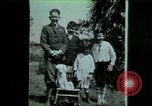
Prior to U.S. Presidential Election of 1968, Richard Nixon recounts his past and reveals details about his Quaker family.
Self-portrait of Republican nominee Richard Nixon aired during his 1968 presidential run against Hubert Humphrey and George Wallace in the United States. An interviewer asks Richard Nixon what sort of a life he lived when he was about 10 years old. He speaks how he used to work on his lemon ranch at that time and later on a service station and says that it was much of work and no play. The interviewer asks how his father and mother met. Nixon responds saying that his father came from Ohio and mother came from Indiana and they met in California. A church. Nixon speaks that his father was a Methodist and his mother a Quaker and they both met in a social church. An old picture of Nixon's father and mother. Nixon speaks more about his Quaker family.
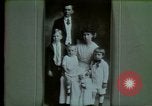
Richard Nixon recounts his past and speaks about his football coach Wallace Newman in the United States.
Self-portrait of Republican nominee Richard Nixon aired during his 1968 presidential run against Hubert Humphrey and George Wallace in the United States. A photo showing Richard Nixon's father and mother, Mr. and Mrs. Francis Nixon and their children, left to right: Harold, who died when he was 23; Donald and Richard, in Yorba Linda, California. Richard Nixon speaks about how devoted and self sacrificing his mother and father were for their children. He calls his family a happy family but also speaks of the difficult times when his brothers Harold and Arthur died from tuberculosis. An old picture of Richard Nixon showing him with his younger and elder brothers. Nixon speaks that a life without any ups and downs can not know the beauty of life in a broader sense. He says that he got his attitude about winning from his football coach Wallace Newman during his college years. A picture of Coach Wallace Newman. A 1934 photograph of Richard Nixon in football gear during his senior year at Whittier College.
Boy Scouts visit the Pentagon building and meet U.S. Secretary of Defense James Forrestal during Boy Scout Week 1949.
Eagle Scouts from the 12 regions of the Boy Scouts of America visit the Pentagon building in Arlington Virginia during Boy Scout Week 1949 (celebrating the 39th anniversary of the Boy Scouts of America). The group of Boy Scouts on the steps of the Pentagon building. The Boy Scouts look around at the building and surroundings. The scouts walk up the stairs and enter the Pentagon building. U.S. Secretary of Defense James Forrestal seated in his office. The Defense Secretary meets with the scouts and talks to them. He shakes hands with various Boy Scouts. The 12 scouts in the group are: Alan Fritts of Troop 11 in Mankato, Minnesota; Andrew L. Clement, senior patrol leader of Troop 2 in Raleigh, North Carolina; George Barron of Troop 17 in Franklin, Virginia; Daniel Abbott of Senior Outfit 16, in Newtonville, Massachusetts; James Roswurm of Troop 31 in Huron, Ohio; Charles S. Wilson of Troop 3, in Bristol Tennessee; H. Cumings Johnson of Senior Outfit 230 in Traverse City, Michigan; Joseph L. Cox of Troop 98 in Trenton, Missouri; Howard M. Williams of Explorer Post 345 in Houston, Texas; James C. Vincent of Sea Scout Ship 232 in Brookings, Oregon; James E. Gill of Air Scout Squadron 234 in Berkeley, California; L. Drury Cathers of Troop 22 in Gouverneur, New York.
U.S. Army Brigadier General Prichard talking to Boy Scouts in his office at the Pentagon building in Arlington County, Virginia.
Eagle rank Boy Scouts representing the 12 regions of the Boy Scouts of America visit the Pentagon building in Arlington County, Virginia, during Boy Scout Week 1949. The interiors of the office of U.S. Army Brigadier General Vernon E Prichard. Boy Scouts arrive in the office and meet Brigadier General Prichard. A wall map in the background. Brigadier General Prichard speaks to the boys. The Vice Chief of Staff General Joseph Lawton Collins, talking to the boys in his office. The 12 Boy Scout representatives are: Alan Fritts of Troop 11 in Mankato, Minnesota; Andrew L. Clement, senior patrol leader of Troop 2 in Raleigh, North Carolina; George Barron of Troop 17 in Franklin, Virginia; Daniel Abbott of Senior Outfit 16, in Newtonville, Massachusetts; James Roswurm of Troop 31 in Huron, Ohio; Charles S. Wilson of Troop 3, in Bristol Tennessee; H. Cumings Johnson of Senior Outfit 230 in Traverse City, Michigan; Joseph L. Cox of Troop 98 in Trenton, Missouri; Howard M. Williams of Explorer Post 345 in Houston, Texas; James C. Vincent of Sea Scout Ship 232 in Brookings, Oregon; James E. Gill of Air Scout Squadron 234 in Berkeley, California; L. Drury Cathers of Troop 22 in Gouverneur, New York.
U.S. officers examine a wrecked Lockheed XP-38 airplane at the Mitchel Field in New York.
Remains of the Lockheed XP-38 that crashed at Mitchel Field, New York, the day before, after a cross-continental flight from March Field, California. The airplane was flown by Lieutenant Ben Kelsey, who escaped without injury. But the airplane was totally destroyed.