


 Francais
 Deutsch
 Italiano
Refine Your Search
Myitkyina Burma 1944 stock footage and images
- Showing 103 to 108 of 6869 results more
more Hide
Hide
Twenty one former Nazi German SS men go on trial before military tribunal for the massacre of 1944 in Oradour-sur-Glane.
Twenty one former Nazi German SS men go on trial before military tribunal for the massacre of 1944, of 642 men, women and children at a village in Oradour-sur-Glane, France during World War II. While in the village, seven survivors survey the charred buildings of the hamlet which was put to torch. Abandoned bicycle with flowers. Mourners at graves.
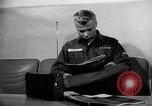
The story of AFN ( American Forces Network) Radio. Founding announced in 1942. First broadcast in 1943; growth in 1944.
U.S. Army soldier reads newspaper while listening to radio. Soldiers doing their respective chores, listen to AFN (American Forces Network) Radio. General Marshall and General Eisenhower announce the creation of AFN, in 1942. July 4, 1943, the first broadcast of AFN. General Eisenhower mingling with paratroopers of the 101st Airborne Division, on the eve of D-day. U.S. B-26 aircraft in flight. United States soldiers aboard landing craft and wading ashore at Normandy, France, on D-day, June 6, 1944. Soldiers tuning radios in the field. United States Sherman tanks and infantry move along country road in France. Audio includes portions from AFN broadcasts, including an announcer saying "You are listening to AFN Paris. This is the American Forces Network, on the road to Berlin." Road sign points to St. Lo. Group of U.S. soldiers gathered around a jeep with a radio, listening to AFN, in Germany. (World War II period).

Chindits with a pack train enter a Burma village and load and fire mortars during World War II.
The Chindits or the Indian 3rd Infantry Division of the British Indian Army in Burma in World War 2. The troops with a pack train consisting of mules enter into a Burma village. They load and fire mortars and machine guns. A Chindit looks through a pair of binoculars. Firing in the village toward Japanese held Mogaung. Chinese troops move to join the Chindits. The soldiers and the pack train move forward. The Chinese troops in a reunion with the Chindits exchange hats and greet. A plane strafes Japanese positions. Smoke due to explosions. Machine guns are fired. Japanese forces abandon Mogaung and Chindit and Chinese soldiers move in to the destroyed area. Dead enemy Japanese soldiers amid the ruins. Three Chindits posing near a Burmese Pagoda, honoring the mythical creatures that are their namesake guarding a Pagoda.

Chinese 38th Infantry Division troops advance to Bhamo, Burma (WW2)
Nationalist Chinese troops of the 38th Infantry Division are seen moving through Jungles with pack animals carrying supplies as they advance toward key city of Bhamo (Banmaw), Burma, during World War 2. A map shows the area, highlighting cities of Rangoon (Yangon), Mandalay, and Bhamo. Using small assault boats, the Chinese troops cross a river near outskirts of Bhamo. American officers, working with the Chinese troops, consult a map as they plot the attack. Chinese artillerymen begin a barrage, as their infantry advance. Allied P-47 aircraft bomb Japanese positions only a few hundred yards in front of advancing Chinese infantry. Chinese troops make their way through bombed and burning areas. Severely damaged Buddhist Shwe Kyina pagoda is seen. A destroyed wall with Buddha statue. Lieutenant General Daniel I. Sultan, U.S. Commander in Burma and India, inspects the captured city. Chinese troops raise their flag over the city.
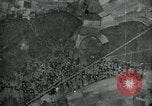
7th Bomber Group (H) Squadron and 4934 Bombardment Squadron of U.S. Army Air Force over Moulmein in Burma, WWII
U.S. Army Air Force attack enemy positions of Burma in China-Burma-India Theater during World War II. The 7th Bomber Group (H) Squadron and the 4934 Bombardment Squadron of the U.S. Army Air Force during a mission on railroad bridges in Moulmein in Burma. Smoke rising from bombed places in farms and railroads.
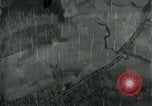
Bomber aircrafts of the U.S. Army Air Force flying over farms, railway tracks, roads and river bridges in Moulmein Burma.
U.S. Army Air Force attacks enemy positions in Burma in China-Burma-India Theater during the World War II. Agricultural farms, railway tracks, roads and river bridges as seen by the 7th Bombardment Group (H) Squadron and the 4934 Bombardment Squadron of the U.S. Army Air Force flying over Moulmein in Burma.
CRITICALPAST.COM: About Us | Contact Us | FAQs - How to Order | License Agreement | My Account | My Lightboxes | Shopping Cart | Advanced Search | Featured Collections | Website Terms & Conditions | Privacy Policy ©2026 CriticalPast LLC.
License Agreement |
Terms & Conditions |
Privacy Policy
©2026 CriticalPast LLC.