


 Francais
 Deutsch
 Italiano
Refine Your Search
Nevada United States 1936 stock footage and images
- Showing 11725 to 11730 of 27248 results more
more Hide
Hide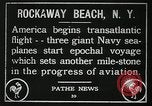
Curtiss NC aircraft being prepared for flight and the crew gets ready in New York for the first transatlantic flight.
Preparations before the first transatlantic flight from New York, United States.. A United States Navy flying boat Curtiss NC stationed. Aircraft in front of a hangar. Three aircraft on ramp being prepared for flight. A sailor hands supplies to a man in the cockpit. Men climb down from an aircraft. Naval officer walks in front of men of the Aero Oceanic Cruise standing in attention and shakes hands with them. A group of military men salute. Commander of the USS Langley (CV-1) John Henry Towers. Curtiss NC-3 taxis on water. Curtiss NC-4 with engines warming up as the aircraft taxis on water. Curtiss NC-1 taxis on water. Curtiss NC-1 in flight.

Ralph Heinzen gives an intelligent analysis of internal conditions in Germany as SS Gripsholm arrives in New York (WW2)
SS Gripsholm (Ship) arrives in New York, United States in World War II. Cameramen take photos as SS Gripsholm as it arrives at New York harbor. The rails are crowded with Americans. She docks at Pier F in Jersey City and ambulances roll away with wounded soldiers. Six hundred and sixty-two repatriates from German internment camps come ashore. S. Pinckney Tuck, excharge d'affairs in Vichy seen. Douglas MacArthur (General Douglas MacArthur's nephew), approaches with his dog. Passengers are happy to come in home. Ralph Heinzen of the United Press gives an intelligent analysis of internal conditions in Germany today. Stalingrad was the turning point, he states. Germany began losing the war with that defeat and Hitler started losing prestige.
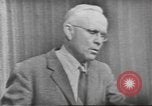
Vice President Nixon and Senator Kennedy debate over a fight against communism prior to presidential elections in the U.S.
The fourth presidential election debate held between Democratic nominee Senator John F. Kennedy and Republican nominee U.S. Vice President Richard Nixon in New York, United States on 21st October 1960. ABC News correspondent Quincy Howe speaks during the debate and allows correspondent Walter Cronkite to ask Senator Kennedy a question. Mr. Cronkite asks Senator Kennedy that in what areas the United States might take offensive against communism rather than being defensive to the Soviet Union. Senator Kennedy replies to the question and says that the eastern Europe is very vulnerable area according to him. He says there should be policies which make it possible to establish closer relation with a country like Poland and he also mentions the Hungarian Revolution. Senator Kennedy speaks about the relations between the Soviet Union and China. He says that India represents a great area for affirmative action by the free world. India started from about the same place that China did. India under a free society has been making some progress. But if India does not succeed, Communism can take over. He says that in Africa, Asia, Latin America, eastern Europe, the great force on their side is the desire of people to be free. Correspondent Howe asks Vice President Nixon to comment on the topic. Nixon speaks about Poland and says that Poland in not in a position to take any independent position under Soviet control. He talks about aids being sent to Poland from the U.S. and says that the U.S. can have more exchange with Poland or with any other Iron Curtain countries.
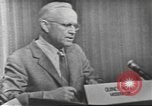
Vice President Nixon gives his closing statement during the fourth presidential election debate held in New York, U.S.
The fourth presidential election debate held between Democratic nominee Senator John F. Kennedy and Republican nominee U.S. Vice President Richard Nixon in New York, United States on 21st October 1960. ABC news correspondent Quincy Howe speaks during the debate and asks Vice President Richard Nixon to give his closing statement. Vice President Nixon opposes Senator Kennedy's statement that American is standing still. He says more houses and classrooms have been built, there has been a progress in civil rights and progress in field of slum clearance in Eisenhower's Administration which is more than in the previous administration. He says the United States should extend freedom to the world. He says that there were eleven dictators in Latin America in 1953 and now there are only 3 left. Nixon also talks about free government in Africa. He says that America will move ahead with the kind of leadership that we can provide in these years ahead. Correspondent Quincy speaks. He says that the opening statements by both candidates ran eight minutes each. The closing statements ran four minutes, thirty seconds. The order of speaking was reversed from their first joint appearance, when they followed the same procedure. A panel of newsmen questioned each candidate alternately. The first discussion dealt only with domestic policy. This one dealt only with foreign policy. As members of a new political generation, Vice President Nixon and Senator Kennedy have used new means of communication to pioneer a new type of political debate.
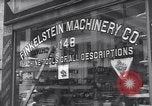
Jewish-American Boy Scouts take Scout Oath in Synagogue of Congregation Rodeph Sholom, New York City
Jewish section in New York City, United States. Sign on a store window reads 'Finklestain Machine Co.' Two signs, one is Hebrew, other is English (Orthodox Restaurant and Bakery). Jewish-American Boy Scouts take a Scout Oath. People come out of Synagogue of Congregation Rodeph Sholom (7 W 83rd St, New York, NY 1)0024, United States. Sign indicates Rabbi is Louis I. Newman. Several signs. View of entrance of Congregation Rodeph Sholom.
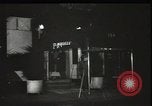
Interiors of El Morocco night club, New York shows dancers on dance floor and waiters serving diners at table.
Partygoers at the El Morocco night club (300 E 55th St, New York, NY 10022, United States) in Manhattan, New York, United States. Limousines stop in front of the El Morocco. Exterior of El Morocco night club. Awning with words “El Morocco”. Guests enter the club. A doorman greets the guests. Interiors of club show waiters prepare to serve food. Men and women smoking cigars and chatting inside the club. Dancers on a dance floor. Diners at table.
CRITICALPAST.COM: About Us | Contact Us | FAQs - How to Order | License Agreement | My Account | My Lightboxes | Shopping Cart | Advanced Search | Featured Collections | Website Terms & Conditions | Privacy Policy ©2026 CriticalPast LLC.
License Agreement |
Terms & Conditions |
Privacy Policy
©2026 CriticalPast LLC.