


 Francais
 Deutsch
 Italiano

Refine Your Search
Nevada United States 1936 stock footage and images
- Showing 20593 to 20598 of 35682 results more
 Hide
Color Sound
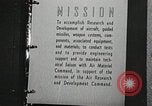
Development of F-86 Sabre at Wright Air Development Center and first flight test of F-86 at Muroc Dry Lake
Development and flight of various U.S. aircraft. A page of Wright Air Development Center (WADS) book reads 'A Sense of Urgency'. A technician works on drawing board. Aerial view of formation of five Convair B-36 aircraft in flight. A centrifuge test in progress at WADC of Wright-Patterson Air Force Base. Evening journal headlines reads 'Reds Invade South Korea'. Explosion during actual battle of Korean War. Smoke due to explosion. Aerial formation of C-119 Flying Boxcar. Parachutes descend. Formation of eight C-119 during jump. Lined up five F-86 Sabre aircraft. Crew members and gasoline trucks in front of F-86. Insignia of United States on F-86. Last minute check is made prior to mission. Refueling of an F-86 by a man. F-59A aircraft in flight leaves a smoky trail. A book in hands of a man. Four technicians seated at desk and are reviewing future proposals of jet aircraft. An outline drawing of an aircraft F-84 Thunderjet. Various instruments and gauges during testing of mechanical systems of aircraft. The door to cold weather chamber opened. An engineer wearing heavy clothing takes instruments through door. F-80 Shooting Star lands and taxis. Narrator discusses problems of load on landing gear. A man cleans the wheels of F-80 after landing. Two technicians seated at a desk discuss about the project. Project engineer hold the model of F-86 aircraft in hand pointing to various sections of F-86 Sabre. Test conducted on a dynamometer machine. Tire test conducted. Gauges which record wheel speed, brake recorder. F-86 Sabre stationary. Initial flight test of an F-86 conducted at Muroc Dry Lake in California. F-86 taxis and takes off. F-86 in flight. A pilot in a cockpit. Landing of F-86.
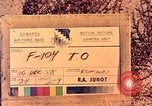
F-104 Starfighters taxi and take off, Runway of Edwards Air Force Base seen from the rear seat of aircraft landing.
Army Material Command (AMC) logistic support of Air Force F-104 Starfighter project in United States. F-104s taxi on a runway and take off. Insignia of United States. Runway of Edwards Air Force Base as seen from the rear seat of a landing aircraft
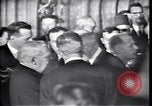
French President De Gaulle, Chancellor Ludwig Erhard and Foreign Minister De Murville at late President Kennedy's burial.
A national television report on the burial of late U.S. President John F Kennedy in the United States. State Department correspondent Elie Abel reports on President Lyndon Johnson's reception on the occasion of John F Kennedy's burial in Washington DC. Dignitaries gathered in a room. Chancellor of West Germany Ludwig Erhard with French President Charles De Gaulle. Officers and dignitaries stand around them. Erhard and De Gaulle use interpreters to communicate. De Gaulle shakes hands with dignitaries and meets leaders of various countries. Foreign Minister of France Maurice Couve De Murville stands at a distance from De Gaulle. French Ambassador in Washington DC steers President De Gaulle across the room through the crowd.
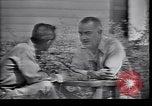
Vice President Lyndon Johnson talks about his political life and work experience in Johnson City.
A national television report on the newly appointed U.S. Vice President Lyndon Johnson, broadcast after the assassination of President John F Kennedy in the United States. A correspondent interviews President Lyndon B Johnson. They discuss Johnson's flair for politics, his father as a Public Representative and his grandfather as a State Representative. Johnson talks about his work experience in Johnson City during World War I and the time he decided to enter politics. The correspondent questions him regarding his giving up the Majority Leadership in the Senate to become the Vice President.
USAF Brig. Gen. Pfautz introduces a USAF documentary on Soviet military equipment and its use.
United States Air Force Soviet Awareness Program titled 'Heirs of Victory' depicts Soviet military equipment and its use in terms of purpose and jurisdiction. Introduction by Brigadier General James C. Pfautz, Deputy Assistant Chief of Staff, Intelligence, Headquarters U.S. Air Force. Brig. Gen. Pfautz gives details about the subject, translation, narration, and editing. The Soviet Communist hammer and sickle symbol. A Soviet long winged early warning radar keeps a watch in the sky. Soviet Air Force MiG-25 (Mikoyan-Gurevich) interceptor bombers with air to air missiles. Pilots board aircraft and they take off. The aircraft in flight. Soviet missiles and rockets protect the borders. World War II Soviet Air Force fighter pilot Nikolai Kozmoff talks to highly trained young Soviet pilots at a air base.
Army Signal Corps receive and send messages via various methods in World War II; Pentagon signal center operations.
The role and contribution of the U.S. Army Signal Corps in combat during World War 2. Submarine cables laid down by the Signal Corps. Soldiers operate field army communication equipment for communication within and between units. Soldiers talk over the radio in a military jeep. American soldiers employ communication equipment seated at a table in a camp. A U.S. Army Signal Officer goes through documents. An officer receives a message in Washington DC. The message is relayed from the State Department to the Signal Center in the Pentagon building. Exterior views of the Pentagon building circa 1943 or 1944. Inside the Army Communications Signal Center in the Pentagon, technicians work using various communication equipment. They receive messages punched on tape as the tapes emerge from machines. Workers encoding and decoding secret and confidential messages that run the war. Workers at the 'Traffic Control, Army Command and Administrative System'. Paper messages seen gliding across a track near the ceiling above a signboard. A man inserts and removes cables from switchboard slots. The plans are then passed on in code through a maze of antennas all over the world. An animated map depicts the sending of these messages by radio multi-channels, radio teletypes, and manual radios to the front lines. A vast network of Army communication system from Washington DC to the rest of the world to carry a message around the world in three and a half minutes.
CRITICALPAST.COM: About Us | Contact Us | FAQs - How to Order | License Agreement | My Account | My Lightboxes | Shopping Cart | Advanced Search | Featured Collections | Website Terms & Conditions | Privacy Policy ©2026 CriticalPast LLC.
License Agreement |
Terms & Conditions |
Privacy Policy
©2026 CriticalPast LLC.