


 Francais
 Deutsch
 Italiano

Refine Your Search
Nevada United States 1936 stock footage and images
- Showing 20971 to 20976 of 35682 results more
 Hide
Color Sound
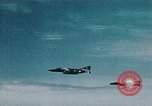
The battle of Khe Sanh in the Vietnam War.
Film begins showing two U.S. Air Force McDonald Douglas F4 Phantom jet fighters in flight. Narrator says American intelligence reports on January 29, 1968, of a 4th North Vietnamese Regular Army Division in the Khe Sanh area, bringing total enemy strength to about 40 thousand regular troops. View of photo interpreter rolling large wet film taken by Air Force surveillance aircraft. Map of Hue, area of South Vietnam, showing disposition of American forces in the region. American Marine Colonel David E Lownds, Commander of Khe Sanh garrison, describes North Vietnamese offensives against some American held positions. Views of North Vietnamese attacks being repelled by artillery and air strikes as well as organic infantry weapons like the A1 millimeter mortars, 3.5 rockets, and M79 machine guns. U.S. aircraft drop munitions on enemy positions. Infantry firing guns mounted on vehicles. An F4 Phantom drops napalm that creates a swath of fire. Closeup of North Vietnamese newspaper warns that the Americans face a defeat comparable to that of the French at Dienbienphu. American newspapers express concerns about the fate of the Marine Garrison at Khe Sanh. U.S. Army General William Westmoreland, Commander of U.S. troops in Vietnam, is seen and heard expressing confidence that American forces would win the battle of Khe Sanh. American troops listen as he speaks. Marines in briefings and in combat, including African American Marines. American artillerymen load and fire a 175 mm field gun at Camp Carrol, and a location called the Rock pile with a network of trenches. Inside that base, are seen Ontos M50A1 multi barrel anti-tank tracked vehicles armed with 105 mm recoiless rifles. A marine fires a 4.2 inch mortar, and another fires a recoiless rifle. Marines firing a 155mm howitzer. Scene shifts to deck of an aircraft carrier. View of Navy F4J phantom fighter aircraft being launched from the USS Ticonderoga (CVA 14) (Note: this may be an anachronism. Reportedly, the F4J was not operating from aircraft carriers in the Vietnam until after 1968). F-4 Phantom fighters taking off from an Air Force base. Aerial view of a U.S. Air Force B-52 bomber dropping conventional bombs on North Vietnamese targets. View from the air of bombs exploding on the ground over battlefield terrain. A C-130 transport plane dropping supplies to U.S. marines on the ground. View from below of the parachutes descending with supplies. Closeup of C-130 dropping mail from above. More views of parachute drops from C-130 aircraft to Khe Sanh. C-123 transport landing at a Marine base and a C-130 taking off. Another C-123 landing. Another having load delivered by low level extraction. Marines on the ground at Khe sanh opening packages of supplies and using a tractor to transport large boxes. On February 13, Marines suffered casualties when a platoon was ambushed just outside the base perimeter. View of Marine on a litter. Heavy black smoke rises at the base from shelling by North Vietnamese artillery. A C-123 aircraft takes off with dense black smoke in the background. Another napalm attack by a U.S plane creates a large conflagration. View from above of a B-52 dropping bombs only yards outside the Khe Sanh perimeter. Marines patrolling close in the base. More views of B-52s bombing North Vietnamese targets. View of nighttime bombing operations. A Marine plotting enemy movements on a plexiglass chart. Marines manning machine guns as enemy rockets and mortars continue to pound the garrison. Officers are seen in CINCPAC Command center. Continued U.S. bombardment and air strikes appear to prevent massing of enemy forces for an assault. Marines controlling hills in the area. A UH-1 Iroquois (Huey) helicopter flying low over the base. During a lull in battle Marines fill sand bags, maintain their weapons, play cards, and keep occupies as they sit and wait. Some play basketball with an outdoor improvised backboard and net. Some marines select books from a library. A marine plays a guitar as some others listen. Closeups of Marines in trenches including white and African American Marines. Marines doing their wash and having a meal of C rations. Marines preparing their own combinations of ingredients into meals being cooked over open fires. Views of many marines eating the various mixes of C-rations they called "casseroles." Marines in trucks pursuing retreating elements of North Vietnamese on Highway 9 that had been opened by Marine engineers. U.S. Army First Air Cavalry reinforcements arrive in operation Pegasus. Marine engineers working to restore bridges and roads needing repairs. Soldiers detecting and neutralizing mines. Bell UH-1 helicopters ferry troops. Captured enemy arms and ammunition. Surrendered North Vietnamese soldier prisoners of war marched under guard.

Japanese newsreel showing American warships for identification purposes, before attack on Pearl Harbor in World War 2
Japanese newsreel early in World War 2. Identification silhouettes of U.S. warships. Surf breaking on a Japanese shore. View of a U.S. Aircraft Carrier, from a biplane that has just taken off. A U.S. Navy dirigible airship aloft over a U.S. battleship underway at sea. Large formation of what look like U.S. Boeing P-12 airplanes in flight. Glimpse of a U.S. Navy heavy Cruiser at Pearl harbor with the Aloha Tower lighthouse visible in the background. U.S. Navy crewmen in a submarine. More views of a U.S. Aircraft Carrier. A U.S. Navy submarine submerging. Aerial views of a coastline. Brief shot at end of clip shows Japanese children, all wearing sashes over one shoulder, as they shout a cheer together (possibly Banzai) and smile.

President Carter and his wife welcome Israeli Prime Minister Begin and his wife during the latter's visit to Washington DC.
U.S. President Jimmy Carter and Israeli Prime Minister Menachem Begin in Washington DC, United States. The U.S. flag on the White House. A large crowd gathered outside the White House. A woman among the crowd taking pictures. U.S. President Jimmy Carter and his wife walking through a group of people. U.S. President Jimmy Carter and First Lady Rosalynn Carter greet Prime Minister Begin and his wife. Prime Minister Begin shakes hands with other officials. Other officials standing behind them. The flags of the U.S. and Israel. An U.S. military honor guard marches. U.S. President Jimmy Carter speaks into microphones at a podium. Prime Minister Begin standing beside him. The wives of the President and the Prime Minister standing behind them. A large crowd in the background on the White House lawn. President Jimmy Carter welcomes the Prime Minister of Israel and his wife, in Washington as part of middle east peace talks. The President says that he has been encouraged by Prime Minister Begin's statement that this year might be a year of efforts that would bring permanent peace and security to the Middle East. He says that they share a common goal of finding peace and this binds the two nations together. The President says that they are honored with their presence and welcome them as their guests. The crowd applauds. Prime Minister Begin speaks into the microphones. He thanks the President. Prime Minister Begin says that they yearn for peace and shall do all things possible to bring real peace to them and their neighbors. The Prime Minister says that he sees President Carter not only as a citizen of a mighty country but also as the defender of the free world. He thanks the U.S. President at the end of his speech. The men shake hands. View of the crowd applauding. President Carter waves to the crowd.
Events of World War 2, and creation of United Nations Organization following the surrender of Germany and Japan
Summary of World War II events and formation of the United Nations Organization. Soviet troops on Eastern Front of Europe fire artillery on German positions in 1944. Russian troops advance. German soldiers come out of buildings and surrender. Allied Forces land in France on D-Day. Allied troops and tanks fight Germans on streets in towns and villages of France. U.S. Army tanks fire at German positions. Various groups of German prisoners of war march along roads and are herded into prison camps operated by American and British forces. In 1945, the Allied leaders meet at Yalta on the Crimean Peninsula to discuss Allied military strategy in the final months of WWII. Leaders included British PM Winston Churchill, U.S. President Franklin D Roosevelt and Soviet Premier Joseph Stalin. The meeting of U.S. and Soviet Russian troops at the Elbe River. German Nazi Swastika symbol blown up in explosion atop Zeppelinfeld Nazi party rally grounds in Nuremberg. Aerial view of Berlin in ruins, as seen from low-flying aircraft flying directly over the Unter den Linden boulevard and the Brandenburg Gate. Wrecked and bombed German buildings seen everywhere. German officials signing surrender instrument at Rheims. U.S. President Harry S Truman, Winston Churchill and Joseph Stalin at Potsdam Conference. U.S. Marines battling on beaches of Pacific Islands. Iconic shot of U.S. Marines raising the American flag on Mount Suribachi at Iwo Jima. Aerial view of bombed and ruined city of Tokyo, Japan. The Japanese surrender to MacArthur aboard the battleship USS Missouri. General MacArthur speaks aboard Missouri. Victory celebrations all across the world, with some scenes from earlier V-E Day (Victory in Europe) day in May 1945, including crowds celebrating in Paris, France, and some scenes on V-J Day (Victory over Japan day) in August 1945. Crowds on streets celebrate. Happy crowds jam streets. Delegates of Nations, among them Andrei Gromyko and Vyascheslav Molotov meet in San Francisco and create a United Nations organization. Truman arrives at signing of UN charter. Various delegates sign charter. U.S. troops disembark troop carrier ships at U.S. ports and are discharged after completing military service in World War 2. Group of U.S. Army soldiers exits a church (the Chapel at Fort Dix, New Jersey), waving their discharge papers in hand.
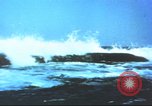
The Hall of Heroes in the Pentagon where names of Medal of Honor recipients from the Spanish-American War are listed
John Charles Daly discussing the Medal of Honor and the Spanish American War. Scenes of waves crashing on shores. Mr. Daly standing in the Hall of Heroes, at the Pentagon, Arlington, Virginia, U.S.A. speaks about Americans called to do battle outside the United States. Map of Cuba with flame and smoke over Havana Harbor. Officials around a conference table. A poster with picture of the USS Maine and words: "Remember the Maine." Excerpts from films depicting events in the Spanish-American War. The Spanish flag being lowered and replaced by the American flag. Back in the Hall of Heroes, Mr. Daly points to names of 30 Medal of Honor recipients from the Spanish-American War, on the wall. He notes they were the first to win Army Medals of Honor on foreign soil. He states that 81 Navy and Marine Corps fighting men were also awarded the medal.

General John Joseph Pershing gives awards to the winners and General Charles A. Doyen in Gondrecourt, France.
U.S. 5th Marine Regiment in Gondrecourt, France during World War I. Troops put sack bags in a trench. Sack bags also kept on the edge of the trench. A U.S. officer raises a flag. The troops stand in a squad in the background. Trophies on a table. General John Joseph Pershing with U.S. officers. He stands in front of the table and talks to them. U.S. troops stand in formation. General John Joseph Pershing and a soldier with a camera. The General presents awards to the winners of a trench digging contest. A parade by the U.S. troops. General John Joseph Pershing and U.S. troops salute. General Charles A. Doyen. U.S. officers on horse backs. The troops march with rifles on their shoulders. The soldiers hold flags of United States and France.
CRITICALPAST.COM: About Us | Contact Us | FAQs - How to Order | License Agreement | My Account | My Lightboxes | Shopping Cart | Advanced Search | Featured Collections | Website Terms & Conditions | Privacy Policy ©2026 CriticalPast LLC.
License Agreement |
Terms & Conditions |
Privacy Policy
©2026 CriticalPast LLC.