


 Francais
 Deutsch
 Italiano

Refine Your Search
Nevada United States 1936 stock footage and images
- Showing 20989 to 20994 of 35682 results more
 Hide
Color Sound
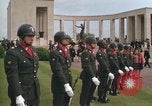
Ceremony at the American Cemetery and Memorial in Normandy, France, commemorating 25th anniversary of D-Day.
A U.S. delegation of former war correspondents visits Normandy, France, 25 years after the Allied invasion of France during World War II. Uniformed United States Honor Guard lined up as officials arrive. Military officers and elected officials along with their wives arrive for a commemoration ceremony at the Normandy American Cemetery and Memorial. They include General Omar Bradley and his wife, Esther Buhler Bradley, General J. Lawton Collins, Robert Sargent Shriver (then U.S. Ambassador to France) and his wife Eunice Kennedy Shriver. French and British military generals are also present. Officials and their wives stand at attention. Military officers salute. Officials place wreaths at a memorial, including Shriver, Bradley, and Collins. A U.S. General speaks at a podium addressing the audience. U.S. Army soldiers and U.S. Air Force airmen lined up. Officers salute as officials stand before them. Honor Guards carry an American flag at the ceremony. A sign on a wreath of flowers reads 'From U.S. D Day correspondents' . A correspondent places flowers at the memorial. View of American cemetery filled with white headstones behind crowd at the ceremony.
Battle of Los Negros in Admiralty Islands during World War II
On orders from General MacArthur, the 2nd Squadron (dismounted), 5th U.S. Cavalry Regiment, 1st Cavalry Division of the United States Army on a Reconnaissance in Force mission at Los Negros,Admiralty Islands. Prior to their landing, two Spitfire aircraft of No. 73 Wing, Royal Australian Air Force (RAAF) are seen attacking Japanese positions in the jungles near the beach. U.S. Navy warships bombard the area and U.S. B-25 bombers from the 345th Bomb Group , 5th Air Force, drop bombs along the beach. After landing, the Reconnaissance Squadron, reinforced with other U.S. 1st Cavalry Division troops, advances into dense jungles. Troops spray the area with machine gun fire. A Squad seen firing a mortar. U.S. troops firing a field gun with "Bataan" written in chalk, on the barrel. B-25 bombers fly very low over edge of Momote airfield and drop bombs. 1st Cavalry troops battle their way against hidden Japanese forces and capture the Momote airfield. General MacArthur comes ashore and congratulates the troops. A wounded soldier carried on a stretcher. U.S. medics tend to wounded soldiers. Wounded are given plasma. Dead Japanese soldiers on ground.
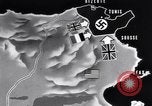
Allied Forces defeat Axis forces in Tunisia during World War II
The final battle of Tunisia, North Africa during World War 2. An animated map shows Allied Forces moving on all sides pressing forward against German forces still remaining in Northern Tunisia. in World War 2. Map outlines battles of Hill 609, Longstop Hill, Goubellat Plain, and Dejebel Mansour, and Takrouna. U.S. forces move 200 miles from the south to confront German forces in the north. Views of U.S. soldiers in trucks and M3 half-tracks, and towing heavy artillery with a tractor. Views of hills where Germans are positioned, west of Tunis and Bizerte. Allied guns firing. French forces sweeping for mines and digging some up with bayonets. French General Alphonse Juin confers with his staff as they review a large map laid out on a jeep. Brief view of French infantry in the field and gunners firing artillery. German Panzer IV tanks moving to counter British attacks. German tanks and artillery firing barrages against the British. Camera pans over destroyed German armor. British 78th Division attacks Longstop Hill. A long line of British infantry moving single file up a hillside. British soldiers firing Vickers machine guns from protected positions and infantry moving uphill, carrying small arms and Bren light machine guns. British troops scaling steep hills, using ropes, as shells burst close to them. One throws a hand grenade that explodes on the hilltop. After reaching the hilltop, the infantry scamper down the other side and continue moving forward, firing their weapons. Several dead German soldiers are seen as the British troops overrun the German positions. British engineers and pioneers working with caterpillar tractors and shovels to build roads. Later, trucks are seen using a new road. In the meantime U.S. troops are seen arriving to commence their assault on Hill 609. It begins with long range artillery firing from camouflaged positions and shells exploding all over on Hill 609. It continues into the night. View of soldiers in artillery headquarters, under a tent illuminated by lanterns. Long sequence of nighttime artillery fire. Medical Corps doctors treating wounded as the nighttime artillery barrages continue. U.S. infantry digging in after taking Hill 609. View of American soldiers walking up Hill 609. View of British Field Marshal Bernard Montgomery consulting with staff officers in the field. British 8th Army commander, Lieutenant General Sir Oliver William Hargreaves Leese, looking through binoculars as he stands with staff members at the front. Scene shifts to U.S. airmen arming machine guns on a parked P-38 fighter plane. Others roughly handling bombs to be placed into U.S. bombers. Bomber with nose art of devil riding a bomb and name "Hell a Poppin." Air crews arrive by jeeps at their B-25 Mitchell bombers and others arrive at their B-17 bombers. View of B-25 number 41-13202 named "Idaho Lassie" of the 321st BG, 445th BS, 12th Air Force. Engines running on bombers and on a British spitfire fighter plane. Formations of Allied aircraft, including B-24 liberator bombers, Martin B-26 Marauder bombers, British spitfire fighters, and B-17 Flying fortress bombers. British and American armor moving forward firing guns. French artillery firing and French infantry advancing. French machine gunners in white hats. U.S. B-24 Liberator aircraft dropping bombs. German fighter planes attacking allied bomber formations. Gunners in the bombers firing at them. Gun camera view of German fighter being shot down. More views of Allied aircraft bombing and strafing. Map shows American forces reaching Bizerte, the British capturing Tunis and German forces split and defeated.

King Saud of Saudi Arabia lays wreath on the tomb of unknown soldier. Prince Faud Ibn Saud lays wreath on George Washington's tomb.
King Saud bin Abdulaziz Al Saud of Saudi Arabia visits Washington DC during a royal state visit to the United States. Tomb of the Unknown Soldier monument (1 Wilson Ave, Fort Myer, VA 22211, United States) in Arlington Cemetery, is visited by His Majesty, in the rain. Soldiers hold a flag of the United States. King Saud is escorted by U.S. officials. King Saud places a wreath bearing the emblem of Saudi Arabia is placed on the Tomb of the Unknown Soldier. A soldier assists the Arabian king in placing the wreath. American military buglers sound taps. Assisted by officials carrying umbrellas, Prince Faud Ibn Saud, Saudi Minister of Defense, pays tribute to President George Washington, at the George Washington Mount Vernon Memorial (3200 Mount Vernon Memorial Hwy, Mt Vernon, VA 22121, United States). He lays a wreath on the tomb of the First President of the United States. Traffic on a road. A flag of Saudi Arabia on the Blair House. U.S. Secretary of State John Foster Dulles arrives by car at the Blair House for a discussion with King Saud. The weather is cold and rainy during the royal visit.

Ivory Coast President Houphouet Boigny arrives at the airport in Washington DC. and receives a warm welcome.
Documentary 'American Journey' depicts the visit of Ivory Coast President Houphouet Boigny and his wife visit to the United States. Low flying aerial views of the United States Capitol building and Washington monument in the background. Low aerial view of Jefferson Memorial and Lincoln Memorial in Washington DC. President Houphouet Boigny arrives in Washington D.C. The 21 gun salute being given by the U.S. soldiers during the arrival. President Houphouet Boigny with his wife get off the plane. President Boigny and First Lady Marie-Therese Houphouet-Boigny shakes hand with American President John F. Kennedy. United States Secretary of State David Dean Rusk shakes hand and citizens of Washington DC. cabinet members, diplomats and city officials welcome Ivory Coast President at the airport. Chief Justice and Ministers of Finance accompany President Boigny. The two Presidents and their wives at the podium. The U.S. President escorts his guest. They sit in a car and leave the airport for the Capitol. Flag of United States and flag of Ivory Coast. People stand on either side and the President Boigny waves as motorcade moves slowly through streets of Washington DC and U.S. military forces parade on streets as citizens watch and wave from sidewalks. A poster of both the Presidents. The Ivory Coast president arrives at Blair House. View of the Lincoln Memorial. The President with other dignitaries enter the Memorial. The statue of Abraham Lincoln at the Memorial.
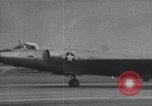
The Cuban Missile Crisis. The Limited Nuclear Test Ban Treaty.
October, 1962, U.S. Air Force U-2 reconnaissance aircraft, tail number 56-6707, of the Strategic Air Command (SAC) 4080th Strategic Reconnaissance Wing, lands at Laughlin Air Force Base, Texas. View of Photographic evidence, brought back by the U-2, showing Soviet missiles being set up in Cuba. President John F. kennedy broadcasts to the nation about the crisis on October 22, 1962, announcing measures being taken by the USA to address the situation. A B-58 Hustler bomber landing. Airmen removing camera from nose of a reconnaissance aircraft. Air Force Sergeant, photo interpreter, reading wet film in a base laboratory. U.S. Naval officers and sailors in Command Center viewing large wall map of the world. U.S. Air Force SAC B-52 bombers taking off. View of United Nations Headquarters building in New York City. On October 25, 1962, U.S. Ambassador to the UN, Adlai Stevenson, confronts Soviet Ambassador Valerian Alexandrovich Zorin about missiles in Cuba.He looks at Zorin, and says,"Don't wait for the translation, yes, or no." Zorin smiles as the room fills with laughter. He then responds. View of a Soviet ship bound for Cuba being monitored by a U.S. aircraft overhead. Pilot in cockpit of the aircraft. View from U.S. aircraft flying low past a Soviet ship. Crew in cockpit of the aircraft. Soviet ships turning away. Helicopter flying over sandy beach area of Hyannis Port, Massachusetts. The helicopter parked and Undersecretary of State, Averell Harriman, steps from the helicopter and is later seen with President Kennedy, and Secretary of State, Dean Rusk, at the President's Weekend White House. Harriman reports on the successful negotiation of a limited nuclear test ban treaty. Glimpse of Moscow. U.S. Secretary of State, Dean Rusk, Soviet Foreign Minister,Andrei Gromyko, and British Foreign secretary, Alexander Douglas-Home, are seen signing the document for their respective nations, August 5, 1963.
CRITICALPAST.COM: About Us | Contact Us | FAQs - How to Order | License Agreement | My Account | My Lightboxes | Shopping Cart | Advanced Search | Featured Collections | Website Terms & Conditions | Privacy Policy ©2026 CriticalPast LLC.
License Agreement |
Terms & Conditions |
Privacy Policy
©2026 CriticalPast LLC.