


 Francais
 Deutsch
 Italiano

Refine Your Search
Nevada United States 1936 stock footage and images
- Showing 21355 to 21360 of 35682 results more
 Hide
Color Sound

President John F. Kennedy gives his inaugural address at the Capitol during his inauguration ceremony in Washington DC.
Presidential inauguration ceremony of U.S. President John Fitzgerald Kennedy in Washington DC. John Fitzgerald Kennedy gives the inaugural address to the gathering at the U.S. Capitol. The United States Marine band plays. Dwight D. Eisenhower attends the ceremony. U.S. Supreme Court Chief Justice Earl Warren administers the oath of office to President Kennedy.
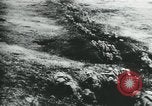
Numerous scenes showing evolution of mechanized warfare emphasizing World War I. but including footage as late as 1934
Montage of scenes illustrating development of mechanized warfare beginning with American Expeditionary Forces (AEF) engaged in World War I. U.S. Army infantry soldiers moving out of trenches going "over the top" into "no man's land" and advancing on battlefield. U.S. troops firing Browning M1917 machine gun,1903 Springfield rifles, and Stokes mortar from trench positions. Soldiers firing mortar are wearing gas masks. AEF trucks and other vehicles ostensibly an improvement over horses, but seen having difficulty in mud. A truck pulling a large artillery gun. A German 80cm K (E) rail gun (developed in 1934) shown at the Rugenwalde Test Range in Germany. It moves along curving rails and is elevated to its maximum elevation (65 degrees). Two World War 1 rail guns firing. An American World War I Naval 14-inch rail gun firing. Allied heavy howitzers firing in World War 1 (one with gun crew in gas masks). American gunners with a French 75 field piece and caisson. French soldier advancing in no-mans-land. The Wright brothers brought warfare into the air with their Wright Flyer airplane, seen being maneuvered on the ground by U.S. Army personnel at Fort Myer, Virginia in July 1909. A De Havilland DH-4 airplane taking off in World War I. A German Fokker D.VIII aircraft in flight. Three U.S. Army Air Service Curtiss P-1B Hawk pursuit aircraft in flight, circa 1926. Aerial dogfight scene including view from behind a pilot in open cockpit biplane (from feature film, circa 1927). Brief view of Renault FT tank maneuvering in World War I. Narrative and clips shift to historical perspective of warfare, showing use of horse and chariot, starting in ancient Assyria and use of elephants in later years by Hannibal. Pictures of mounted soldiers, in the middle ages, waging war in armor, and being transported in a wagon. Shift to World War I showing British Mark IV tanks maneuvering in a field.
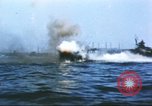
Color scenes of WWII including Pearl Harbor, D-Day, and Pacific campaign.
Montage of scenes dealing with Japanese attack on Pearl Harbor in World War 2. Bombs exploding and ships on fire; Japanese airplane diving from formation; a jeep driving past a burning airplane; hangars burning; Sailors firing anti-aircraft guns from an American ship; A New Orleans class American Cruiser firing her 8-inch guns; A South Dakota Class battleship firing her 16-inch guns; Group of American M3 Stuart light tanks in a field; U.S. Aviation Cadets marching between rows of Boeing Stearman Model 75 training biplanes; American soldiers marching in huge formations; Paratroopers in training jumps from towers; U.S. soldiers climbing down netting on side of troop transport ships to board small landing ships in the Pacific.; Marines in a landing craft carrying a large American flag; Landing craft in an amphious assault; Troops coming ashore from a Higgins boat, during training; An amphibious invasion task force at dusk; Troops wading ashore during the invasion of France in World War II, with barrage balloons aloft and support ships offshore. Staged scene of soldier on transport ship using flash light to read letter from home. Capital warships firing heavy guns and soldiers descending rope nets to enter landing craft. Soldiers landing on shore from Higgins Boats during training, and then on the shores of Normandy during the D-day invasion. American tank crew on an M26 Pershing tank. Major General George Patton with 1st Armored Division patch on his uniform sleeve. General George Marshall. General Dwight D. Eisenhower decorating an officer. Lieutenant General Henry (Hap) Arnold. Paratroopers jumping en masse from C-47 transport planes. German forces retreating in trucks along a road. Japanese General Yoshijirō Umezu, Chief of the Army General Staff, signing Surrender document aboard the USS Missouri, ending World War II, in the pacific. Glimpse of troop ship arriving in a U.S. harbor. View of U.S. military cemetery. Scene shifts to John Charles Daly, speaking in front of wall with names of Medal of Honor recipients, in the Hall of Heroes at the Pentagon, Arlington, Virginia, in 1968.
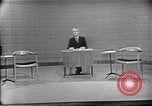
Richard M. Nixon and John F Kennedy give their summation speeches during a presidential election debate in Chicago, Illinois.
The First Kennedy-Nixon Presidential Debate in Chicago, Illinois. Moderator Howard K Smith asks the candidates to give their summation speeches. Republican candidate U.S. Vice President Richard M. Nixon starts his summation speech and compares the progress of the Soviet Union with that of the United States. And he states that in terms of the Gross National Product (GNP), the U.S. is far ahead of the Soviet Union. He compares his proposals with that of Kennedy and states that his own proposals would result in greater growth. He compares his health program which provides a choice of having either government insurance or private insurance with that of Kennedy's health program with compulsory government health insurance under Social Security. He talks about the spendings and inflation during Truman Administration. He concludes his speech and states that U.S. President's should work for every program that would mean growth. Democratic candidate Senator John F Kennedy comments on the statement given by Nixon regarding comparison of the Soviet Union and American economy. He speaks in favor of his proposed health program for aged which was an amendment to the Kerr bill and which provides assistance to all those who were not on Social Security. He thus contrasts Nixon's point on health program for the aged. He concludes his speech and speaks about the goals and responsibilities of the Americans. Moderator Smith thanks the candidates.
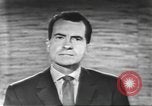
Kennedy and Nixon present their views about a summit conference during a presidential election debate in Washington DC.
The second Kennedy-Nixon Presidential Debate in Washington DC, United States. Alvin Spivak of United Press International asks Republican candidate U.S. Vice President Richard M Nixon about the possibility of occurrence of a summit conference after the presidential elections. Nixon states his willingness as the President to meet Soviet Premier Nikita Khrushchev or any other world leader if it would serve the cause of peace. He states that another summit conference will lead to negotiations at the diplomatic level and hamper peace. He concludes that he would hold another summit conference only after some preparation and assurance from Khrushchev that he wanted something meaningful from the conference. Democratic candidate Senator John F Kennedy states that before any summit conference the United States should build its military as well as economic strength. He talks about U.S. commitment to Berlin. He concludes and says that he agrees with Nixon statement in not meeting Mr. Khrushchev unless there were some agreements at the secondary level- foreign ministers and ambassadors - which would indicate that the meeting would have some hope of success, or a useful exchange of ideas.
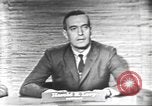
Kennedy and Nixon present their views about tax increments during a presidential election debate in Washington DC.
The second Kennedy-Nixon Presidential Debate in Washington DC, United States. Harold R. Levy of Newsday asks Democratic candidate Senator John F Kennedy about his recommendations to increase tax. Kennedy answers and states that in the present scenario tax increase is not desirable. He says that if it would be essential to U.S. security he would suggest a tax increase. He talks about his programs for economic growth, care for the aged, development of natural resources which would build the strength of the United States. He states that Americans can mobilize their economy and resources. Republican candidate U.S. Vice President Richard M Nixon comments on the increasing expenditures for defense, mutual security, economic and technical assistance. He says that he thinks it may be necessary to increase taxes to maintain a sound economy. He concludes and states that no president can add billions of dollars to his nations expenditures and not pay for it, after all the payment is made by peoples money.
CRITICALPAST.COM: About Us | Contact Us | FAQs - How to Order | License Agreement | My Account | My Lightboxes | Shopping Cart | Advanced Search | Featured Collections | Website Terms & Conditions | Privacy Policy ©2026 CriticalPast LLC.
License Agreement |
Terms & Conditions |
Privacy Policy
©2026 CriticalPast LLC.