


 Francais
 Deutsch
 Italiano
Refine Your Search
Nevada United States 1936 stock footage and images
- Showing 21865 to 21870 of 27294 results more
more Hide
Hide
Houston volunteers join military; a new cruiser ship USS Houston (CL-81) launched at a ceremony in Newport News Virginia
Scenes in Houston Texas as 1000 Houston Volunteers enlist in the military in World War 2 to avenge the loss of the USS Houston (CA-30) to the Japanese. They attend a swearing in ceremony in front of the marquee of the Loews State theater. Scene change to Newport News, Virginia as people gather for the launching of the new U.S. Navy cruiser ship USS Houston (CL-81). New cruiser launched at a colorful ceremony. Dignitaries on stand include the sponsor, Mrs. C. B. Hamill, who is seen hitting a bottle of champagne against the ship hull, and then it slides down the ways at launching.
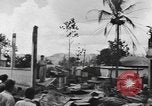
Devastation from Calimano Theater fire in Guayama, Puerto Rico, and rebuilding efforts.
Scene of several buildings including the Calimano Theater, wrecked due to a fire. Newspaper headline states that youth from the National Youth Administration (NYA) extinguished the fire at the Calimano Theater. Scene of fire fighters in Puerto Rico arriving on scene, hooking up fire hoses, and spraying water. A sign reads "National Youth Administration U.S. Coast Guard project". Young men at work reconstructing buildings. Scaffolding in front of a building and a man pulls a wheelbarrow behind him. Sign on building reads, "Departamento de Sanidad. Laboratorio Central de Rayos 'X' " (World War II period).

Various scenes of Puerto Rico. Views of churches in different settings. The University of Puerto Rico, buildings and library.
Opening scene shows a young girl with her hair blowing in a windy spot, and the dome of the Puerto Rican Capitol building visible behind her. Passengers ride in a wooden bodied station wagon, down a steep inclined street. As they pass a local policeman, their tailgate is seen to be filled with bananas and plantains. A large church complex tucked into a valley with hills in background. Another church halfway up a hill overlooking a town. A significant big city church with parishioners on its steps. An ancient historic-looking abandoned church building. Sign at a church reading: "St. John. Fire Baptized Holiness Church of God of the Americas." Another church sign (name of church not visible) stating: "Built 1882;" and announcing schedule of services. Cars driving past what may be a mosque. Cover of a book entitled: " Poesía Puertorriqueña." (Puerto Rican Poetry). Park-like setting of University of Puerto Rico, with a complex of buildings across the street, including the university clock tower. A girl paging through a large book. She pauses and laughs. A shelf of books in the university library, with titles including: Books of Leonardo da Vinci; Babes in the Darkling Wood by HG Wells; Abraham Lincoln, the War Years, by Carl Sandburg; and numerous other significant literary works. A newspaper boy runs past a girl on a sidewalk, carrying an armload of books.
Allied troops aboard ships and gliders head for Normandy, France for the D-day invasion during World War II.
Allied invasion of Normandy, France during World War II. U.S. General Joseph McNarney, Deputy Chief of Staff at a desk as he outlines the importance of June 6, 1944 the day Allied forces attacked the Germans in Normandy. He speaks about the decision to knock down the Nazis first and then the Japanese during the World War. He says that the invasion of Normandy was planned in November 1943. He also states how General Dwight D. Eisenhower, Supreme Commander of the Allied forces in Europe, planned and executed the invasion. He also speaks about how the U.S. Army Air Forces and the Royal Air Forces aircraft bombarded the coasts of Normandy prior to the D Day invasion. Past events show American soldiers getting onto landing crafts in England as they leave for the invasion. The soldiers aboard the ships in the English Channel. The soldiers read the Bible and comics, sleep and cook aboard the ships. On June 5th , 1944 the ships head towards Normandy for the invasion. In England gliders carrying paratroopers take off from an airfield to bombard the German positions in Normandy. British soldiers receive ration and work on motorbikes. TNT (trinitrotoluene) charges being prepared by soldiers tasked with demolition duties. British soldiers check their guns and other weapons prior to the invasion. Jeep and artillery being loaded onto aircraft.
Scenes of Rome, Italy, and American Army officers, during their stopover there, during World War II
Scenes of Rome and American Army officers on leave there during World War 2. Views including St Angelo Bridge and castle (Castel Sant'Angelo) at the Tiber River. People riding bicycles over the bridge. Statue of an angel, by sculptor Pieter Verschaffelt. St Peters Basilica and Square. Sign proclaiming neutral territory of the Vatican (in Italian and English). The sign reads ' Neutral state of Vatican. Admission of military vehicles not allowed.' A sign reads '322 service group'. U.S. Army officers, in uniform, pose as they smoke cigarettes, wearing overseas caps and smiling. An officer pretends to count money, posing in front of a sign in the background reading ' Finance office 322nd service group.' Unidentified U.S. Army officers smoking cigarettes and posing for photographs in front of flowering shrubs in Rome.
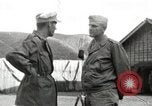
An American medical officer talks about the experiences at a Japanese prison camp in Honshu, Japan during World War II.
American prisoners of war being interviewed at a Japanese prison camp in Honshu, Japan after World War II. A U.S. officer interviews a medical officer who has been liberated from a Japanese prison camp. The medic says that he is from San Antonio, Texas. He talks about his early days. He says that he came to the Philippines on November 3, 1940. He discusses the difficulties faced by the medical officers at the prison camp. He narrates an incident where a soldier developed an infection in his foot and he lost nearly 20-30 kilos of weight. The medical officer also talks about the scarcity of medical supplies at the prison camp. He states that many men died due to malnutrition at the camp.
CRITICALPAST.COM: About Us | Contact Us | FAQs - How to Order | License Agreement | My Account | My Lightboxes | Shopping Cart | Advanced Search | Featured Collections | Website Terms & Conditions | Privacy Policy ©2026 CriticalPast LLC.
License Agreement |
Terms & Conditions |
Privacy Policy
©2026 CriticalPast LLC.