


 Francais
 Deutsch
 Italiano
Refine Your Search
Nevada United States 1936 stock footage and images
- Showing 26155 to 26160 of 27247 results more
more Hide
Hide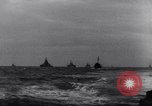
U.S. Army paratroopers board C-47 aircraft and take off to invade France on D-Day of World War 2
Allied ships in the English Channel, bound for Normandy. U.S. Army paratroopers board C-47 aircraft in England to launch the D-Day attack on France during World War II. Paratroopers with smeared camouflage on their faces and helmets board the planes. LIne of C-47 aircraft taking off. Aircraft in flight over the English Channel seen by allied ships at sea near dawn. Vapor trails visible on aircraft.
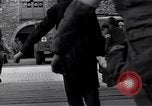
Wounded soldiers being unloaded at a dock in England
Heap of shoes, bedding and helmets at a dock in England as soldier packs them. Helmet filled with ammunition. Invasion convoy of military trucks moves away. Soldiers on deck of a ship. Wounded soldiers from invasion operation (D-Day) being unloaded at an English dock. (World War II period).
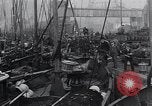
Thousands of pounds of Herring and Bloaters reach the East Coast in England
Thousands of pounds of Herring and Bloaters reach the East Coast in England. Fishermen put fishes in baskets as women carry them away. Fishes being filled into barrels.
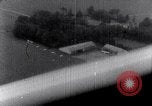
Demonstration of Pitcairn Model C-130 autogiro at Hanworth Air Park, UK
Air-to-ground footage of London Air Park (Hanworth aerodrome), showing hangars and Hanworth Park House in the centre of the grass airfield, plus surrounding houses and A312 Uxbridge Road. Pilot walks toward camera from Pitcairn Model C-130 autogiro G-ACIO. Pilot and others discuss the flight. Pilot poses next to the autogyro.
The use of RADAR by Allied forces throughout World War 2
Film made in 1946 recounts use of RADAR in World War 2. Air raid sirens sounding in London, England,1940, during Battle of Britain. Air raid warden helps people to shelters during blitz bombing run by German Luftwaffe aircraft. German He 111 bombers in formation overhead. Woman scoops up child. British gunners man a 3.7 inch antiaircraft gun. Farmer rides horse-drawn plow. RAF airman rings alert bell that reads: "Don't come and tell.Ring this like hell." RAF pilots scramble to their Spitfire fighter planes and take to the air from a British airbase or aerodrome. German He 111 bombers being intercepted.Wreckage of German bombers. Evening views of London. Prime Minister Winston Churchill contributing to a war drive and receiving a pin from a woman. He doffs or tips his hat. Technician using a slide rule. Early British radar antenna tower. A U.S. P-38 aircraft in flight. Animated diagrams explaining how radar works. Radar operators at their screens receiving radar transmissions. U.S. Army soldier operating antiaircraft radar in the field. Antiaircraft gun firing and downing an airplane. Artllerymen decorate gun barrel with symbols for enemy aircraft downed. A U.S. B-29 bomber in flight with bomb bays open. Bombardier with bomb sight having radar and optic options, using radar to sight target. Bombs away view of bombs falling from aircraft through clouds. A U.S. P-61 night fighter aircraft equipped with airborne radar. Hand of pilot of P-61 pressing button to fire on enemy aircraft at night. A C-47 transport aircraft flying in poor visibility makes a ground controlled approach and landing enabled by radar. A U.S. Navy F6F landing with radar help, on an aircraft carrier. A U.S. battleship. Sailors quickly get up from sleeping bunks responding to battle stations at night. Radar antenna rotating on a U.S. warship. Naval guns firing at night. U.S. heavy cruisers bombarding a shoreline. A submarine underway submerged. Navy ship tracking enemy submarine. Destroyer firing depth charges. A PBY Catalina flying over a convoy of ships.
British submersible nicknamed Sleeping Beauty is shown.
An OSS instructional film titled 'Sleeping Beauty' shows a British submersible nicknamed Sleeping Beauty, used for attack and reconnaissance. It is a Motorised Submersible Canoe (MSC) designed by Major Hugh Reeves. Cockpit, indicators and air pressure gauge of the submersible shown. Submersible's Pilot is wearing underwater suit with the help of a crew person. Pilot putting on breathing set and wearing underwater goggles. (World War II period).
CRITICALPAST.COM: About Us | Contact Us | FAQs - How to Order | License Agreement | My Account | My Lightboxes | Shopping Cart | Advanced Search | Featured Collections | Website Terms & Conditions | Privacy Policy ©2026 CriticalPast LLC.
License Agreement |
Terms & Conditions |
Privacy Policy
©2026 CriticalPast LLC.