


 Francais
 Deutsch
 Italiano
Refine Your Search
Nevada United States 1936 stock footage and images
- Showing 27025 to 27030 of 27248 results more
more Hide
Hide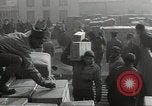
U.S. troops load supplies aboard LCM (Landing Craft Mechanized) at Plymouth harbor during World War II.
Loading supplies aboard U.S. LCM (Landing Craft Mechanized) at Plymouth harbor, England during World War II, as forces were amassing in England for the Operation Overlord D-Day invasion of France. U.S. troops load supplies aboard LCM. Loaded LCM pulls away. Other LCMs in the foreground.
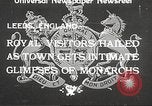
King George V and Queen Mary inspect the Town Hall and review the Life Guards in Leeds, England.
King George V and Queen Mary are welcomed from the residents of Leeds, England. King Geroge V and Queen Mary are seated in a horse-drawn carriage which drives past a crowd lined up on a street. King George V inspects the Town Hall and reviews the Life Guards. The King and the Queen pass in a horse-drawn carriage from the front of the Town Hall.
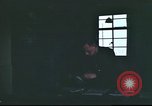
U.S. 8th Air Force activities at RAF Station Chelveston, England, in World War II
U.S. 8th Air Force B-17 Flying Fortress bombers in England during World War 2. Interiors of an operations building shows an operations officer making a call on a phone. Displayed on a board is a chart of the airfield, RAF Chelveston (USAAF Station 105) in Northamptonshire, England. Airmen inside the operations building measure distances on a large wall map. A tower operator fires a flash signal gun. British and American airmen stand on an observation platform and watch B-17s overhead, while several aircrew members sit in the grass below. A British airman on the platform holds a very pistol.
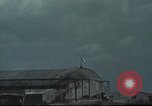
B-17s of the U.S. 91st Bomb Group, returning to their base at RAF Bassingbourn, England in World War II
B-17s of the U.S. 91st Bombardment Group, returning to their home base at RAF Station Bassingbourn following a bombing mission,in World War 2. B-17, tail number 41-24617, named "Southern Comfort," taxiing on outboard engines, only, after landing with a large chunk of its rudder shot away. Crew members and other airmen gather around the battle-damaged aircraft. Closeups of the damage to its rudder. Dim views of the B-17, "Memphis Belle," tail number 41-24485, with skin missing from wing exposing its internal ribs. It also has holes in its rudder and its nose. Closeup of a B-17 engine stained by fire-fighting foam. Other views of battle damage to a B-17.

Claude Monet's 'Terrasse a Sainte-Adresse' brings over one million dollars at a London art auction.
People gather at a Christie's art auction in London England. Claude Monet's 'Terrasse a Sainte-Adresse' (Garden at Sainte-Adresse) brings over one million dollars from Jeffrey Agnew at the auction. It was sold by Pennsylvania clergyman Theodore Pitcairn. Agnew and other men look at the painting following the auction.
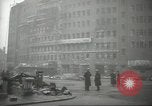
People view damaged BBC building and wrecked vehicles following bomb explosion in London, England in World War 2
War damage in London, England during World War II. Exterior of the British Broadcasting Company (BBC) building after a bomb explosion in the vicinity. Men view the damaged building. A burned and wrecked car belonging to a BBC announcer. Men standing outside a damaged building. A sign board on a wall of the building reads: 'Langham Hotel'. Two men remove rubble from in front of the hotel doorway.
CRITICALPAST.COM: About Us | Contact Us | FAQs - How to Order | License Agreement | My Account | My Lightboxes | Shopping Cart | Advanced Search | Featured Collections | Website Terms & Conditions | Privacy Policy ©2026 CriticalPast LLC.
License Agreement |
Terms & Conditions |
Privacy Policy
©2026 CriticalPast LLC.