


 Francais
 Deutsch
 Italiano
Refine Your Search
Nevada United States 1936 stock footage and images
- Showing 4111 to 4116 of 27250 results more
more Hide
Hide
In the United States, U.S. Army General George Catlett Marshall speaks about the contribution of the WAAC in World War II.
A film titled: 'We're in the army now' on the Women Army Auxiliary Corps (WAAC) in the United States. U.S. soldiers fighting the Japanese in the Pacific. Smoke from bombardment and firing. The soldiers advancing on a battlefield. U.S. Army General George Catlett Marshall seated at a desk in his office. He speaks about the contribution of the WAAC in World War II. A woman of the WAAC standing nearby.

Uniforms and shoes are issued to new recruits of the WAAC at a training center in the United States.
A film on the Women Army Auxiliary Corps (WAAC) in the United States, featuring women recruits of the Army during World War 2. A railroad train moving on a track toward camera, with smoke or steam billowing out locomotive stack. Animated map shows training centers of the WAAC. Women walking towards a center with their personal belongings. Some of the women coming out of vehicles. They talk amongst themselves. 'Reception Center' written outside a building. Their measurements are taken for shoes and uniforms. A doctor undertakes their physical examination. Aerial view of the camp. Women inside barracks. Women wearing uniforms and getting out of the barracks.
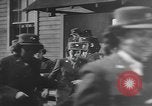
A sergeant corrects a recruit during a drill and demonstrates a salute during the training of the WAAC in the United States.
A film on the Women Army Auxiliary Corps (WAAC) in the United States. Women coming out of barracks. They arrive at a mess. Women seated at a table and eating food. They talk amongst themselves. Recruits standing on the ground and practicing drill. A sergeant corrects a recruit. She demonstrates a salute. The recruits march. Buildings in the background. Recreation activities for the recruits. The recruits in a cafeteria talking and enjoying. A mail call for them. Recruits in barracks talking about the last day of their training. A woman ironing her uniform.
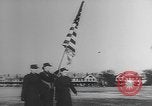
Women in the U.S.military in World War 2: Role of WAACs and review of their jobs after training period in the United States.
A film on the Women Army Auxiliary Corps (WAAC) in the United States during World War II. WAACs parade at the end of their training period. Officers review them. Recruits stand at attention and are ready to serve the army. An officer seated at his desk in an office. A woman stands nearby. A woman driving a jeep. Another woman repairs a jeep. The WAACs prepare food for soldiers. Animated map locates work areas of the women. A train passing on a railway track. Newly assigned WAACs arrive at their quarters. Ships in a harbor. The first WAAC detachment in North Africa. Clerical, technical and other types of work done by the WAACs. They work with soldiers. They draw military maps and charts. Group of African American women soldiers relieve African American male soldiers working as switchboard operators. Women are shown serving as dispatchers, as typists, developing film in photographic laboratories, serving as pigeoneers who handle carrier pigeons used in war communications, serving as radio operators, issuing clothing in quartermaster houses, working in post offices, fingerprinting, and collecting rations at a commissary. Female African American soldiers and and female white soldiers work at a motor pool. The WAACs marching.

American children watching a puppet show on television in the United States.
A documentary on the growth of television industry in the United States. Children watching television in a family living room. Telecast of several children shows on the television. Children watching a puppet show. Views of boys smiling and laughing as they enjoy a television show. Narrator extols the virtues of television for entertaining and educating children. Narrator notes that televisions are being used in classrooms in schools and that its uses for teachers are "limitless."
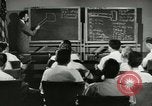
Students at the New York University learn the technical and creative aspects of television in the United States.
A documentary on the growth and opportunities in television industry in the United States. Students at the New York University listening to a classroom lecture on how television signals are transmitted and received. Professor instructs the college students on the technical aspects of television, including an iconoscope. A class at NYU conducted in tandem with a local televsion studio briefs students interested in the creative side of television. Studio equipment is demonstrated including lights, microphone boom stands, and television cameras The equipment and the method of production and recordings are demonstrated. 'WPIX television' written on cameras. Students are coached in using the equipment, while other students prepare to stage a play for television that was written by one of the students. The director meeting with the student actors. Views of the play being filmed for television. Men working on television studio transmission equipment.
CRITICALPAST.COM: About Us | Contact Us | FAQs - How to Order | License Agreement | My Account | My Lightboxes | Shopping Cart | Advanced Search | Featured Collections | Website Terms & Conditions | Privacy Policy ©2026 CriticalPast LLC.
License Agreement |
Terms & Conditions |
Privacy Policy
©2026 CriticalPast LLC.