


 Francais
 Deutsch
 Italiano
Refine Your Search
New Mexico United States 1946 stock footage and images
- Showing 7597 to 7602 of 30777 results more
more Hide
Hide
Soviet foreign minister meets Secretary Dulles at his residence in Washington D.C., United States.
Soviet Foreign Minister Gromyko in Washington D.C., United States. Reporters gathered outside United States Secretary of State John Foster Dulles's house in Washington D.C., United States. Soviet Foreign Minister Gromyko arrives for a meeting with the Secretary. Gromyko and Secretary Dulles come out of the house after the meeting.
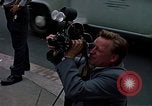
Soviet Premier Khrushchev visits the research center of United States department of agriculture in Washington D.C.
Soviet Premier Nikita Khrushchev visits Washington D.C., United States. Mrs. Khrushchev with the first Lady of United States at the White House. Soviet Premier Nikita Khrushchev with President Dwight D. Eisenhower at a state dinner. The two statesmen pose along with their wives. Premier Khrushchev makes an appearance outside the President's guest house as photographers take pictures. Khrushchev visits Research center of United States department of agriculture as U.S. Secretary of Agriculture Ezra Taft Benson welcomes him. A scientist gives demonstrations to the Premier about the weed killers, growth regulating chemicals. Premier Khrushchev visits a dairy area and looks at the cattle and turkeys. An official presents a turkey to the Soviet Premier.

President Richard Nixon delivers "Nixon Shock" speech dealing with the economic crisis in the United States.
President Richard Nixon gives a speech on the economy from the White House in the United States. Nixon addresses the nation on the need to create more jobs, stop the rise in the cost of living, control price inflation, relieve economic stagnation, and control speculation. He announces the Job Development Act of 1971. He talks of eliminating excise taxes on automobiles and speeding up availability of some exemptions in personal income taxes. He charges Congress to introduce incentives for research and development. He orders federal spending cuts including a postponement of pay raises, a 5 percent cut in government personnel, and a 10 percent cut in foreign economic aid. He notes need to open ways for the young people entering job markets. Nixon orders a freeze on all prices and all wages in the United States for 90 days, and he calls on corporations to extend the freeze to dividends. He announces a Cost of Living committee within the government. He calls for voluntary cooperation of all Americans to control price increases after the 90 day period ends. He talks of the need to protect the strength of the American dollar and prevent international money speculation. He announces that the dollar will be defended. He announces the suspension of the convertibility of the dollar to gold, except in certain circumstances. (Later this speech was called the Nixon Shock and also the speech closing the gold window.) He says he wants to "lay to rest the bugaboo of what is called devaluation." He states the goal is stability in the dollar. Regarding trade balances, he announces a temporary 10 percent tax increase on goods imported into the United States, valid until unfair exchange rates are eliminated. He reflects on success of post World War 2 relief measures offered by the U.S. to foreign countries, increased competition with those nations, and need for less U.S. relief to them. He asks the public of America to work together to crush unemployment and economic problems.
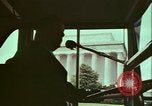
A city tour bus driver speaking about the Lincoln Memorial in Washington DC, United States.
A city tour bus in Washington DC, United States. The city tour bus driving in front of the Lincoln Memorial (2 Lincoln Memorial Cir NW, Washington, DC 20002, United States). The driver of the bus speaks into a microphone fitted on a rod beside the steering wheel. The driver says that the Lincoln Memorial had 36 columns to represent the 36 States of the United States during the Presidency of Abraham Lincoln.
United States soldiers shop at 25th Infantry Division Base Camp in Vietnam.
United States soldier enters shopping area at 25th Infantry Division Base Camp in Vietnam. Board reads 'Entrance'. Vietnamese salesman shows glasses to United States soldier. Board of 'Kwang Hak Opltical'. Soldiers cash check at the cash counter. United States soldiers look through magazines inside officer's club. Soldiers pay for purchased items at the cash counter. Vietnamese women fill the purchased goods into paper bags. United Sates soldiers leave the room. (Vietnam War period).
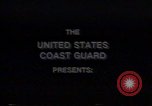
United States Coast Guard arrive for Operation Shield in Saudi Arabia
'In to the Gulf ' Highlights the role of United States Coast Guard in Operation Shield in Saudi Arabia. A boat underway at sea and seagulls fly. Planes land and United States Coast Guard units arrive for Operation Shield. A map of Saudi Arabia shows the places of arrival of American Coast Guards. Men look at a map and plan the strategy for the operation. Soldiers practice at a firing range. Men dressed in combat uniforms with gas masks. Coast Guards look after operation load out in United States to ensure security of material going out of port. Captain Paul Ibsen, Load out Coordinator explains the importance of load out operations. FS1 Rich Whitney moves about on board a vessel and looks at loaded materials.
CRITICALPAST.COM: About Us | Contact Us | FAQs - How to Order | License Agreement | My Account | My Lightboxes | Shopping Cart | Advanced Search | Featured Collections | Website Terms & Conditions | Privacy Policy ©2026 CriticalPast LLC.
License Agreement |
Terms & Conditions |
Privacy Policy
©2026 CriticalPast LLC.