


 Francais
 Deutsch
 Italiano
Refine Your Search
New Mexico United States 1946 stock footage and images
- Showing 1987 to 1992 of 30776 results more
more Hide
Hide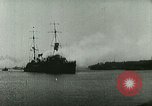
Charles Lindbergh feted in Washington, DC and New York City, upon return to U.S. after his historic transatlantic flight
American aviator Charles A. Lindbergh arrives aboard USS Memphis (CL-13) at the Washington Navy Yard, Washington D.C. upon his return from Europe to the United States following his pioneering trans-Atlantic solo aircraft flight. He comes down the gangplank and is greeted by a phalanx of officials. They drive Lindbergh away in an open car. Two days later, June 13, 1927, the scene shifts to New York harbor, where there is a virtual traffic jam of ships and boats of all sizes and shapes, assembled to greet Lindbergh. Fireboats salute with streams of water as Lindberg arrives (as backseat passenger) in a seaplane from Mitchel Field on Long Island. The seaplane is seen flying over the harbor,and descending to land. The seaplane is seen in the water amongst the flotilla of vessels, as. Lindbergh is picked up by a police launch that takes him to the ship Macom, where he is helped aboard by passengers. (He almost falls into the water while stepping from the launch to the ship.) Lindbergh waves from the deck of the Macom, as they proceed in a parade of vessels toward a Manhattan pier. Upon arriving, Lindbergh is hustled into an open car and driven away surrounded by New york City policemen,including mounted police, who escort the car through mobs of spectators. Police form lines to hold back enthusiastic admirers. The car proceeds along a city street where cheering spectators jam the sidewalks and office workers create a virtual storm of ticker tape and confetti from their windows high above the street.

Early 1900s car traffic on streets of New York City; car usage in America versus rest of world
Demand of Automobile in the United States. Shows a photograph (ca. 1900) of a policeman ordering a horseless carriage off New York City streets. Picture of men on horseless carriage and on bicycles. Views of traffic of 1910's and 1920's cars and other vehicles on busy, traffic filled streets of New York City, as a police officer directs traffic between the lanes of automobiles. Figure shows that out of 26 million of automobiles, 77% is in the U.S. and 23% in rest of the world.
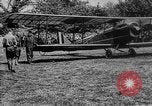
Woodrow Wilson and Mrs. Wilson inspect an airmail airplane as service is opened between Washington and New York, U.S.
U.S. President Woodrow Wilson inaugurates airmail service as it commences in the U.S. A Curtis JN-4 airmail airplane parked on the Polo field, in Washington, DC.. Van of United States Air Mail Service arrives. Mail is loaded into the airplane. Pilots Lieutenant George L. Boyle and Major Reuben H. Fleet standing beside the airplane conferring over a map. U.S. President Woodrow Wilson, Mrs. Wilson, and Post-master General Albert Sidney Burleson inspect the airmail airplane that will carry mail to New York. . A man shows first official piece of airmail. He and his wife greets pilot. Wilson talks with pilot Major Reuben H. Fleet . Pilot George L. Boyle gets into airplane. Airplane takes off. Airmail airplane piloted by lieutenant Webb leaves New York from Belmont Park and takes off. The airplane stops at Philadelphia to pick up more mail. Mail is loaded into the airplane. The airplane takes off. It arrives in Washington. Mail is unloaded from the airplane. Pilot gets out of the airplane.
New U.S. infantrymen learn to fire rifles, make trenches and advance on a battlefield, in preparation for going to war in France
Training of U.S. Army infantrymen in the United States. A newspaper headline reads ' infantrymen arrive in France'. The infantrymen are taught to advance on a battlefield. Recruits in New York's Rainbow Division are seen marching in the mud, at Camp Mills, Long Island, They undergo physical training at the camp. They learn to fire rifles and dig trenches. They inhabit a tent city at the camp. Scenes of Rainbow Division soldiers on a chow line at Camp Mills. After basic training, the soldiers board ships and trains for France. Loved ones give them a sendoff. Upon arrival in France, they are given a warm welcome.They resume training in France, until they are ordered to the Front. Scenes of U.S. infantry in trenches wearing gas masks and firing rifles. Tanks advancing across the trenches. View of the 7th Regiment World War I memorial statue in Central Park, New York City.
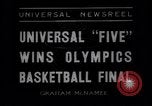
Universal Pictures beats McPherson Globe Refiners in basketball to win Olympics final in New York City
A newsreel titled "Universal five wins Olympics basketball final" shows a game between the company team from Universal Pictures and the McPherson Globe Refiners from Globe Oil and Refining Co. of McPherson, Kansas. The McPherson team is sometimes also referred to as the Oilers, or the Refiners. The teams are seen playing in the Olympics Qualifying basketball final in New York's Madison Square Garden. People cheer the two teams. Universal defeats the McPherson Globe Refiners to win the Olympics final. The win entitled the Universal Pictures team to name 7 players to the Olympic basketball team representing the United States in the 1936 Olympics held in Berlin Germany, and McPherson Globe Refiners was able to name 6 players to the team. These two teams beat out five U.S. college teams to earn the spots in the final and determine the makeup of the U.S. Olympic Basketball team. Players in the game in this video clip include Globe Refiners forward Francis Johnson, Centers Willard Schmidt and Joe Fortenberry, and Universal forward Carl Knowles. Universal beat the Globe Refiners by a score of 44 to 43. According to a Time Magazine article of April 13, 1936, the Globe Oil & Refining team, "...have perfected a technique called dunking with which they score by jumping up above the basket, dropping the ball into it." This may be one of the earliest references to dunking, now a staple technique in basketball. The same Time article further stated of the Oilers, "On the defense, they prevent opponents from scoring by batting the ball out of the basket." Again, the Globe Refiners were demonstrating play that later became standard in modern basketball. The idea for the Globe Refiners was a company promotion scheme, thought up in 1934 by Gene Johnson, the Sales Manager of Globe Oil who had several years experience coaching basketball. The Olympic team also included Washington State Huskey player Ralph Bishop. The USA went on to win the gold, defeating Canada 19-8.
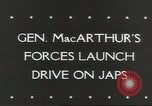
Allied air attack on Japanese positions in New Guinea during World War II
'General MacArthur's forces launch drive on Japanese forces in New Guinea, during World War 2. Allied war equipment including airplanes unloaded at an Australian port. United States B-24, B-17 bombers launch an air attack on Japanese positions in New Guinea. Bombs dropped and cause an impact. Air gunner in one of the bombers looks down at impacting bombs.
CRITICALPAST.COM: About Us | Contact Us | FAQs - How to Order | License Agreement | My Account | My Lightboxes | Shopping Cart | Advanced Search | Featured Collections | Website Terms & Conditions | Privacy Policy ©2026 CriticalPast LLC.
License Agreement |
Terms & Conditions |
Privacy Policy
©2026 CriticalPast LLC.