


 Francais
 Deutsch
 Italiano
Refine Your Search
New Mexico United States 1946 stock footage and images
- Showing 20749 to 20754 of 30775 results more
more Hide
Hide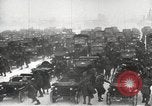
African American U.S. cavalry and infantry units on snow covered training battlefield and in war exercises during World War 2
Activities of U.S. African American soldiers training stateside for battle during World War 2. Soldiers aboard jeeps and trucks driving past on a training battlefield. A snow covered area with U.S. Army soldiers in many tanks, trucks, and a M3 Gun Motor Carriage (tank destroyer) advancing in the snow. The soldiers stand near artillery lined up on the battlefield. They load and fire artillery. Tanks advance on the battlefield. Smoke rises due to firing. Engineers building a pontoon bridge over a river. Cavalry units advance on the battlefield. Trees in the background. African American troops advancing against targets in a mix of M3 half tracks APC and M3 Gun Motor Carriage Tank Destroyers. The soldiers fire an anti-aircraft artillery. African American U.S. Army Infantry units lying in prone position fire rifles and guns on the battlefield.

Horses in the Kirghiz Steppes of the USSR being moved to their winter quarters.
Hundreds of horses are seen being herded by Kyrgyz horsemen, inhabitants of the Kirghiz (Kyrgyz) Soviet Socialist Republic (formerly known as Kirghizia). The horses are being moved from summer quarters in the mountains to winter quarters. Closeup of horses and a famous breeder who is also a member of the Kirghiz parliament. He is in charge of the annual drive of horses to their winter quarters. Horses moving as a herd across mountainous land and later being escorted singly, by men on horseback, along a tree-lined trail. Narrator states these horses are generally a cross between Kirghiz breeds and English purebloods, and have won many races on Soviet racetracks. Next, men are seen riding their horses into Lake Issyk-Kul for a bath. They ride out again and across the sandy shore. Mountains are visible in the background. The final scene shows horses in their winter quarters stalls.
Ukrainians and Belorussians, who fled to France to escape poor treatment under Polish domination, return home after 20 years.
The Soviet ship Vyacheslav Molotov is seen, docked at the French port of Le Havre. A crane raises cargo onto the ship. Ukrainian and Belorussian passengers stand on the pier, ready to board the ship that will take them to their former hometowns. One woman walks up the gangplank with a flag and a carryall displaying the image of Joseph stalin. On the pier, French Army officers process the embarking passengers, as a Soviet Army officer stands nearby. Closeup of documents being stamped. (Narrator states that these refugees fled their homes for France, 20 years earlier, when they were under the domination of Poland.) The Soviet officer encouraging passengers up the gangplank. View from high on the ship, of passengers clustered around the processing station. Camera pans up to the ship's funnel, where Soviet hammer and sicle is displayed. View from behind people waving on the dock, of the passengers lining the railing of the ship, waving goodbye as the ship slowly begins to move forward and then is seen underway. Scene fades to reopen showing the ship in waters of the Black Sea approaching the port of Odessa, Ukraine. Buildings seen upon cliffs overlooking the port. Several views of the passengers assembled on deck looking toward shore. Closeups of passengers and their flags. A Ukrainian woman gives a speech about her joy at homecoming. Other passengers applaud. A man holds up a homemade sign reading (in Russian) "LONG LIVE SOVIET-HOMELAND I-EE-GOVERNMENT." Passengers disembarking down the gangplank, carrying flags and riding in open small trucks away from the ship.
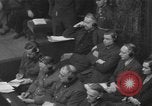
Prisoners seated in a prisoner's dock as the Nuremberg Trials proceed in Germany.
The Nuremberg Trials in Germany after World War II. American lawyer Telford Taylor while speaking about Rostock, Handloser and Schroeder states that they held eminent position in international medicine. Backgrounds of some of the other defendants are also given. Defendants in a dock as Taylor's voice is heard reading the indictment. Defendants Brandt, Handloser, Rostock, Schroeder, Rose, Ruff, Brock, Romberg, Backer-Frysing and Weltz speaking to their lawyers during a recess. Herta Oberhauser leaves the courtroom. Cameramen with cameras.
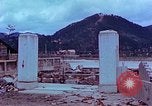
Damaged granite columns in Hiroshima, Japan.
A survey of physical damage of bomb blasts in Hiroshima, Japan after World War II. Two granite columns on each side of an entrance. The displaced columns. The base of a granite column shows the extent and direction of displacement. A shattered wall in the background. Two granite columns felled by a blast. Two granite columns in a state of collapse in the background.
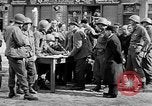
U.S. soldiers interact with German civilians in Munich during occupation of Germany after World War II.
Training film for U.S. soldiers during occupation of Germany after World War 2, guiding them on their role of "reeducation" and restoring normal life to civilians in Germany after World War II. U.S. soldiers seated and Germans standing around them talking to the solders. A German MG Police officer outside a building. A German police officer monitors citizens in a line. Germans talk to U.S. soldiers outside the Office of Military Government for Bavaria, in Munich. The U.S. soldier reviews their identification papers and questions them. German children at play. A smiling American soldier seated with a group of young German children around him. A group of German boys plays baseball on the lawn in front of the largely destroyed Altes Armeemuseum in Munich (later home to the Bayerische Staatskanzlei or Bavarian State Chancellery) in Greek architectural style with six prominent ionic columns. A U.S. soldier talks to German civilians. Soldiers talking with German men , women and children. A soldier frisks men and women entering a secure area. German police grab and restrain a German citizen for some offense and escort him away. Young children seated and learning at an outdoor class. The children standing and smiling.
CRITICALPAST.COM: About Us | Contact Us | FAQs - How to Order | License Agreement | My Account | My Lightboxes | Shopping Cart | Advanced Search | Featured Collections | Website Terms & Conditions | Privacy Policy ©2026 CriticalPast LLC.
License Agreement |
Terms & Conditions |
Privacy Policy
©2026 CriticalPast LLC.