


 Francais
 Deutsch
 Italiano
Refine Your Search
New Mexico United States 1946 stock footage and images
- Showing 211 to 216 of 30772 results more
more Hide
Hide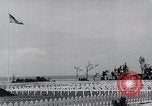
U.S. Army aircraft bombing raids on Japanese cities in 1945, and atomic bomb explosion in World War 2.
Air raids and battle in Japan in the Pacific Theater near the end of World War II. A cemetery of United States military soldiers in the Japanese island of Okinawa. Memorial at the tombstone of Ernie Pyle built by the 77th Infantry Division of the U.S. Army. General Doolittle, General Henry Arnold, General George Kenney, General Ennis Whitehead and other officers during a discussion standing before planes at the 48th Air Force base. B-29 aircraft advances towards Tokyo. Bomber aircraft dropping of a number of guided bombs towards their targets. Targets include Japanese airplane factories, shipping industry, military supply chains in the cities of Tokyo, Nagasaki, Nagoya, Okinawa and Yokohama of Japan. Explosion and smoke arises from bombed targets on ground. Aerial wide and close up views of a B-29 aircraft in flight. Narrator notes that on 05 August 1945, Enola Gay, a B-29, carries the atomic bomb and flies towards Hiroshima. Atomic explosion seen signifying the one in Hiroshima on August 6, 1945, but narrator indicates the image seen is that of the first atomic explosion (the Trinity test) during on July 16, 1945 in New Mexico. Immense cloud of smoke and light. This atomic explosion, the first of two, was pivotal in compelling Japan to surrender unconditionally. Film ending includes public service announcement image "Buy Bonds. Hold Them. Victory Loan."
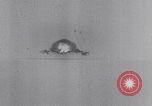
Surrender of Japan, ending World War II; imprisoned Japanese officials; German concentration camp scenes
View of first atomic explosion (Trinity) on July 16, 1945, at New Mexico, United States. View of the battleship, USS Missouri, in Tokyo Bay, Japan, with entire ship's company on deck in dress whites, Japanese military high command and several formally dressed Japanese diplomats standing on the ship's deck. Brief closeup of General Douglas MacArthur. Japanese foreign minister, Mamoru Shigemitsu, bending to sign the instrument of surrender ending World War 2, on September 2, 1945. Supreme Commander, General Douglas MacArthur, seated, signing the document. Lieutenant General Jonathan M. Wainwright and British Lieutenant-General Arthur Ernest Percival stand behind MacArthur. General Hsu Yung-chang signs for China. View of sailors observing the historic moment from every possible place aboard the ship. Large numbers of aircraft flying over the ship. Scene shifts in flashback to Manila, Philippines, where dead bodies of civilians litter the streets in silent witness of Japanese wartime atrocities. Some have hands tied behind their backs. Views of destitute Filipino mothers and children wandering through the rubble. A sign identifies the 98th Evacuation Hospital. Inside, a doctor and a nurse stand over the bed of Japanese Prime Minister, Hideki Tōjō, who attempted suicide by pistol, when apprehended, but was taken for treatment and is seen resting in his bed. View of Japanese Adrmiral Shigetarō Shimada, Minister of the Navy, behind bars in prison. Also seen in prison are Japanese general of the Japanese Imperial Army and Governor-General of the Philippines, Shigenori Kuroda;. General Masaharu Homma; and militarist Colonel Kingoro Hashimoto. Scene shifts to bodies of numerous victims of German death camps. American Army medics attend to some survivors rescued from the camps.
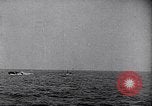
Scenes of warfare using American technology, including submarines, aircraft bombing of London, atomic bomb use in Japan
Training regarding relief and rebuilding works in Germany and Japan by United States Army, after World War II. Narrator discussing adoption of American inventions during the war that were used against America and allies. Sketch of an early American submarine design, followed by view of German U-boats operating under sea, firing torpedoes and target ship is destroyed. Footage of Wright brothers with an early Wright Brothers airplane invention, as they prepare it for a flight. This is followed by a view of London burning after aerial blitz raids by German aircraft during World War 2. View of atomic bomb explosion over Japanese city of Nagasaki and mushroom cloud seen from the air. Also view of Trinity blast in New Mexico - the first U.S. atomic test. The atomic cloud rises high and vast in the sky. Narrator warning against the perils of a third world war.

Men on horseback with pack horses move on mountain trail and Continental Divide from Pikes Peak, Colorado.
Landscapes in the United States. Animated map shows: tourist places in Montana,Idaho, Wyoming, Utah, Colorado,and New Mexico. Men on horseback as pack of horses move on a mountain trail. View of Continental Divide from Pikes Peak.
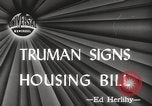
United States President Harry Truman signs housing bill in Washington D.C . that will help provide homes for the homeless.
United States President Harry S. Truman signs Housing Bill in Washington D.C., United States. President seated at desk as he signs the the Veterans Emergency Housing Act of 1946, during a housing shortage for veteran soldiers and their families after World War 2. Officials stand behind him at the White House. President Truman signs the bill that will help provide homes for the homeless. He speeds authorization of $250,000,000 for emergency homes.
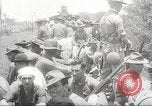
United States Army troops drill with rifles and pistols at a training camp in preparation for mission to Veracruz, Mexico
U.S. Army soldiers arrive at a training encampment by train. Soldiers in training each firing a pistol at targets on an open field. Groups of soldiers prone in a line firing rifles, then running across a field. The troops mount a wall obstacle. Again they lie prone and fire across a field. The troops are in training for mission to Veracruz Mexico following the Tampico Affair.
CRITICALPAST.COM: About Us | Contact Us | FAQs - How to Order | License Agreement | My Account | My Lightboxes | Shopping Cart | Advanced Search | Featured Collections | Website Terms & Conditions | Privacy Policy ©2026 CriticalPast LLC.
License Agreement |
Terms & Conditions |
Privacy Policy
©2026 CriticalPast LLC.