


 Francais
 Deutsch
 Italiano
Refine Your Search
New Mexico United States 1946 stock footage and images
- Showing 2623 to 2628 of 30776 results more
more Hide
Hide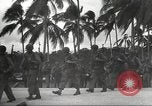
U.S. amphibious forces underway in the Pacific Ocean from Guadalcanal to invade New Georgia during World War II.
Amphibious forces of United States Army leave Guadalcanal harbor to attack enemy positions on the Solomon Islands during World War II. U.S. troops and equipment are loaded aboard LCIs (Landing Craft Infantry). Marines and infantry board the LCIs. Landing crafts loaded with troops head for an LST (Landing Ship Tank) anchored at Guadalcanal harbor. Amphibious forces underway in the Pacific Ocean head for New Georgia on the Solomon Islands. Soldiers look through binoculars. U.S. Army Air Force fighter aircraft in the sky. .
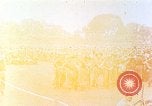
American, Australian, New Zealand and Chinese troops participate in victory parade in Rangoon, Burma.
Allied troops participate in a victory parade in Rangoon, Burma towards the end of World War II. The troops of the United States, British forces of Australia, New Zealand and China are gathered on a grassy field. They stand in formation and parade on the field. An artillery gun is fired in honor. Dignitaries review the parade.
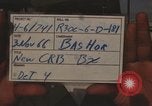
Long line of U.S. military personnel waiting in line to buy items from the Base Exchange at New Cam Ranh Bay in Vietnam.
Opening day of New Cam Ranh Bay Base Exchange in Vietnam. Long line of United States military personnel waiting in line to buy items from the Base Exchange. Vehicles drive past the queue of soldiers. (Vietnam War period).
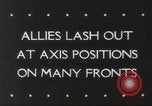
U.S. troops land at Attu Island, Aleutian Islands and the Australians bombard Japanese positions in New Guinea.
Allied campaign against the Japanese during World War II. United States troops loaded in landing crafts head towards Attu Island, Aleutian Islands. Naval guns aboard ships fire at Japanese positions on the coast. Soldiers land and wade through water amidst heavy firing. Royal Australian aircraft take off from an airstrip in New Guinea to bombard Japanese positions on the island. The aircraft in flight as they drop bombs. Explosions occur. A pilot in a cockpit as Japanese positions are being bombarded.
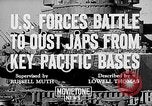
U.S. troops advance and USAAF B-24 Liberators drop bombs on Japanese positions in Indonesia during the New Guinea campaign.
The New Guinea campaign during World War II. A heavy cruiser underway at sea. Anti aircraft guns fired at the cruiser from a U.S. Navy battleship. U.S. Marines holding guns. The Marines fire at the cruiser. U.S. soldiers on a ship. U.S. Navy LCPs (Landing Craft, Personnel) move towards a beach. Marines aboard an LCP. The Marines holding guns get down from the LCP and move onto the beach. Marines from a U.S. Navy LCI (Landing Craft, Infantry) on the beach. An army truck driving down the ramp of a U.S. Navy LST (Landing Ship, Tank) onto the beach.The LST half immersed in water. An army jeep driven on a muddy road, soldiers on either side. A few soldiers wading through a stream with their hands raised to hold their guns. A soldier wades through the stream holding two ammunition boxes on his shoulders. Guns fired from a tank. Soldiers with rifles walk through bushes. An M4 Sherman tank moving in a wooded region. Combat infantrymen follow the tank. Two tanks fire into the wooded region. A group of soldiers wade through tropical grass. Three soldiers load projectiles into a 75mm mortar. Soldiers look at a Japanese field gun. Dead Japanese soldiers lying beside the gun. American soldiers observe a wrecked Imperial Japanese Navy Air Service fighter aircraft A6M Zero. LCPs move towards a beach. Soldiers man a 30 caliber machine gun aboard a LCP. The LCPs approach the beach and the soldiers advance across the beach into the wooded area. Several more LCPs arrive. A United States Army Air Force B-24 Liberator takes off from an airfield. Several bomber aircraft in flight. Bombs dropped from the bomb bay of an aircraft on Japanese positions. Explosions occur and smoke rises. Explosions on areas along a coast line. Thick smoke rises from the bombed areas.
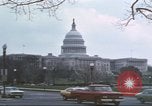
Men work with news ticker tapes in a newsroom at the American Forces Radio and Television Station in Washington DC, U.S.
American Forces Radio and Television Station facility in Washington DC, United States. The U.S. Capitol. Traffic on streets. A man sorts and checks news ticker tapes. Rolls of ticker tape emitting from a printing machine and growing in large coil piles. Another man feeds the ticker tapes in a teletype in a newsroom at the American Forces Radio and Television Station.
CRITICALPAST.COM: About Us | Contact Us | FAQs - How to Order | License Agreement | My Account | My Lightboxes | Shopping Cart | Advanced Search | Featured Collections | Website Terms & Conditions | Privacy Policy ©2026 CriticalPast LLC.
License Agreement |
Terms & Conditions |
Privacy Policy
©2026 CriticalPast LLC.