


 Francais
 Deutsch
 Italiano
Refine Your Search
New Mexico United States 1946 stock footage and images
- Showing 2689 to 2694 of 30776 results more
more Hide
Hide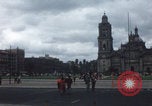
Traffic near the Zócalo, the main plaza of Mexico City. Scenes of busy streets in Mexico City
View of the Zócalo, the main square of Mexico City, and the Mexico City Cathedral from across the street (Plaza de la Constitución S/N, Centro Histórico de la Cdad. de México, Centro, Cuauhtémoc, 06000 Ciudad de México, CDMX, Mexico). Midcentury cars and a streetcar pass by the street of the Zócalo. View of Mexico City Cathedral Tower. View of busy street in Mexico City, possibly in the Condesa tourist district. Entrance to a park, possibly the Parque España, can be seen. A shopping street in Mexico City with people and buses. Two Mexican women walking briefly look behind at the camera.

Plants of Reed near Lerma River, Mexico City in Mexico.
Mexican Indians use reed and palm to make objects of everyday use in Mexico. Reed plants along Lerma River in Mexico. Map shows Mexico and Rio Grane. Mexico City in map. Location of Lerma River near Mexico City. Reed plants growth near by river. Men stand in water and cut plants. Man pushes bundle of Reed over water.
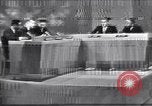
Correspondents question and talk to Dr. Martin Luther King about Kennedy's assassination and its effects on American politics.
A Press Conference with civil rights leader Dr Martin Luther King, Jr. in the United States. Correspondents include UN correspondent for the Ghana News Agency George Enninful, Mr Parshuram of the Indian Express and William Workman. They question and talk to African American clergyman and activist Dr. Martin Luther King, Jr. They discuss American politics, the Radicals and Democrats, the late President John F Kennedy, the American constitution and legislation.
V-mail procedures including cutting, microfilming, transport, photographic enlargement, and processing during WWII.
The use of V-mail (Victory Mail) by the United States during World War II. V-mail procedures including cutting, microfilming, transport, photographic enlargement, and processing of V-mail letters and post. A poster promoting the use of V-mail. Women in a line at a post office. The post office staff at counter windows serves the customers. A woman collects a V-mail letter, writes her message and then addresses the letter. The preferred use of a softer pencil in V-mails. Cutting: Specially trained soldiers unpack the V-mails and use a cutting machine to open each mail. Processing: The experienced staff sorts mails into the respective destination groups at sorting tables. Soldiers open mails to photograph them. A soldier sorts mail that can't be photographed and are to be sent back. These mails include stamps, enclosures, snapshots and bad writing. The correct mails are then sorted into given numbers in bundles. Microfilming: Women use Airgraph machines to photograph each mail on 16mm films. 1600 mails on 100 feet of film. The complete reels are sent for developing. Women put in new reels of negatives into the cameras. Developers dry the film reels. Stacks of reels on a table containing images of thousands of letters. Soldiers packing and stacking many hundreds of sacks filled with V-mail letter microfilm images. A Boeing 314 Pan American Clipper flying boat sea plane (military designation C-98) is seen taking off to transport V-mail to major destination points. A bag of microfilm reels is delivered to an officer. He unpacks the reels and sends them to the printing room. Enlargement: Enlargement machines are used to enlarge the snapshots. Men and women operate the printing machines. Soldiers with the printed facsimiles on tables. Processing: Women slice the prints into separate letters. Machines used to insert facsimiles into V-mail envelopes and seal them. The mails are then sent to the exact destinations by ordinary post. Soldiers gather around as a comrade distributes mail at a U.S. military base in the combat area.
U.S. Army Air forces pilots learn about the Republic P-47 Thunderbolt airplane
From a U.S. Army Air Force Training film, "How to Fly the P-47. Pilot Familiarization." United States pilot seated on table writes a postcard to his mother, "Mrs D.Q. Hopkins. 1024 Clay Avenue, Pelham, New York" Board in the background with 'Daily Assignment of today' written on it. Scene shifts to forward view from cockpit of a Republic P-47 aircraft flying low over the flight line at an Air Base. Momentary glimpse of the pilot and his post card in the office. Back again, to forward view from cockpit of a P-47, but this time it is on final approach to the runway. Scene shifts to ground view of a P-47 landing. It taxis to the ramp and parks. The crew chief stands on the wing as the pilot completes and signs the aircraft's Form 1 (record of any problems). Five pilots walk past the flight line. The pilot, wearing a seat pack parachute, climbs down from the cockpit. The five pilots, seen earlier, approach, and one introduces them to the P-47 pilot (Captain Hopkins). They are Lieutenants assigned to his training flight. He greets them and shakes hands with all. The group ask questions about the P-47. Then they all go to the pilots room. As Captain Hopkins takes off his flight gear he tells them the P-47 is designed to operate at high altitude. He describes the P-47, referencing a large illustration of it on the wall. (World War II; WW II; World War 2; World War Two)
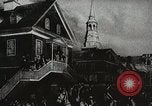
Sketches of the Boston tea party and unrest among American colonists
Sketches of struggle for borders and territory between Canada and United States. Leaders of American colonists like Patrick Henry protesting taxation without representation. British guards protecting paper. Burning of paper used for taxation. Images of traders from New York area who made great wealth trading overseas. Fire on British ships. Sketches of the Boston tea party with colonists disguised as Indians hurling tea into the harbor. Sketches of former British Prime Minister William Pitt and Lord North shown debating in Britain. With commentary and narration by J. Frank Willis.
CRITICALPAST.COM: About Us | Contact Us | FAQs - How to Order | License Agreement | My Account | My Lightboxes | Shopping Cart | Advanced Search | Featured Collections | Website Terms & Conditions | Privacy Policy ©2026 CriticalPast LLC.
License Agreement |
Terms & Conditions |
Privacy Policy
©2026 CriticalPast LLC.