


 Francais
 Deutsch
 Italiano
Refine Your Search
Norway 1941 stock footage and images
- Showing 325 to 330 of 1737 results more
more Hide
Hide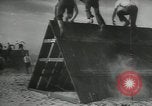
Training of American draftees before World War II; also Japanese attack on Pearl Harbor and Roosevelt's request for declaration of war.
United States soldiers and new recruits at a camp in the U.S. before outbreak of World War II. New recruits and U.S. Army soldiers in training run obstacle course. Soldiers in their uniforms march through the camp area. Tents in the background. Newly drafted U.S Army soldiers learn to fire weapons on firing range using artificial wooden rifles. U.S. soldiers seen training with wooden replica machine guns and using empty Adelphi beer cans as substitute artillery ammunition for training purposes. Teams of soldiers compete in moving a giant ball. They compete in blindfolded boxing on their knees. Lacking adequate war materiel for training, they make do by pretending that trucks are tanks and labeling them with such signs. They pretend with wooden guns and throw flour sacks instead of grenades. Scenes of the Pearl Harbor raid by the Empire of Japan on December 7, 1941. Views of the USS Arizona being hit and various ships on fire soon after the attack. United States President Franklin D. Roosevelt is seen addressing Congress, where he asks for a declaration of war against Japan.
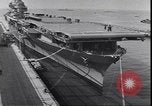
U.S. Secretary of Navy William Franklin Knox makes a speech during commissioning of USS Hornet CV-8 in Norfolk.
A film dedicated to the workers of America's shipyards and war plants working to built USS Hornet (CV-8) and commissioning of the same in Norfolk during World War II. Workers work in shipyard to build USS Hornet. USS Hornet is launched. Sailors walk up gangway of USS Hornet. U.S. Secretary of Navy William Franklin Knox makes a speech during commissioning of USS Hornet CV-8 on 20th October, 1941. Navy officers and sailors lined up.
Japanese bombers bomb the U.S. ships anchored in Pearl Harbor, Island of Ohau during World War II.
Japanese air raid attack on Pearl Harbor, Island of Oahu on December 7th, 1941 during World War II. Japanese aircraft take off from Japanese carriers in the Pacific. Formation of Japanese bombers bomb U.S. Navy ships anchored in Pearl Harbor. Smoke billows up from the explosion as the bombers bombard the U.S. ships.
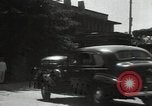
Japan mediates conflict and its officials endorse Peace Treaty between Vichy France and Thailand, during World War II.
After successfully mediating an armistice between French forces in Indochina and Thailand, during World War II, Japan facilitates the signing of a Peace Treaty between Vichy France and Thailand. Cars carrying diplomats enter gates of the Japanese prime minister's official residence. Views of the Treaty being signed in the Great Hall. Japanese, Thai, and French officials are seen at a conference table, signing the Peace Treaty documents, on May 9 1941. Japanese Foreign Minister Yousuke Matsuoka delivers a congratulatory address following the signing of the Treaty. Officials have drinks. A Vichy French official speaks. Thai official speaks before microphone.
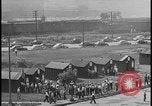
Members of UAW Ford Local 600 voting on the first Union contract with Ford Motor Company
Opening scene shows a virtual tent city set up to facilitate voting by numerous elements of Ford United Auto Workers Union 600. Camera pans over the scene where buses are transporting members. It shows the headquarters building with sign reading: "Ford Local No. 600." Men are lined up to vote at tents marked according to Ward and District. They are voting on the question of ratifying the first UAW contract with Ford Motor Company that was signed June 20, 1941. A bus pulls up to a curb. It contains signs reading "Ride Free" and "Vote Yes."
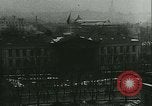
Norwegian Leader Vidkun Quisling greets visiting officials and reviews contingent of German Reichsarbeitdienst
Norwegian Prime Minister Vidkun Quisling greets visiting officials. Later, he goes outside, and reviews a contingent of German National Work Service (Reichsarbeitdienst, or RAD) in formation with their shovels. Representatives of various RAD groups are lined up holding their respective flags that contain variations on the wheat sheaves and shovel elements characterizing the organization,
CRITICALPAST.COM: About Us | Contact Us | FAQs - How to Order | License Agreement | My Account | My Lightboxes | Shopping Cart | Advanced Search | Featured Collections | Website Terms & Conditions | Privacy Policy ©2026 CriticalPast LLC.
License Agreement |
Terms & Conditions |
Privacy Policy
©2026 CriticalPast LLC.