


 Francais
 Deutsch
 Italiano
Refine Your Search
Ohio-State-football stock footage and images
- Showing 10843 to 10848 of 24492 results more
more Hide
Hide
Mountain highway, snow covered mountains and road construction site in Glenwood Canyon, Colorado, United States
Glenwood Canyon, Colorado. Winding mountain road and highway at Glenwood. Car crosses Eagle River Bridge. Trees besides road. Snow covered mountains besides road. Trees on mountains. Buildings under construction. Road construction site, machines, sand and material.
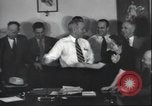
United States Senator Harry S Truman shakes hands with members of his reelection campaign staff in Missouri.
Senator Harry S Truman in his office at the Federal Reserve Bank Building in Kansas City, Missouri. Senator Truman shakes hands with campaign workers on the occasion of his reelection as Senator. Truman then reads a statement for the press.
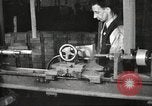
During World War I, workers manufacture automatic rifles at a factory in the United States.
Manufacturing of Browning Automatic Rifles (BARs) at Winchester Repeating Arms Company in New Haven Connecticut.during World War 1. Machinists perform metal boring and turning operations on lathes. Others work on wooden gun stocks.They place parts of rifles on various pieces of equipment during the construction and assembly process.
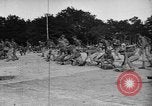
U.S. Marines in prone positions holding guns and practice the use of weapons in the United States during World War I.
U.S. Marines practice with Lewis machine guns during World War I. U.S. marine three-man machine gun teams set up Lewis machine guns and fire them during training at Key West, Florida, in World War 1. Teams set up in prone positions, with gunner ready to fire. Second man fastens circular ammunition magazine atop the gun and third man stays low behind. The guns are on a bipods, and equipped with large cooling shields around their barrels. The gunners fire one magazine, replace it, and fire again.
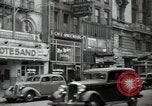
German shops in Yorkville Manhattan area inhabited by Germans in New York City, United States.
Yorkville neighborhood area of Manhattan, New York City, inhabited by Germans around the start of World War 2. Cars parked outside German shops. Traffic along the road. Pedestrians on the sidewalk. A sign reads "Cafe Hindenburg" and another sign for "Rudi's and Maxl's Brau-Haus." Another sign reads "Platzl Dance." Various German signs outside shops and restaurants in Yorkville. Sign board in front of the the "Der Entappenhase" theatre advertises information about the USS Panay sinking incident.
Frido W. Kessler's rocket-propelled mail plane launches on frozen lake Greenwood, New York, United States, 1936
Frido W. Kessler and his rocket-propelled mail plane. (Allegedly, the first scheduled mail-delivery rocket flight) Kessler is seen in his workshop with his test stand and apparatus. Launch of Kessler's first winged liquid-fueled (liquid oxygen and Kerosene) mail rocket plane on frozen Greenwood Lake, New York, February 23,1936. Launch team opens the nose to insert mail into the rocket-propelled glider plane (reportedly designed by German rocket pioneer Dr. Willy Ley). Kessler poses with a little girl, Gloria Schleich Quackenbush, for whom the plane is named. She holds a silver cup of snow. They are surrounded by a cluster of men. Photographic equipment is set up next to them. The girl, Gloria, empties the cup of snow onto the tail of the rocket plane, to Christen it "Gloria (I)." Launch team fueling the rocket from containers. A technician in fireproof protective suit lights fuel at tail of the plane. It flares up in flames and then settles down with normal rocket burn, and leaves the launch stand. (A second rocket plane is seen sitting on the ice near the launch stand.) The rocket glider only goes about 20 feet before falling onto the ice. Team members look over the stand and prepare to try again with Kessler's second plane, the "Gloria (II)." They load the mail (6000 letters and postcards) into the nose and set the plane on the launch stand. It launches very nose high, and strikes the ice near the stand. But the rocket motor continues to propel it across the ice until it takes off again and continues, a way in the air until flipping over and crashing on the ice. View of people surrounding the broken plane on the ice. (Note: The second attempt carried the Gloria II and its mail, about 2000 feet, far enough to cross the border from New York into New Jersey, constituting an interstate mail delivery, and making the letters and post cards worthy mementos of the event.)
CRITICALPAST.COM: About Us | Contact Us | FAQs - How to Order | License Agreement | My Account | My Lightboxes | Shopping Cart | Advanced Search | Featured Collections | Website Terms & Conditions | Privacy Policy ©2026 CriticalPast LLC.
License Agreement |
Terms & Conditions |
Privacy Policy
©2026 CriticalPast LLC.