


 Francais
 Deutsch
 Italiano
Refine Your Search
Ohio-State-football stock footage and images
- Showing 11845 to 11850 of 24492 results more
more Hide
Hide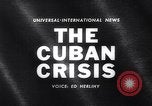
The Cuban Missile Crisis in October 1962
Adlai Stevenson addresses the United Nations Security Council regarding the build up of missiles in Cuba. United State Navy ships form a blockade to stop further missile delivery to Cuba. In Cuba, soldiers operate anti-aircraft guns that have been set up on the waterfront Cuban soldiers hold their posts on streets, tops of buildings, and on posts all along sea shore. Fidel Castro addresses a public demonstration. Cubans seen marching. Signs in the crowd include, 'Apoyamos Lucha Contra El Imperialismo' and 'Adelante Fidel Venceremos' High powered reconnaissance cameras are fitted to a plane. A plane flies to take reconnaissance photos of Soviet bases in Cuba. Views of aerial photographs showing aircraft landing strips and missiles in Cuba. United States Marines arrive at Guantanamo bay. C-124 Globemasters in background. View of the Organization of the American States Building. U.S. Secretary of State Dean Rusk addresses the gathering. Exterior view of the United Nations building. Soviet representative Valerian Zorin address the Security Council.
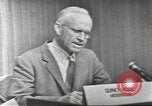
Vice President Nixon talks about Communist influence in the Western Hemisphere prior to presidential elections in the U.S.
The fourth presidential election debate held between Democratic nominee Senator John F. Kennedy and Republican nominee U.S. Vice President Richard Nixon in New York, United States on 21st October 1960. ABC news correspondent Quincy Howe speaks during the fourth Kennedy-Nixon presidential debate. He speaks that the candidates would answer and comment upon questions put by these four correspondents: Frank Singiser of Mutual News, John Edwards of ABC News, Walter Cronkite of CBS News and John Chancellor of NBC News. Frank Singiser puts the first question to Vice President Nixon. He asks Nixon the way he would handle Fidel Castro's regime and prevent establishment of Communist governments in the Western Hemisphere and why his policy is better for peace and security of the United States in the Western Hemisphere. Nixon answers that Senator Kennedy's policies and recommendations for the handling of Castro regime are dangerously irresponsible recommendations that he's made during the course of this campaign. Nixon speaks that what Senator Kennedy recommends is that the U.S. government should give help to exiles and to those within Cuba who oppose Castro regime, provided they are anti-Batista. Nixon says the United States have five treaties with Latin America, including the one setting up the Organization of American States in Bogota in 1948, in which the U.S. has agreed not to intervene in the internal affairs of any other American country. He further says that if the U.S. follows recommendations of Senator Kennedy then the country would probably be condemned in the United Nations and it would result in an open invitation to Soviet Premier Nikita Khrushchev to come into Latin America and to engage the U.S. in a civil war. He speaks about quarantining Cuban Prime Minister Fidel Castro by cutting off trade and diplomatic relations with Cuba.
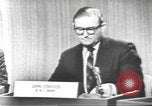
U.S. Vice President Nixon speaks about U.S. foreign policy towards Latin America prior to the presidential elections in the U.S.
The fourth presidential election debate held between Democratic nominee Senator John F. Kennedy and Republican nominee U.S. Vice President Richard Nixon in New York, United States on 21st October 1960. News correspondent John Edwards asks Senator Kennedy if he can give the names of three or four Americans whom he can appoint as the Secretary of State. Senator Kennedy replies to the question and says that this decision can only be made by the president and not presidential candidates. He says that he has made no judgment about who should be the Secretary of State. News correspondent Quincy Howe asks Richard Nixon to comment. Nixon says that it would be the responsibility of the next president to appoint the Secretary of State. Vice President Nixon speaks about a previous comment made by Senator Kennedy regarding Fidel Castro's regime. He says that President Eisenhower's administration appropriated five times as much for Latin America as was appropriated by the previous administration. He speaks that Democratic Congress has cut eighty million dollars off of the Voice of America appropriations to Latin America.
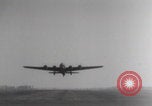
Operation Cobra bombardment and attack begins in Normandy (WW2)
A bomber takes off from an airfield for Normandy during World War 2. A group of bombers in flight. Free French 2nd Armored Division soldier looking up the sky. B-17 bombers flying. A German soldier looks up to see bombers. Bomber dropping bombs. German troops get out of a camouflaged truck. Close up of bomber pilot flying. Bomber cockpit with view of bomb sight. Bombs falling. A B-17 bomber dropping multiple bombs from its bomb bay. Anti-aircraft guns firing at bombers. A bomb lands on a factory. Aerial view of bombs landing onto crossroads. More B-17 bomber planes dropping bombs simultaneously. Consolidated B-24 Liberator bombers dropping bombs over Normandy. Multiple bombs fall on Normandy, creating clouds of explosion. United States General J. Lawton Collins and General Omar Bradley (wearing glasses) ascend stairs. United States troops remove camouflage branches from a Jeep. An M4 Sherman tank moves. Soldiers began moving as Operation Cobra has begun. “Marigny” and “St. Gilles” are highlighted from a map of Normandy. United States soldiers moving through a village with destroyed houses. A German soldier in foxhole aims his rifle. United States M4 Sherman tank passing stone house on road. German soldier with deep scar on his face. German soldier fires a rocket launcher (Raketenpanzerbüchse 54). Multiple explosions on field. German troops fire artillery at United States soldiers. German commander observes field using binoculars. German soldiers prepare to attack Allied troops. German soldiers running. A German soldier fires a Maschinengewehr 34, also known as the MG 34, machine gun. A German soldier throws a hand grenade. A Panzer IV firing at Allied positions. Explosions and thick smoke. United States soldiers crouch beside a hedgerow for cover. Soldiers carry supplies after fighting ceased for the day. Soldier sitting while holding a pistol. Soldiers moving and running with rifles. Tank artillery firing. An M4 Sherman tank drives through a forested road. United States soldier climbs a hedgerow. Soldiers firing artillery from under camouflage nets. A group of United States soldiers climb a hedgerow. Soldiers on top of a moving M4 Sherman tank. Two soldiers fire a mortar from a foxhole. An M4 Sherman tank moves across a field. American commander directs troops to climb over hedgerows. United States soldiers firing at Germans from behind a hedgerow. Soldier firing an M9 Bazooka. A soldier firing with an anti-tank rifle grenade launcher (M7 grenade launcher). Soldiers firing with an M1919 Browning machine gun. An M4 Sherman tank pass by a house. An Armored Column with M4 Sherman tanks enters the town of Saint-Gilles. Most houses in Saint-Gilles are damaged. Piles of rubble in Saint-Gilles. United States 7th Corps soldiers engage in street fighting with German troops in Saint-Gilles. Destroyed houses in Saint-Gilles. Tank firing at a house. Soldiers running far. United States soldier firing with machine gun behind bushes. A tank climbs up a hedgerow. United States soldiers climbing hedgerows. Soldier puts more shell into an artillery. Map of Normandy showing the town of Avranches.
U.S. wartime propaganda film - Japanese people toil in industry and at warfare unified to help Japan win World War II.
United States anti-Japanese propaganda war film about Japan and its people, and its intentions in World War 2. A White actor narrator impersonates a Japanese man, enforcing negative stereotypes and mocking Americans. “You’ve learned that the Japanese do not show their feelings, nor do I have big teeth and thick glasses- how sad to disillusion you” the narrator mocked. Japanese people work to help Japan win war. Japanese people work on a farm. People row in boats on a lake facing Mount Fuji. Snow-capped Mount Fuji. Volcanic explosion. Japanese soldiers seize the United States flag. Japanese flag flying. Sacred fishes in a pool. Soldiers hold Japanese flags as they cheer Banzai in a victory celebration after battle. Modern buildings in a Japanese city. High altitude view of buildings in an area. Bombardment in a city. Destroyed houses, buildings, and rubble on the ground of Japanese cities. United States warplane aircraft fly in formation. Aerial view of a Japanese city. People walk on the street. Vehicles pass on street. Ship 'Argentina Maru' docked at a Japanese harbor. People sow rice seeds on the farm. Narrator (actor impersonating a Japanese person) mocks Americans as being soft. View in an American town of cars parked along the sides of a main street. American 1940's cars. Jockey's Ball banner. People queue at theater box office and in train stations. United States nightclubs, bars, and casinos. United States people at beach. Japanese industry and munitions factories. Ships underway at sea. United States Marines carry a dead soldier on stretcher. United States Marines coming ashore and Japanese soldiers fighting in Pacific islands such as Guadalcanal and Tarawa. Forces of both sides fire guns and artillery. Smoke from bombardment. Ragged Japanese forces surrendering to United States forces. Japan's best forces shown marching in formation and review. Young Japanese soldiers in training. Japanese children study in a school. Burning Japanese city following attack. Japanese citizen refugees flee, a woman crawls across a railroad track. Japanese girls and boys exercise simultaneously outdoors. Japanese soldiers execute two men (possibly in China?). Prisoners held by Japan in forced labor; others executed. Japanese soldier puts his hat on a little girl, other children playing. Remains of a newborn infant wrapped in cloth lying on the street. Forced laborers from Japanese-occupied countries are made to farm rice. Remains of victims of Japanese forces. Heads of decapitated victims lying on the field. United States prisoners emaciated and injured in the Philippines. A United States soldier wipes his tears after losing an arm. Remains of United States troops, Japanese soldiers, and Asia civilians. Japanese soldiers deploy for war at train station. Map showing Japan, China, Manchuria, and Mongolia. A Type 3 Chi-Nu tank rolling up a fortress in China. Soldiers marching on rice fields and climbing rocky cliffs. Japanese soldiers assume prone position, firing rifles.
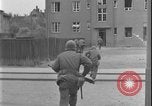
U.S. Army soldiers engage in battle with German forces, Sherman tank and machine gun battle scenes in Halle, Germany in WW2
United States soldiers, including a United States Military Red Cross Medic, advance towards an apartment block in Halle, Germany during World War 2. United States Army officers discuss together as they confer to map, behind them a soldier looking at camera from top of tank. United States soldiers crouch in front of brick wall. Gate with words “Feuerwehr” (“Fire Department” in German). United States soldier sprints across street. United States soldier on lookout on the streets of Halle, Germany. A Sherman tank in front of building. United States soldier sprints across street towards a doorway. Soldiers climb over destroyed walls. Sherman tank fires on the street. White flag drapes from fence in Halle, Germany. Sign says “Halle Saale”. United States soldiers with Sherman tank marches in Halle, Germany. United States soldiers open a wooden door and enter. White flag on tree in a street with German civilians and United States soldiers in Halle, Germany. American Sherman tank drives over rifles confiscated from German soldiers. Soldier fires with machine gun from house window. Soldiers dash across street towards doorway of German house. Soldier sprints towards a doorway of apartment.
CRITICALPAST.COM: About Us | Contact Us | FAQs - How to Order | License Agreement | My Account | My Lightboxes | Shopping Cart | Advanced Search | Featured Collections | Website Terms & Conditions | Privacy Policy ©2026 CriticalPast LLC.
License Agreement |
Terms & Conditions |
Privacy Policy
©2026 CriticalPast LLC.