


 Francais
 Deutsch
 Italiano
Refine Your Search
Ohio-State-football stock footage and images
- Showing 12001 to 12006 of 24492 results more
more Hide
Hide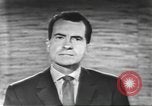
Kennedy and Nixon present their views about a summit conference during a presidential election debate in Washington DC.
The second Kennedy-Nixon Presidential Debate in Washington DC, United States. Alvin Spivak of United Press International asks Republican candidate U.S. Vice President Richard M Nixon about the possibility of occurrence of a summit conference after the presidential elections. Nixon states his willingness as the President to meet Soviet Premier Nikita Khrushchev or any other world leader if it would serve the cause of peace. He states that another summit conference will lead to negotiations at the diplomatic level and hamper peace. He concludes that he would hold another summit conference only after some preparation and assurance from Khrushchev that he wanted something meaningful from the conference. Democratic candidate Senator John F Kennedy states that before any summit conference the United States should build its military as well as economic strength. He talks about U.S. commitment to Berlin. He concludes and says that he agrees with Nixon statement in not meeting Mr. Khrushchev unless there were some agreements at the secondary level- foreign ministers and ambassadors - which would indicate that the meeting would have some hope of success, or a useful exchange of ideas.
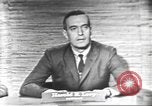
Kennedy and Nixon present their views about tax increments during a presidential election debate in Washington DC.
The second Kennedy-Nixon Presidential Debate in Washington DC, United States. Harold R. Levy of Newsday asks Democratic candidate Senator John F Kennedy about his recommendations to increase tax. Kennedy answers and states that in the present scenario tax increase is not desirable. He says that if it would be essential to U.S. security he would suggest a tax increase. He talks about his programs for economic growth, care for the aged, development of natural resources which would build the strength of the United States. He states that Americans can mobilize their economy and resources. Republican candidate U.S. Vice President Richard M Nixon comments on the increasing expenditures for defense, mutual security, economic and technical assistance. He says that he thinks it may be necessary to increase taxes to maintain a sound economy. He concludes and states that no president can add billions of dollars to his nations expenditures and not pay for it, after all the payment is made by peoples money.
Delegations from the US, Britain and the Soviet Union attend the Dumbarton Oaks Conference in Washington DC, U.S.
Delegations from three Allied nations arrive in Washington DC, United States to study post-war security during World War II. Delegates disembark from aircraft and review a parade of troops. Soviet Ambassador to the United States Andrei Gromyko, U.S. Secretary of State Cordell Hull, British Permanent Under Secretary for Foreign Affairs Alexander Cadogan, U.S. Under Secretary of State Edward Stettinius arrive and attend the Dumbarton Oaks Conference. Secretary of State Hull speaks at the conference. Alexander Cadogan speaks.
Scenes from WW1 include Woodrow Wilson, Franklin Roosevelt, troop deployment, munitions factory, ship building, WWI battle, and Armistice Day.
A title reading “1917”. An American ship sinks down in the Atlantic Ocean after it was torpedoed by a German U-Boat during World War I. United States President Woodrow Wilson signs the United States declaration of war on Germany. President Woodrow Wilson at work in his desk. A United States soldier blows a trumpet. United States soldiers crowd the deck of a ship sailing to Europe during WWI. The American Expeditionary Forces are waving as the ship sails away from the port. Franklin Roosevelt during World War I. American troops disembark from their ships after arriving in Europe. American women working in military supply factory. Women manufacture bullets using hand drills. A woman assembles munitions. Men building battleships at shipyard assembly line. Allied soldiers running in the battlefield to avoid being hit or bombed by the Germans. Bombs explode in the battlefield in Europe during World War I. Soldiers avoid bombs. A railway gun fires. An biplane falls in smoke after being hit. Explosion from tank in battlefield. Soldier rolls down to a trench. Explosion beside a rolling tank. A German soldier ducks in trench. An Allied soldier fires from a trench. A soldier behind him throws a grenade. Soldier with machine gun ducks from a trench. Tank rolls and fires in battlefield. Black explosion in battlefield. Soldiers run and avoid explosions. German soldiers fire a machine gun and throw grenades. Surrendered German prisoner soldiers march out as prisoners-of-war. American soldiers celebrate Armistice Day. View of the United States flag. Allied soldiers march in victory through ruined city. Americans celebrate Allied victory in World War I, filling with crowds in New York City. Americans hold banner saying, “Germany Surrenders”. Celebrating Americans in New York City, hold American flags and their hats triumphantly after Allied Victory in World War I.
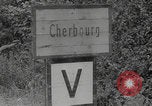
Allied infantry mopping up operations at Cherbourg (WW2)
Allied forces capture Cherbourg during World War 2. Town sign of Cherbourg, France. Soldiers pass through ruined street in Cherbourg. Allied troops patrol Cherbourg. United States troops of the 324th Regiment 79th infantry division enter Cherbourg as they close in from east, south, and west of the town. Infantry patrolling an empty street in Cherbourg. United States Army sniper firing with a rifle. A military truck is parked on a street as soldiers conduct house-to-house mopping up operations. A United States soldier firing a rifle to take out snipers. U.S. infantry soldiers enter a house. An American soldier runs out of the Café du Rond-Point. Road signs near the Café du Rond-Point say “Valognes PARIS” and “Einzelfahrzeuge” (“Single vehicles” translated from German). A United States sniper aims from a window of a house attic. An American soldier guards an entrance of an apartment. Close view of a United States soldier aiming and shooting. Taking of prisoners of war: Captured German soldiers with their hands up are marched out of a building by American troops. A dead German soldier in the doorway of a building.
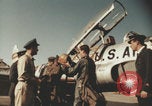
Italian Air Force pilots visit San Antonio Texas, Ambassador Manlio Brosio speaks about Italian American relations
Italian fighter pilots train in Lackland Air Force Base in San Antonio, Texas, USA. Italian Air Force (Aeronautica Militare) crewmen put on helmets and climb the ladder of a fighter jet. United States Air Force instructors and Aeronautica Militare students in Mess dress watch the fighter jet taking off. Italian Air Force pilots wave at their colleagues from the tarmac. Italian Air Force pilots visit The Alamo Mission (300 Alamo Plaza, San Antonio, TX 78205, United States ) during their free time in Texas. A car passes by the Italian Embassy (2700 16th St NW, Washington, D.C., DC 20009, USA) in Washington DC. A man exits the Italian Embassy. Italian Ambassador to the United States, Manlio Giovanni Brosio, speaks from his office. Ambassador Brosio speaks about his role as the Italian ambassador in raising awareness of Italy in the United States. Ambassador Brosio says that Italy known in the United States not only for its art, history, natural beauty but also as a modern and productive country- the new, postwar Italy is known in America today.
CRITICALPAST.COM: About Us | Contact Us | FAQs - How to Order | License Agreement | My Account | My Lightboxes | Shopping Cart | Advanced Search | Featured Collections | Website Terms & Conditions | Privacy Policy ©2026 CriticalPast LLC.
License Agreement |
Terms & Conditions |
Privacy Policy
©2026 CriticalPast LLC.