


 Francais
 Deutsch
 Italiano
Refine Your Search
Okinawa Ryukyu Islands 1944 stock footage and images
- Showing 823 to 828 of 9549 results more
more Hide
Hide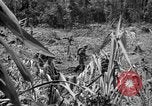
United States 145th Infantry Regiment infantryman fight against Japanese forces in Bougainville Island, Solomon Islands.
United States 145th Infantry Regiment, 37th Division troops on Hill 700, Bougainville Island, Solomon Islands. A patrol with full packs and carbines deploy through broken brush. The troops advance cautiously. A Japanese soldier hides behind a boulder. He is hit by gun fire. Dead Japanese soldier. U.S. soldiers throw hand grenades. Soldiers crawl on stomach towards gun emplacement. (World War II period).
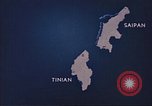
Animated map shows U.S. forces capturing Saipan and moving towards Tinian Island in the Mariana Islands.
U.S. forces battle against the enemy in the Mariana Islands during World War II. Animated map shows U.S. forces occupying Saipan and moving towards Tinian Island. A United States officer shakes hands with soldiers.
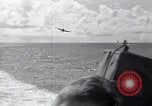
U.S. Navy FM-2 Wildcat fighters land on flight deck of USS Marcus Island, during invasion of Palau Islands in World War II
The escort carrier, USS Marcus Island (CVE-77), off the coast during invasion of Palau Island in World War 2. Several FM-2 Wildcat fighter aircraft of Fleet Composite Squadron 21 (VC-21) are seen making routine approaches and landings aboard the carrier. On their tails, they display "Diamond" G-Symbols enclosing the numeral "7."

U.S. troops capture Roi-Namur island in Kwajalein Atoll, Marshall Islands during the Battle of Kwajalein of World War II.
U.S. troops on Roi-Namur island of the Kwajalein Atoll during the Battle of Kwajalein in World War II. Marines at a 1.1"/75 caliber gun on the deck of a ship. A fleet of U.S. Navy transports and aircraft carriers underway at sea. The cargo deck of an LST (Landing Ship, Tank). Explosions due to bombardment on Kwajalein Atoll. U.S. Marines in boats heading towards the shore. Smoke due to explosions on the beach. Troops going down the side of transport ship using a cargo net into the LCVP (Landing Craft, Vehicle, Personnel). Ships at sea and clouds of smoke rising in the background. Marines getting down from LCVPs on the shore. A Marine fires a 3"/50 caliber gun. An amphibious craft on the shore. A U.S. Navy dive bomber SBD Dauntless in flight overhead. Explosions on the beach. An LCM (Landing Craft Mechanized) underway at sea. The Marines get off an LVT (Landing Vehicle Tracked) and advance across the beach. Marines and a few amphibious vehicles on the beach. An LVT coming up on the beach. Two GIs firing rifles on the shore. An LST with troops on the beach. Marines load and fire 75 mm howitzers. A combat cameraman operates a camera mounted on a tripod. Marines on an airfield. An explosion occurs and dirt and rubble fly all around. Marines inside a bomb crater firing carbines. A Marine looking under a concrete slab aiming his carbine. A Marine engineer constructing a yard grenade with one end in a hole and other Marines standing around taping a fuse on it. Two Marines run away from the hole. Explosions occur. Dead Japanese soldiers lying behind a wooden screen. A partially constructed Japanese hangar with burnt canvas. A part of the tail of a Japanese bomber in view. Two soldiers beside a wrecked aircraft. One of them looking into the fuselage of the aircraft. View of the tail assembly of a wrecked Japanese bomber on an airfield. A damaged Japanese bunker. An LCVP beside a U.S. Navy ship. Wounded men being transferred from the LCVP to the ship. Church services held on a beach at Kwajalein.
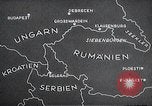
German 23rd Panzer Division engages Soviet and Romanian forces in Hungary (Northern Transylvania) on Eastern Front in World War II
Battle of Grosswardein, precursor to Battle of Debrecen, in World War 2. In late September, 1944, the German 23rd Panzer division was ordered to clear Grosswardein (aka Oradea or Nagyvárad) and environs occupied by Soviet and Romanian forces (who had switched sides a month earlier). In late September, 1944, the German 23rd Panzer division was ordered to clear Grosswardein (aka Oradea or Nagyvárad) and environs occupied by Soviet and Romanian forces (who had switched sides a month earlier). This was prelude to the World War 2 Battle of Debrecen, in October, 1944. Map shows areas of interest and reflects German treatment of Grosswardein and Debrecen as part of Hungary (Northern Transylvania), A German 88mm artillery piece is seen being towed uphill by a SdKfz 6 half-track. Battery of German 15 cm schwere Feldhaubitze 18 cannons being fired from high ground. Their shells striking at edge of wooded area. View of shells being loaded. Chalk writing on one "trotzdem siegen win" or in English "We will win despite all this". German Panther medium tanks move at the head of a column that includes Stug III and other armor. A Stug III camouflaged with tree branches. German armor advancing across and open field. Two tanks parked, and their crew members watching the battlefield. Explosions in the field. German machine gunners firing against Soviet infantry. Romanian soldiers surrendering in a grove of trees, are searched and processed as prisoners of war. German infantry moving through field of corn stalks, along with armored personnel carriers (Schutzenpanzerwagen SdKfz 250/10 Neu). A truck burning in the field, with a field piece attached on a towbar.
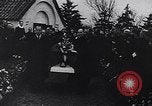
Denmark under German martial law during World War II
Film made by Danes, after increasing tensions between them and German occupation forces that invaded Denmark in 1940, boiled over in August 1943, and the Germans placed Denmark under martial law. It covers the period 1943 and 1944, after which the film was smuggled out of the country. Opening scene shows pallbearers at the funeral of Kaj Harald Leininger Munk (aka Kaj Munk) a Danish playwright and Lutheran pastor, who was assassinated by Nazi Gestapo agents, on 4 January, 1944. Narrator states that Nazi murder leagues assassinated some of Denmark's greatest leaders to intimidate the Danes and quell any rebellions. The coffin of Pastor Munk is lowered into its grave. Memorial stone and flowers are shown. Smoke rising and then a large conflagration are seen, from Danish acts of sabotage. Damaged buildings and more fires, from Danish resistance, are seen. In response, the "Schalburg Corps," a Danish volunteer branch of the Nazi SS, began counter-sabotage (called Shalbotage by the Danes). Film shows fireman on ladders at the building of the Paramount Movie Company, Ltd. where smoke is coming from the windows. (Narrator says film companies that refused every form of collaboration were blown up.) View of severely damaged Nordisk film studio at Helerup. Windows shattered in department stores and in all shops along a street. Illums Bolighus (famous store of Scandinavian design) and many others are wrecked. Camera pans up the side of damaged building with bird painted on its side and the words: "mod lysere Dage.." (Brighter Days). Views of the destroyed Royal Yacht Club pavilion, in Copenhagen harbor. Destruction in Tivoli Gardens. Its concert hall completely destroyed. Fire burning at the Syndicate, Denmark's largest armaments factory, from bombing by saboteurs, in June, 1944. Danes walking in Copenhagen, on a summer evening, flaunting the Nazi curfew from 8PM to 6AM and then lighting bonfires after dark. Abandoned wheel barrows and empty streets are shown when residents of Copenhagen all go home in a general strike. Several German soldiers are seen in otherwise empty street, as the German Commander in Chief declares the city of Copenhagen under siege. A German tank parked in the street amidst pedestrians. Barricades set up by strikers in a street. The American flag flying high over a street. The "Bulldog" a department store in flames. A car serving as an ambulance drives down a street displaying a white flag. A long line of Danes wait at a street corner shop for self-rationed food. Danes drawing fresh water from lakes to be brought to hospitals, where needed. View from above of strikers at a barricade. Narrator states that after 5 days, the Germans gave in and agreed to Danish terms. View of open area in the city, where people stand in silence to commemorate those who lost their lives in the struggle. Danish man looking through chain link fence. More scenes of continued sabotage by Danes.
CRITICALPAST.COM: About Us | Contact Us | FAQs - How to Order | License Agreement | My Account | My Lightboxes | Shopping Cart | Advanced Search | Featured Collections | Website Terms & Conditions | Privacy Policy ©2026 CriticalPast LLC.
License Agreement |
Terms & Conditions |
Privacy Policy
©2026 CriticalPast LLC.