


 Francais
 Deutsch
 Italiano
Refine Your Search
Okinawa Ryukyu Islands 1944 stock footage and images
- Showing 937 to 942 of 9549 results more
more Hide
Hide
Battle of the Ardennes and Battle of the Bulge, in World War II
Film starts showing silhouettes of British tanks on the move, including one with a bulldozer blade. View from Allied warplane as bombs explode on the ground below. In November, 1944, infantry of the First Canadian Army, with Polish and British units fire Bren guns as they advance in Belgium and secure the Scheldt Estuary, to open a shipping route to Antwerp for the Allies. They traverse a river and cross rail lines while advancing. View of destroyed steel bridge across the Maas (Meuse) river with several British troops wading in water nearby. Silhouettes of German prisoners of war marching single file. View from rear of German prisoners walking under guard with hands resting on their heads. British troops running beside the Scheldt river at Antwerp on September 4, 1944, as huge explosions occur in the river behind them. A column of British troops, marching on tree-lined road, enters outskirts of Antwerp, as local people cheer them. Views of the troops being greeted in the city itself. Columns of Belgian refugees are seen returning to their homes. One,injured, is carried by friends in a wooden cart. A contingent of British troops marching in the city. Glimpses of derricks in the Antwerp port and a ship under construction in a shipyard. An animated map shows German counter offensive through Belgium and Luxemburg on September 4, 1944. Refugees leaving again, ahead of the returning German forces. View of a road sign reading: "Bastogne." American military police checking credentials of some refugees as they leave. American soldiers jammed together atop a Sherman tank parked at a checkpoint. After delaying further German advance, through the Ardennes, on September 16th, American troops are forced back and seen leaving , in trucks and Sherman tanks, from Bastogne, past a road leading to Martelange. As weather cleared on September 22nd, a formation of British Hawker Typhoon ground attack aircraft are seen in flight and diving to attack lines of communication with machine gun fire and rockets. Several different views of the aircraft firing and smoke rising from the ground. Animated map of German advance depicts the so-called "Bulge" extending 60 miles into Allied territory. Captured German films show German troops,one carrying a rifle and another a Sig 44 machine gun, as they pass columns of burning Allied trucks, other vehicles and armor. Closeup of German soldier waving to others to follow him, as he runs ahead past burning Allied equipment. Several German soldiers hunker under a knocked out Allied tank, as a German Jagdpanzer 38(t) Hetzer light tank destroyer passes their position. Closeup of German soldier smoking captured American cigarette. German infantry, walk past barrel of destroyed Allied tank. Several gather and smoke American cigarettes. One of them, with a belt of ammunition around his neck, is Hans Tragarsky aka Walter Armbrusch, of German Kampfgruppe Hansen, a battle group formed during the Battle of the Bulge from SS-Panzergrenadierdivision Regiment 2, an infantry regiment of SS Pz Rgt 2 "Das Reich". (This image is well known but his identity is subject to debate.) Glimpse of German officer walking with a soldier at the front, with background engulfed in flames.. Scene shifts to a formation of U.S. Army Air Forces C-47 transport planes seen, in flight, dropping food and ammunition to beleaguered American troops caught in the Battle of the Bulge. Change of scene to German Jagdpanzer IV tank destroyer moving; Panzer IV tanks firing 7.5 cm KwK 37 L/24 guns; and troops riding on a Tiger tank ( Panzerkampfwagen Tiger Ausf. B). German soldiers riding in a streamlined Volkswagen Kübelwagen. German soldier in an open single seat courier car spattered with mud. Close-ups of him smoking a cigar. German soldiers looking at formation of American C-47 aircraft overhead. A U.S. Army Air Corps B-25 bomber in flight. View from Allied bomber dropping bombs that strike ground with many explosions. View from above of a B-24 Liberator bomber in flight. View on ground of shells and bombs exploding in wooded area and low level black flak clouds. Captured 88mm gun being fired by Allied forces. British soldiers in a Landing Vehicle Tracked, cross a stream and climb up a steep bank. View from British "Wasp" flame-throwing Bren-gun carrier, as it fires and resulting inferno of fires. Views from a long distance of other flame-throwers firing across the stream. Closeup view of one firing with fires burning on the opposite shore.
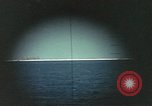
Views through periscope of U.S. submarine off the coast of Midway Island as bombs explode on the island during World War II
As viewed through periscope of submerged American submarine, bombs explode all along the coastline of Midway Island under attack by Japanese bombers (unseen) during World War 2 Battle of Midway. One strike hits oil storage site causing black smoke to rise. Many bombs create high long-lasting clouds of smoke.
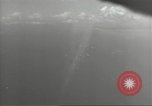
Several B-29s fly in a formation over Rota Island in Guam, Mariana Islands.
United States Army Air Forces ( USAAF ) 29th Bombardment Group in Guam, Mariana Islands during World War II. An aerial view of USAAF B-29 Superfortress aircraft in flight over Rotal Island. Several B-29s fly in a formation. A B-29 parked on an airfield. The crew of the B-29 prepares for a flight.
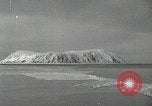
The USS Burton Island (AGB-1) arrives at King Island, Alaska on U.S. Navy cruise to assess ice conditions in Alaskan waters.
View from the icebreaker, USS Burton Island (AGB-1) as she approaches the two-square-mile King Island, at the Western most tip of Alaska. A village of simple dwellings is seen on the sharply sloped rocky side of the island. Local inhabitants gather at the shore to greet the arriving icebreaker. The crew lowers a gangway and villagers accept the invitation to come aboard the ship. The local Priest, Village Leader, and two school teachers are among several local people seen on the ship's deck during their visit. Eskimo women and children wait on shore with their children until being assured by their leaders and men that it is safe for them to visit. Several of the ship's company are invited to visit the village and are seen climbing up the steep way upward. View of house perched against steep mountainside, with skin boat laid up for winter, underneath. Clothing on washline. A larger building with a short wave radio. View from high up in village toward the icebreaker. Sailors climbing down the steep stairs from the village at the end of their visit. Some of them slip and slide down the hillside. Crew try hand at catching king crab through a hole in the ice. A large catch of king crab. View from the icebreaker as she departs Southward away from King Island.

An airfield is constructed on a drained lagoon in Adak Island, Alaska during the Aleutian Islands Campaign.
The Aleutian Islands Campaign of World War II. An airfield is constructed in ten days on a drained lagoon in Adak Island, Aleutian Islands, Alaska. A bulldozer clears the land to construct the airfield. Laymen put concrete slabs on a runway. An aircraft lands. A rainbow in the background. An aircraft takes off from the airfield. A group of soldiers on the airfield. An aircraft lands. A medical van moves from the airfield. Casualties are removed from an airplane downed by enemy aircraft. Outdoor memorial services are held for the victims.
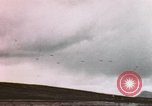
Troops on Adak Island in the Aleutian Islands, Alaska prepare for a returning mission and others plan for the next mission.
The Aleutian Islands Campaign of World War II. A group of soldiers with an anti aircraft gun on Adak Island in the Aleutian Islands, Alaska. Six U.S. Army Air Force B-25 Mitchell bombers fly in the background. The aircraft land. Soldiers come out of the aircraft. Soldiers greet the returning squadron as they relax and sing. Photographers, meteorologist and others plan for the next mission.
CRITICALPAST.COM: About Us | Contact Us | FAQs - How to Order | License Agreement | My Account | My Lightboxes | Shopping Cart | Advanced Search | Featured Collections | Website Terms & Conditions | Privacy Policy ©2026 CriticalPast LLC.
License Agreement |
Terms & Conditions |
Privacy Policy
©2026 CriticalPast LLC.