


 Francais
 Deutsch
 Italiano
Refine Your Search
Okinawa Ryukyu Islands 1944 stock footage and images
- Showing 121 to 126 of 9550 results more
more Hide
Hide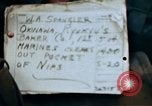
Bodies of Japanese soldiers after U.S. Marines attack; advance of United States 1st Marine Regiment towards Shuri, Okinawa.
U.S. 1st Marine Regiment advances towards Shuri in Okinawa Island. Marines move past wrecked wagons. They advance up a hill. Bodies of dead Japanese soldiers, some still burning. Columns of Marines move along road. (World War II period).
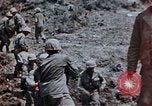
United States 1st Marine Regiment transfers ammunition up a hill during their advance to Shuri, Okinawa.
U.S. 1st Marine Regiment advance towards Shuri in Okinawa Island. Chain of men pass ammunition up the hill. Marines line up on the hill side and pass ammunition. Wounded Marines are evacuated and carried on a stretcher.
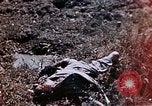
Wounded men of United States First Marine Regiment receive aid during their advance towards Shuri, Okinawa.
U.S. 1st Marine Regiment advances towards Shuri in Okinawa Island. Dead civilian on field. Wounded Marines on stretchers. Marines making tag for wounded man. Casualty on stretcher receive aid. A wounded man carried on stretcher. Demolition. Smoke rises from blast on hill.
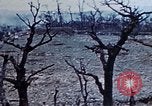
U.S. 1st Marine Division move up the Shuri Castle and dead bodies of Japanese soldiers in Okinawa.
U.S. 1st Marine Division near Shuri Castle, Okinawa. A group of Marines sitting. Smoke rises from an island in distance. View of terrain. Marines move up the Shuri Castle. Dead bodies of Japanese soldiers. Ramparts of Shuri Castle. (World War II period).
Major General Archibald V Arnold and Lieutenant General Simon B Buckner observe action from hilltop observation point.
United States 7th Infantry Division soldiers advance on Okinawa Island. Aircraft in flight over Okinawa. Major General Archibald V Arnold and Lieutenant General Simon B Buckner observe action from hilltop observation point. Smoke arises from explosions in field. (World War II period).

Destruction in coastal northeast USA from the 1944 "Great Atlantic Hurricane" (First example of a named hurricane in the US)
Views of The Great Atlantic Hurricane lashing at northeast United States areas (after having already hit the North Carolina Outer Banks), and views of the aftermath and early cleanup following the storm. Regions shown include Atlantic City, Long Island (where it came ashore as a category 3 hurricane on September 15, 1944), New York City suburbs, and parts of New England. High surf flooding boardwalks and coastal cities. Trees bent over and snapped in high winds. People walking with difficulty in the high winds. Streets of towns submerged in water. Coastal docks destroyed and large boats scattered high onto shore areas. Trees, poles, and wires downed over roads and homes. Entire homes moved off of their foundations and placed down the street. The "Great Atlantic Hurricane" was the first example of a named hurricane by the Miami Hurricane Warning Office, which later became the National Hurricane Center. The name was meant to reflect the hurricane's size and intensity.
CRITICALPAST.COM: About Us | Contact Us | FAQs - How to Order | License Agreement | My Account | My Lightboxes | Shopping Cart | Advanced Search | Featured Collections | Website Terms & Conditions | Privacy Policy ©2026 CriticalPast LLC.
License Agreement |
Terms & Conditions |
Privacy Policy
©2026 CriticalPast LLC.