


 Francais
 Deutsch
 Italiano

Refine Your Search
Panama 1969 stock footage and images
- Showing 205 to 210 of 1052 results more
 Hide
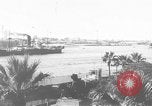
Seamen take launch to board their ship in Suez Canal.
Merchant Marine officers who need to join their ship, leave dock on a Egyptian launch that takes them out to their ship, in Port Said, Egypt. (The launch flies an Egyptian flag design in use from 1922 through 1953.) When the officers arrive at their ship, deckhands lower a rope ladder and the officers climb aboard. View of steamship, SS Aeolia, underway. (This ship, launched as the Stuyvesant 1918, was acquired in 1950 and named, Aeolia, by Cia Naviera del Atlantica of Panama. It was managed for them by the Hellenic Mediterranean Lines, Piraeus.) Back of a sailor as the boat he is on passes a monument statue of Ferdinand de Lesseps at the Port Said entrance to the Suez Canal (this statue was removed circa 1957). Views of waters around Port Said with palm trees along shore and commercial shipping traffic in the waters.
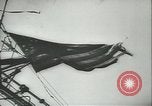
USS Franklin heads towards the United States after facing a Japanese attack during World War II.
United States aircraft carrier USS Franklin after being attacked by a Japanese bomber in the Pacific Ocean on March 19, 1945, during World War II. The U.S. flag flies from USS Franklin while on its way to the United States. A chaplain conducts a religious service on the deck of the aircraft carrier. The ship enters the Panama Canal. The men who faced the Japanese attack on USS Franklin being decorated. Men lined up with medals on their uniforms. Crew members smile after being decorated. The ship enters New York Harbor with the Statue of Liberty in the background.
U.S. Marines using flame throwers against Japanese, Chinese troops during Sino-Japanese War, aftermath mass suicide of Japanese
A film titled 'The San Jose Project' gives an introduction of chemical warfare tests carried out by U.S. Army on San Jose Island, Panama during World War II. Film opens with scenes of U.S. troops battling Japanese on Pacific islands during World War II. Tank mounted flamethrower being used to burn Japanese from caves. Backpack style handheld flamethrower being used by U.S. Marine at mouth of a cave. A Japanese soldier emerges from a cave and is shot by American soldiers. Scene changes to China, where Chinese troops march near fields during the Sino-Japanese War before World War II. A wounded soldier carried by Chinese troops. Scene changes again to Mariana Islands during World War 2. Piles of bodies of Japanese civilians and soldiers at base of a cliff from which they jumped to commit suicide rather than be captured or killed by American forces. A Japanese civilian jumping off of a cliff. Japanese civilians at waters edge jumping into water.
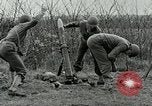
U.S. Chief of Chemical Warfare General William N. Porter directs the establishment of tropical chemical warfare tests.
An introduction of chemical warfare tests to be carried out by the U.S. Army on San Jose Island, Panama during World War II . U.S. troops test chemical warfare in a jungle. Rocket artillery is fired. Rockets explode. U.S. Chief of Chemical Warfare General William N. Porter during an initial conference with two other U.S. officers in the United States. General Porter directs the establishment of tropical chemical warfare tests on San Jose Island. British, Canadian, U.S. Marine and U.S. Navy officers attend various conferences. U.S. NDRC (National Defense Research Committee) scientists and technicians in front of charts and various instruments. The technicians carry out chemical tests. A scientist during a laboratory testing. The technicians at various instruments in a jungle during a testing phase.
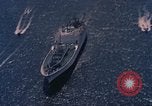
The NS Savannah is welcomed at the ports of various cities in the U.S.
The Nuclear Ship( NS ) Savannah is welcomed at ports of various cities in the United States. The NS Savannah underway at sea. She receives a welcome. Citizens standing in a harbor to welcome the Savannah. People aboard the ship in the foreground. A woman watches through binoculars. The United States Atomic Energy Commissioner Robert E. Wilson speaks. Flags of the United States in the background. U.S. Secretary of Commerce Luther Hartwell Hodges speaks. Other officials seated in chairs listen. A car is lowered on to a deck aboard the Savannah. The ship underway at sea. She makes her first trip through the Panama Canal. On this trip she carries very special passengers. The passengers watch out from the ship. She heads towards the Pacific Ocean. The port of Seattle. Large sign for "Port of Seattle" is seen behind a large old ferry ship. View of the Space needle and harbor in background. The Savannah arrives at the port of Seattle. Citizens of Seattle welcome the Savannah and a banner reads "Welcome Savannah to Seattle Worlds Fair." The captain of the ship draws routes on a map.
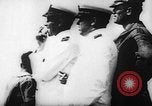
VE-7 and JN-4 biplane aircraft land on flight deck of USS Langley during operations with the U.S. Pacific Fleet
Officers aboard U.S. Navy's first aircraft carrier, USS Langley (CV-1). View of the Langley passing through the Gaillard Cut in the Panama Canal, her deck filled with airplanes, en route to join the Pacific Fleet. Activities aboard the Langley as U.S. Navy works to refine carrier operations. Numerous views of Landing mishaps, including landing hook problems, nose-overs, wings striking deck, power-on stalls, and even a VE-7 ditching in water between the Langley and a U.S. Destroyer.