


 Francais
 Deutsch
 Italiano

Refine Your Search
Panama 1969 stock footage and images
- Showing 199 to 204 of 1052 results more
 Hide
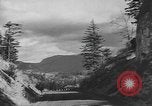
Views of American landscape and western cities; United States soldiers from civil war and later marching in various places.
A film on the history of U.S. soldiers. Various American landscape wide views, some with roads, some with natural features. Plains, deserts, mountains in the United States. A mountainous area in the western United States. A snowcapped mountain in the background. Three elderly United States Civil War veteran soldiers, both Union and Confederate, walking together in a American military cemetery. United States Army soldiers wearing helmets and marching at an Army base or encampment. U.S. soldiers marching on Constitution Avenue in Washington DC during a parade. They hold rifles and a soldier holds the U.S. flag. U.S. Army cavalry unit riding on horses in formation. Elevated view of an American city square with snow capped mountains rising in the background. Other American cities in the west with city center areas, pedestrians, and 1930s and 1940s automobiles on the roads. Cars parked at a large industrial factory with a water tower rising up. Aerial view of an urban, western United States city with a bridge over water in background. Aerial views of various American cities. United States Army infantry soldiers march along a road and then cavalry are seen galloping by on horses. A railroad train approaching the camera and then passing by at high speed, with views of the locomotive, cars, wheels, and railroad tracks. View of the Golden Gate Bridge in San Francisco, California. Point of view shot from front of moving railroad train in Colorado on the edge of gorge near the Rocky Mountains. A river steamboat or paddle steamer with a bridge in the background. Men harvesting sugar cane in Cuba. Lock gates on the Panama Canal opening, as seen from a ship waiting to enter. A World War I memorial sculpture honoring American soldiers.
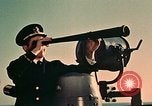
U.S. sailors visit and enjoy in various places of Europe.
A film on the life of sailors aboard United States Navy ships. An officer looks through a telescope. He sees land as the ship approaches Copenhagen, Denmark. He explores a land area. Sailors stand at attention aboard the ship. Officers inspect the sailors. They board a liberty boat to take them to shore. The ship underway at sea. The sailors visit various countries and places in Copenhagen. The sailors talk to Danish women. They eat local delicacies in Europe. United States Navy sailors buy from a street vendor in Copenhagen. View of London, United Kingdom. A sailor asks a British policeman for direction on the street. Greek Army Evzones marching in Athens, Greece. The sailors walk in the streets. Buildings along the sides of the street. The sailors return to the ship. The ship in the Panama Canal. The sailors aboard the ship.
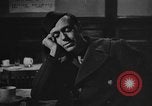
Model community, growth in cities, and town meetings in the United States.
A U.S. Army soldier seated on a chair takes a nap. A cup kept in front of him on the table. Children walking on sidewalk in small town America. Downtown view of small Indiana town. View of an American family of a small town seated in dining room for a dinner meal. Children exit a one room school house. Both a well-kept high school building and a rural simple school are shown, with boys and girls in bare feet exiting the poor rural school down a wooden ramp. Men lined up for work. Children playing in slum and tenement areas in poverty stricken areas. Quick views of skyscrapers, new schools, buildings, colleges (including view of Rice University in Houston Texas) and art galleries in the United States, including the National Gallery of Art entrance. A Texan in a cowboy hat delivers a John Randolph famed "Texas Brag" saying, "If all the hogs in Texas were one big hog, he could dig the Panama Canal with three roots and a grunt.” The National Gallery of Art in Washington, D.C. Labor organizer John L. Lewis, president of the United Mine Workers of America (UMW) states, "The American Federation of Labor can help if it will, it can uphold anything, but we shall carry on." An American town hall meeting in progress. (World War II period).

Activities aboard the aircraft carrier USS Lexington (CV-2) while heading into the Pacific in World War II.
USS Lexington (CV-2) passing through the Gaillard Cut of the Panama Canal as she heads into the Pacific Ocean during World War 2, Her deck is full of aircraft. Sailors perform routine chores, mopping and cleaning. They stow propellers in the hangar deck. Sailors at mess in the dining hall and ready to sleep in their bunks. Officers in the ward room. Aviators discussing air navigation. Air crews receiving orders on flight deck. During an interlude crew members enjoy themselves swimming in tropical waters. They dive from the flight deck, from a lower section of the ship, and even from the ship's anchor. Sailors seen climbing the anchor chain. In an exercise of combat readiness, sailor sounds general quarters with bugle over ship's intercom. Aviators respond and are briefed about mission. Deck crews make aircraft ready for flight. Pilots run to F4F airplanes. Douglas Dauntless aircraft start their engines on deck.
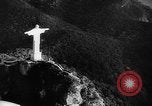
FBI agent William Sebold (posing as Harry Sawyer), and successful filming of members of Duquesne spy ring in the United States.
Aerial view of Christ Redeemer Statue on Mount Corcovado, Brazil. The director of the Federal Bureau of Investigation (FBI), John Edgar Hoover, narrates this 1944 clip and talks about enemy agents in the United States during World War II, before America's entrance into the war. German and Japanese suspects seen in South America. A German fleet carries German agents aboard merchant and cargo ships. German agents in formation on deck of ship, shown debarking the ship after receiving instructions. Japanese and Nazi German colonies being established in South America in large cities and in remote areas of Patagonia. Automobile industries, hotels, shops, and other industries established by Nazi German agents. German signs and Nazi Swastikas and Nazi flags shown on some buildings in South American countries including Brazil. A Nazi flag. A view of German factories in South America. Photographs of Adolf Hitler in a school building where young boys and girls are being instructed by their teacher. German pilot shown operating a passenger airliner; aerial view of from aircraft of Rio de Janeiro Brazil, including port and city areas. A dramatization depicts well planned accidents in the factories and sabotage attempts to slow production of goods bound for the United States. The Federal Bureau of Investigation (FBI) receives reports about planning of German attack on the Panama Canal. A woman watching a teletype machine as a report arrives. A man in a radio room of the Federal Bureau of Investigation receives information and turns to type out a report on his typewriter. Men and women convicted as spies are seen together in a room with U.S. federal agents. The spies are taken in a police van. Man serving as projectionist seen running a film projector. A film of Fritz Duquesne case in the FBI office shows FBI Agents' successful secret filming of members of the Duquesne spy ring. The film is shown being loaded onto a projector and then played. FBI agent William Sebold (posing as spy Harry Sawyer) is seen with Fritz Duquesne and other spy ring members: Pedestrians and vehicular traffic on a New York street corner as Sawyer and Duquesne prepare to meet. German spies sit together in a hotel room in New York City, recorded by hidden camera. Heinrich Clausing, a spy ring member and former cook on the cruise ship SS Argentine is seen. Also seen is Hartwig Richard Kleiss putting on his hat and smoking a cigar. He's shown giving money to Sawyer for purchase of a spy camera, according to narration. J Edgar Hoover notes that German agents communicated through a Long Island radio station that was secretly controlled by the FBI. Hartwig Kleiss is seen showing the blueprint plans of the steamship SS America, including plans for its secret gun emplacements. Fritz Duquesne is shown in the film, removing diagrams of various American arms that he had concealed in his sock Japanese agent Takeo Ezima, of the Imperial Japanese Navy, is also seen meeting in the hotel with Harry Sawyer.

Pan American Union Building; South America Statue; Gardens; Washington Monument, in Washington DC.
The Pan American Union Headquarters Building in Washington DC, United States. A garden around the Beaux Arts-style building. A circular drive at the Pan American Union Building (Organization of American States Building, 200 17th St NW, Washington, DC 20006). People arrive by automobile and climb up the steps at the entrance. The vehicle drives away. A statue of a woman with a child at the building with the words 'South America' inscribed on the base. The garden from where part of the Washington Monument is visible. Another small building. A garden with walkways in front of the building. The United States flag sways, the flag of Panama hoisted on a pole and another flag.