


 Francais
 Deutsch
 Italiano
Refine Your Search
Phu Cat Air Base Vietnam 1969 stock footage and images
- Showing 6649 to 6654 of 13375 results more
more Hide
Hide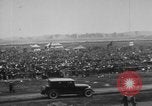
Lieutenant Cyrus Bettis and Lieutenant Jimmy Doolittle win air races in 1925.
In October 1925, crowd gathered to watch the Pulitzer Trophy air races at Mitchel Field, Long Island, New York. VIPs arrive in various automobiles. Army Air Service Curtiss R3C-1 airplane is pushed onto the field. Air Service Chief, General Patrick , speaks with Lieutenant Cyrus Bettis as Lieutenant James Doolittle listens. A Navy crew works on their entry in the race, similar to the Army Air Service airplane. Navy Lieutenant Al Williams seen with a pipe upside down in his mouth. Lieutenant Bettis taxis out for takeoff in his airplane number 43. Then Navy Lt. Williams proceeds to take off in his aircraft, number 40. Lt. Bettis breaks ground and begins to fly the closed course, coming very close to the ground at times. He lands and climbs out of the cockpit, surrounded by spectators and officials who are convinced he has won, registering a speed of 249 miles per hour. Navy Lt. Williams lands shortly thereafter having averaged 242 miles per hour. He is greeted by several spectators, including a young woman. Two weeks later, the U.S. Army was represented by Lieutenant Jimmy Doolittle, who flew the Curtis R3C-1, again, but this time fitted with floats, at the Schneider Cup Seaplane Race in Baltimore, Maryland. He shakes hands with a young woman, just before the race. The Navy also entered with a similar seaplane, shown being pushed into the water. The British entry, a Glouster-Mapier IIIA is seen (replacing the Supermarine-Napier S.4, that was damaged). The Italian Macci M.33 is seen on a dock with engine running. The float planes taxi out over the Chesapeake bay waters to takeoff position. Doolittle is the first to take off and to return, logging an average speed of 232 miles per hour. He is seen smiling after the race.
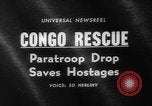
U.S. Air Force Aircraft transport 600 Belgian Para-Commando troopers, on rescue mission to Stanleville, Congo
View from behind the pilot in cockpit of a U.S.Air Force C-130 transport aircraft of the 322nd Air Division, U.S. Air Forces Europe, approaching Stanleyville, Congo, on a mercy mission to save lives of Belgian hostages held by Congolese rebels who threaten to kill them. View from tarmac on the airport, as Belgian paratroopers exit the aircraft while its engines are still running. They secure the airfield, unload supplies and ammunition, and start moving toward the center of Stanleyville. View from moving vehicle traveling along deserted street in Stanleyville. After hearing shots, the paratroopers come upon a courtyard where they find numerous Belgian dead. View of courtyard and bodies covered with cloth. Another dozen, or so, bodies are seen lying in another group. One dead seen lying in the roadway. Bullet-riddled car at side of road. Local Congolese residents (non-rebels) board trucks for transport to the airport. Hundreds of rescued Belgian people are gathered at the airport. A C-46 transport aircraft is parked in the background. A Belgian trooper walks past. Next, a view, again, from behind the pilot in a USAF C-130 aircraft, this time, approaching Leopoldville. Ground crewman guides the aircraft to a parking place on the Leopoldville airport ramp. Rescued people walk across the ramp. U.S. Air Force airmen carry body of a victim,on a stretcher, down the rear ramp of a C-130. Bodies of those killed, are laid out across the entrance of a hangar at the airport. Two U.S. Marines place American flags on the bodies of medical missionary, Dr. Paul Earle Carlson, and missionary, Phyllis Rine. More views of rescued persons walking with some belongings, across the tarmac and gathered around the open rear door of a C-130. Tail number of the C-130 is 40499. A USAF C-119 aircraft; a C-97 (of the Military Airlift Command); and a C-54 aircraft are parked in the background.
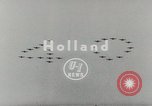
Spectators in the stands look at NATO (North Atlantic Treaty Organization) aircraft in an air show in the Netherlands.
A NATO (North Atlantic Treaty Organization) air show in the Netherlands on the 49th Anniversary of Dutch Air Force. Spectators in the stands. Formations of Dutch Gloster Meteor jet fighters, U.S. Air Force B-36 Peacemaker bombers, RAF (Royal Air Force) Hawker Hunter jet fighters, USAF B-47 Stratojet bombers in flight.
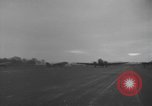
U.S. paratroopers of 9th Air Force Troop Carrier Command jump and land during practices prior to the D-Day invasion
A film about the D-Day invasion practices by United States Army 9th Air Force Troop Carrier Command in England during World War II. U.S. Army Air Forces C-47 aircraft taxi and take off from an air field in England. The aircraft fly in formation. Paratroopers of U.S. 9th Air Force Troop Carrier Command aboard an airborne plane. Captain Frank L. Lillyman with a cigar. The paratroopers jump from the aircraft during a practice landing prior to the D Day invasion. They jump and descend with parachutes.
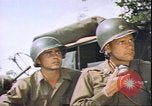
U.S. Army Air Forces pilots, on the ground, direct bombing of German military fortifications a month after VE day.
German Hilltop fortifications and related ground targets being bombed by U.S. Army Air Forces P-47s a month after the end of World War 2 in Europe. A U.S. Army Air Force field grade officer and a sergeant on the ground, both wearing steel helmets. Another U.S. field grade officer, also wearing a steel helmet. Both officers wear Air Force pilot's wings. They communicate with P-47 aircraft via radio. U.S. Army Air Force P-47 Thunderbolts drop demolition bombs on the hilltop fortifications. P-47 Thunderbolt aircraft drop napalm incendiary bomb on an installation below the hill. Smoke and fire rises.
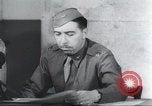
U.S. B-17 crews of 8th Air Force are debriefed by intelligence officer upon return from a mission, during World War II.
U.S. 8th Air Force B-17 crew is debriefed by an intelligence officer immediately after returning from a bombing mission during World War 2. In response to his questions, the crew members describe being hit by enemy fire, damage to their aircraft, and attacks by German Fw-190 and Me-109 fighter aircraft. A gunner tells of shooting down a German plane that flew underneath their B-17. Narrator Richard Cordon seated at a desk speaks to camera in a public service announcement, and appeals to capable American mechanics and men under 50 who are handy with tools to volunteer for service with the Army Air Forces. He reads a notice of the U.S. Army Air Forces dated October 1, 1942, inviting civilian mechanics to service with the Army Air Force. Views of mechanics performing various maintenance duties on parked B-17 bomber aircraft. Mechanics work on a B-17 aircraft with name "Baby Doll" on it. A mechanic works on a propeller of B-17 aircraft with nose art and name "Birmingham Blitzkrieg." A mechanic evaluates a machine gun in side door of a B-17 aircraft named "Shoot, You're Faded." Close-up view of notice from the U.S. Army on its letterhead, appealing for mechanics up to 50 years of age.
CRITICALPAST.COM: About Us | Contact Us | FAQs - How to Order | License Agreement | My Account | My Lightboxes | Shopping Cart | Advanced Search | Featured Collections | Website Terms & Conditions | Privacy Policy ©2026 CriticalPast LLC.
License Agreement |
Terms & Conditions |
Privacy Policy
©2026 CriticalPast LLC.