


 Francais
 Deutsch
 Italiano
Refine Your Search
Phu Cat Air Base Vietnam 1969 stock footage and images
- Showing 9001 to 9006 of 13375 results more
more Hide
Hide
French Army engineers work on various projects during World War I
French Army engineers at work in World War 1. Several maneuver in a small boat at a waterfront. Others manual operate a pile driver to set a post in the water for a dock. Officers look on as a group of Army engineers works to repair a wooden bridge made of many supporting members and cross braces. Change of scene to French engineers strengthening and stabilizing the base of a high bridge over a river. New sequence shows a pier with boats tied up and high water in river behind. Scene shifts to engineers working on a low level bridge over a river. A team of horses pulls construction equipment over the bridge. A bombed out high railroad bridge is seen in the background. (WWI. WW1)
35th anniversary of Wright Brothers' first flight. Advances in travel due to rail and airplane. Howard Hughes' round the world flight.
Film notes 35th anniversary of Wright Brothers' first flight and reviews history of transportation and advances in transportation brought about by railroad and aircraft. An animated map of the United states before the advent of mechanized transport methods. It illustrates the difficult and long overland journey to travel from the East Coast to the West Coast. Travel by horse and wagon over the Santa Fe Trail in 1849 is recreated in a brief film clip. Next, a locomotive is shown pulling a passenger train at high speed along a railroad at the base of a mountain. Animated map charts fairly direct path from Coast to Coast, taking only 4 days by railroad. Next a nearly straight course is traced across the map illustrating the path of an airplane taking only seven and a half hours for the journey. Change of scene shows aerial view of Howard Hughes' Lockheed 14 Super Electra Special, Model 14-N2 ( NX18973), christened "New York World's Fair 1939," in flight over New York harbor with the skyline of Manhattan, New York City in the background. Camera follows the plane as it passes over lower Manhattan. The Empire State building is seen prominently with other skyscrapers below the aircraft. This was filmed, on July 14, 1938, as Hughes and his crew were returning from Minneapolis, Minnesota, to Floyd Bennett Field, on Long Island, at the conclusion of their around-the-world flight (circling the Northern Hemisphere) from July 10 - July 14, 1938.
Emperor Hirohito visits an Officer's Training School in Japan during World War II
Motorcade of Imperial limousines with motorcycle escorts proceeds through gates of an officer's training base in Japan, during World War 2. Emperor Hirohito, on a white horse, is accompanied by other mounted military officers as he rides past officer candidates drawn up in formation. The emperor salutes the candidates. A number of officer candidates in white uniforms, and steel helmets, carrying rifles, demonstrate their skills running through an obstacle course, including a high barrier that must be scaled, as senior officers watch. Several candidates demonstrate gymnastic skills, performing giant swings on horizontal bars. The emperor stands alone, observing, as other candidates perform stunts across various barriers.
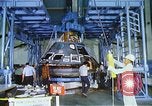
National Aeronautics and Space Administration (NASA) technicians disassemble and move damaged Apollo 1 command module post fire
Apollo 204 review board at National Aeronautics and Space Administration (NASA) in United States. Technicians disassemble damaged Apollo 1 command module.The upper portion of spacecraft is separated from the base and lifted with a crane. Scorches visible on exterior and burned components visible on underside of separated module.
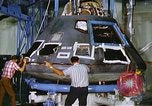
Technicians of National Aeronautics and Space Administration (NASA) disassemble Apollo 1 command module into two parts
Apollo 204 review board at National Aeronautics and Space Administration (NASA) in United States. Technicians maneuver crane over damaged Apollo 1 command module; hook up and lift upper part of module, from base, exposing underside of upper part and damaged components.
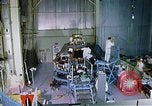
National Aeronautics and Space Administration (NASA).Technicians fasten cables and separate top of Apollo 1 command module
Apollo 204 review board at National Aeronautics and Space Administration (NASA). Technicians fasten cables to the upper part of Apollo 1 command module and then raise it to separate it from the base. Man rides on top and directs crane operator.
CRITICALPAST.COM: About Us | Contact Us | FAQs - How to Order | License Agreement | My Account | My Lightboxes | Shopping Cart | Advanced Search | Featured Collections | Website Terms & Conditions | Privacy Policy ©2026 CriticalPast LLC.
License Agreement |
Terms & Conditions |
Privacy Policy
©2026 CriticalPast LLC.