


 Francais
 Deutsch
 Italiano
Refine Your Search
Phu Cat Air Base Vietnam 1969 stock footage and images
- Showing 9307 to 9312 of 13375 results more
more Hide
Hide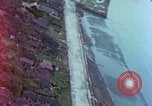
An aerial view of Atsugi Airfield near Atsugi, Japan (close to Yamato and Ayase Japan), at the end of World War II.
An aerial view of Atsugi Airfield as seen from a U.S. aircraft in flight, shortly after the end of World War 2. Aircraft parked on Atsugi Airfield. Scene shifts to a harbor area and dock installations in vicinity of Yokosuka Naval Base. Ships alongside a finger dock. Bomb damage in the surrounding area.
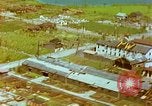
United States fleet enter Sagami Bay, Japan towards the end of World War II.
Aerial views of U.S. fleet in Sagami Bay, Japan towards the end of World War II. An aerial view shows letters 'PW' painted on the roof of a building at a prison-of-war camp located near Tokohoma seaplane base. An aerial view of Yokohama including the prison-of-war camp located close to a railway junction. U.S. fleet underway includes BBs (battleships) and escorting DDs (destroyers) as they enter Sagami Bay.
The Japanese Imperial Navy fleet in review, attended by Emperor Hirohito
Emperor Hirohito visits the Yokosuka Naval Base. Soft background music of orchestra playing "Kimi ga Yo," the Japanese national anthem, is heard during this segment of the film showing Emperor Hirohito in formal attire, including top hat, as he walks following the Japanese rising sun flag, in the company of Japanese naval officers, past an honor guard of Japanese sailors. (Civilians stand against building in background.) At one point, the officers and the Emperor turn, bow, and salute, and the the Emperor removes his top hat . He then carries it as they proceed. The group walks down a gangplank to a dock. The harbor is filled with steamships and various vessels. Momentary glimpse of the Kongō class fast battleship Hiei anchored in the harbor. The Emperor and party board a motor launch flying the rising sun naval ensign. They stand as it pulls away into Tokyo harbor. Brief partial glimpse of the aircraft carrier Hōshō showing the three funnels on her starboard side. The motor launch seen headed toward the battleship. Closeup of Japanese naval ensign waving from a ship. Aerial view from an airship of Japanese warships in water below and then views from water level of various World War 2 era Japanese Navy warships. Formation of Kongō class Battle cruisers that were rebuilt as fast battleships. They are cruising with all hands on deck, as if in a naval review. The are followed by an aircraft carrier, in the background. One of the battleships firing her 14-inch guns. Three Hatsuharu-class destroyers in formation. A Fubuki-class destroyer passing at high speed. A Nagara-class light cruiser moving the opposite direction in the background. Warships firing their heavy guns. Others generating heavy black smoke screens as they cruise at full power. A Yokosuka K4Y float plane flying over the navy ships. Formation of Navy Yokosuka B4Y (or Aichi D1A) bi-wing dive bomber aircraft in flight. Camera pans over many naval vessels in the water. Segment ends with the Japanese naval ensign in the breeze, again. Following the segment with Emperor Hirohito, and the national anthem, the remainder of the film is accompanied by male chorus singing martial songs and brass band music.
Views of Pearl Harbor in Honolulu, Hawaii prior to Japanese attack during World War II.
A film reviewing the conditions at Pearl Harbor in Honolulu, Hawaii prior to Japanese attack during World War II. The island of Oahu. An actor portraying Uncle Sam sleeps in a chair. Aerial view of Oahu island. U.S. soldiers on guard walking a military base perimeter with high fencing behind them. Another soldier walking on guard along a beach. U.S. Army soldiers standing atop a moving cargo railroad train to guard its contents during transport. View of Hickam Field entrance gate on Oahu, Hawaii, with a guard checking entry. Two airmen walking toward parked aircraft. Military aircraft lined up outside a hangar at Hickam Field. Pearl Harbor which lies near Hickam Field. Wide, elevated view of many large U.S. Navy ships at anchor in Pearl Harbor. U.S. minesweepers, light cruisers, destroyers and other ships in Pearl Harbor. Bus on a quiet street in early morning. A man tending a small boat at dock. Ground crews at work in the hangar of Hickam Field, performing maintenance on a bomber aircraft. U.S. Navy sailors throw a baseball back and forth on a dock in Pearl Harbor. Large group of Navy sailors attend church services. A chaplain speaks to the sailors and other military officers during the religious service.
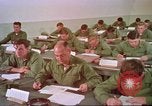
The contents of biological and chemical detection kit used by U.S. Army NBC (Nuclear, Biological, Chemical) survey team.
A training film based on biological warfare sampling and chemical warfare detection in the United States. U.S. Army NBC (Nuclear, Biological, Chemical) disaster control training given to a survey team. The team monitor puts on protective clothing including hood, boots and a gas mask. He carries a radio for communication. Working equipment of the survey team monitor shows a biological sampling kit and chemical detection kit. Contents of the chemical detection kit include test tubes, bags to contain samples, swabs, aspirator bob, sterilized water, nutrient solution and a notebook. Contents of the biological kit includes instruction cards, detection tubes, universal detector papers, plastic container packets, inspection report card and cards to report findings in the field. U.S. Army officers at a wall chart and a desk during an NBC survey. The survey includes the sighting of a low level airplane releasing a chemical gas, a low order explosion on a field and a gas released alongside a road. U.S. soldiers in a jeep come to a stop and talk into a radio. Information reaches an officer at the control center. It is further dispatched to the survey team.
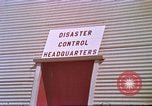
A U.S. Army NBC (Nuclear, Biological, Chemical) disaster control surveyor makes an investigation for chemical agents in the U.S.
A training film based on biological warfare sampling and chemical warfare detection in the United States. A sign reads 'Disaster Control Headquarters'. U.S. Army NBC (Nuclear, Biological, Chemical) disaster control surveyors in protective clothing get into jeeps. The jeeps pull away. A surveyor takes a look at a chemical detection paper placed on a pole, on which normal olive green coating turns red. The surveyor takes the detection paper to his jeep and takes another look. The NBC survey team monitor looks for clues on the side of a road. The monitor tests for chemical agents and inserts a chemically treated ticket in an aspirator bob. He checks if the color of the ticket changes when it comes in contact with a gas. He proceeds further and does other tests. Animation depicts a check on a detector ticket and blue-band and green-band tube tests for nerve agents. The survey team monitor uses a crayon and performs a test along a road. He reports to the disaster control center. The contaminated sector is roped and marked with signs reading 'gas'.
CRITICALPAST.COM: About Us | Contact Us | FAQs - How to Order | License Agreement | My Account | My Lightboxes | Shopping Cart | Advanced Search | Featured Collections | Website Terms & Conditions | Privacy Policy ©2026 CriticalPast LLC.
License Agreement |
Terms & Conditions |
Privacy Policy
©2026 CriticalPast LLC.