


 Francais
 Deutsch
 Italiano
Refine Your Search
Pilsen Czechoslovakia 1945 stock footage and images
- Showing 361 to 366 of 6810 results more
more Hide
Hide
American Army troops entering area of Dachau Concentration Camp, Dachau, Germany, near end of World War II
U.S. troops of the 45th Division, 157th Infantry Regiment, 3rd Battalion, I Company, entering the area of Dachau concentration camp, in the final days of World War 2. They are seen escorting German prisoners of war, with their hands raised, along a railroad siding. U.S. troops in front of a railroad train of boxcars. A dead German soldier, face down on the ground. The U.S. troops follow the railroad track into area of buildings, and run to take cover due to incoming fire. One fires a browning automatic rifle from an elevated walkway. Other American soldiers hunker down behind the walkway wall. U.S. Army soldier fires rifle while standing on a roadway. Surrendering German soldier, carrying a white flag, is attacked by a concentration camp inmate, as several other liberated inmates and U.S. Army soldiers stand nearby, watching. (Note: Opening cameraman slate states date as 04-27-1945, but historical records indicate this took place on 04-29-1945.)
Two soldiers arrest suspected Nazis and a woman takes firewood out of debris in Germany during World War II.
Activities of civilians in Germany during World War II. Two U.S. Army soldiers arrest two suspected Nazis. They stand and interact at the entrance gate of a building that is under guard by American forces. Scene changes to a bomb damaged Atlas relief carving on a destroyed building. Next scene is a wide view of a totally destroyed area from bombing, with the same portion of broken wall with the Atlas carving seen at center. A German woman walks through rubble and debris from bombing, carrying two stacks of broken wooden timber pieces for firewood. (Location is possibly Nuremberg. Despite film slate stating 2-24-1945, these shots appear to be more likely April or May 1945.)
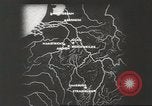
German Army Group Oberrhein undertakes Operation Nordwind, in Alsace, during World War II
German troops are seen in white winter uniforms, during World War 2, with some holding panzerfaust. Narrator mentions combat against Anglo-Canadian forces, and then speaks of preparation for the New Year's offensive. Heinrich Himmler, as commander of Army Group "Oberrhein" had ordered the launch of Operation Nordwind to recapture Strasbourg. Accordingly, On New Year's Eve, 1945,The Germans launch an offensive (Nordwind) into Alsace, attacking the Allied 6th Army Group at multiple points. On January 5, 1945, Army Group Oberrhein begins a support attack by General Otto von dem Bach's XIV SS Corps, the 553d Volksgrenadier Division, reinforced with armor and commando units. They are seen crossing the Rhine river in small boats at Gambsheim, just ten miles north of Strasbourg. Allied aircraft bomb German positions on the West bank of the Rhein (Rhine) River. The German troopers seize high ground West of the Rhein. German troops are seen firing recoilless anti-tank weapons in a field, Views of knocked out British and American tanks. Abandoned German Jagdpanzer IV faces a U.S. Tank Destroyer. German troops are seen advancing into town North of Strasbourg (Herrlisheim, Drusenheim, Offendorf ?). Scenes of destruction in town. Words: "Haus Bewohnt Civil" scrawled on homes to identify them as civilian occupied.
Allied armies including the Ninth United States Army fight and German citizens surrender in Germany.
The Allies invade Germany during period March 1945 - April 1945, during World War II. Animated map depicts Allied invasion of Germany. Ninth United States Army troops and tanks advance in Hanover, Germany. A convoy of military vehicles on a road. Smoke rises from behind a house. Smoke near a tank. Allied M4 Sherman tanks and trucks move at various German fronts. German women wave white handkerchief signifying surrender. Over the border in Overijssel, Netherlands, British Coldstream Guards roll in to Enschede to liberate the Dutch people there, and many Dutch citizens wave and cheer their liberators. A captured train loaded with German V-2 rockets. United States Army Air Force P-47 Thunderbolt aircraft drop bombs on a village. Smoke rise due to explosions. Tanks and troops of Ninth U.S. Army cross a bridge. U.S. Infantry soldiers cross a bridge and run through ruins of bombed buildings in house to house village fighting, working to evade German sniper fire. Some German soldiers seen surrendering to American forces. US Army forces walking single file on both sides of a road as tanks and equipment roll by in Germany.
Images of signed affidavits by U.S. military personnel verifying authenticity of images of German Concentration camp scenes
Camera shows close up of two certificates of affidavit signed by Lieutenant Colonel George Stevens and Lieutenant Kellogg. The first affidavit by U.S. Army Signal Corps Colonel Stevens cites Stevens' work from 1 March 1945 to 8 May 1945 photographing concentration camps and prison camps liberated by Allied forces. It is read aloud by George Stevens (or by a narrator reading the text of the affadavit). The second affidavit, signed by U.S. Navy Lieutenant E.R. Kellogg, and witnessed by Captain John Ford, is also read aloud. It cites Kellogg's expertise in motion picture and photographic techniques through his employment with Twentieth Century Fox Studios in California from 1929 to 1941. He attests that he has thoroughly examined the concentration camp liberation films of the Army Signal Corps and found them to be unaltered, genuine, and true copies of the originals in the U.S. Army Signal Corps vaults. A map shows the location of concentration camps in Germany and other parts of occupied Europe under Nazi control. (World War II period).
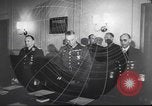
German surrender, UN founding, and Chiefs of Counsel meet before conducting Nuremberg and other trials after World War 2.
A film on preparations that are made for prosecution of axis war criminals following World War 2. Ratification of the surrender documents (from surrender two days earlier at Reims) held at Soviet headquarters in Karlshorst, Berlin, on May 9, 1945. German officers Colonel-General Hans-Jürgen Stumpff as the representative of the Luftwaffe, Field Marshal Wilhelm Keitel as Chief of Staff of OKW, and Admiral Hans-Georg von Friedeburg as Commander-in-Chief of the Kriegsmarine enter room and are seated. View of Keitel signing the surrender document. Scene change to Hall of the United Nations Conference, held in San Francisco from April 25 to June 26, 1945, with delegates from 50 Allied nations creating the United Nations. This was officially the United Nations Conference on International Organization (UNCIO). Leaders of various United Nations countries address delegates present in the War Memorial Opera House of San Francisco, including Edward Stettinius Jr of the United States. Next: A meeting of the military tribunal Chiefs of Counsel of many nations, including France, Russia, Great Britain and the United States, held in London, England, United Kingdom. They sign the International Military Tribunal Charter governing how the major war criminals from World War 2 would be tried.
CRITICALPAST.COM: About Us | Contact Us | FAQs - How to Order | License Agreement | My Account | My Lightboxes | Shopping Cart | Advanced Search | Featured Collections | Website Terms & Conditions | Privacy Policy ©2026 CriticalPast LLC.
License Agreement |
Terms & Conditions |
Privacy Policy
©2026 CriticalPast LLC.