


 Francais
 Deutsch
 Italiano
Refine Your Search
Pleiku South Vietnam 1966 stock footage and images
- Showing 1513 to 1518 of 5965 results more
more Hide
Hide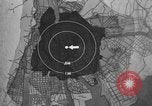
Damaged sides of a bridge, buildings and a hospital in Hiroshima after atomic bomb attack in Japan.
Survey of damage in Hiroshima, Japan after the atomic bomb attack in World War 2. Damage in the range of 1 mile from the center. Damaged side of a steel bridge on the Ota River. No damage signs visible on the other side of the bridge. Damaged Red Cross hospital building. Damage on the north east side of the hospital. Less damaged north west side of the building. Windows of the building blown on the south west side and the south east side. Burnt chairs on the window side. Interior partitions of the hospital not damaged. Ruins on the land. On the south side of the city only few missionary walls remain. A small industrial smoke stack stand undamaged. Damaged huts and houses.
Federal Bureau of Investigation officers discuss German and Japanese agents and their activities in the United States.
The director of the Federal Bureau of Investigation (FBI) John Edgar Hoover talks about enemy agents and spies in the U.S. at the time of World War II. Two officers sit in an office. German and Japanese suspects in the United States. A German agent on a street. A Japanese spy takes photographs from a bridge. Purported Nazi German agents arriving as tourists in the United States. German and Japanese diplomats greeting one another and exchanging a Nazi salute. The conference room of the Federal Bureau of Investigation. Officers discuss the activities of Nazi German secret agents and Imperial Japanese agents operating in South America. Nazi signs on an animated map show the advance of German agents in areas such as Patagonia. Narrator states that Nazi German and Imperial Japanese agents setup radio listening posts in multiple locations in South America to track and report on U.S. shipping in the world's oceans. Animated map shows settlements northward migration through Brazil of "more than 300,000 Japanese colonists". Animation shows expansion of German airline services through South America from Argentina to Colombia.
Victims of Hurricane Beulah in Red Cross shelters are being helped by volunteers in Texas, United States.
A documentary titled: 'It Happened in Texas', about the landfall and aftermath of Hurricane Beulah in Texas, United States. Doctors treating a wounded infant. Hurricane hits the area with high winds and high surf. Wind blown trees near Brownsville Texas. A flooded area. A ship submerged in water. Men working on an instrument. A man typing a document on a typewriter in offices of the Texas Department of Public Safety. People getting food inside a building during relief operations. People in Red Cross shelters. Wind blowing debris and roofing material along a city street in South Texas. Devastated buildings and debris in Port Isabelle area of South Padre Island. People listen to weather warnings from the weather bureau. Officers discussing among themselves. Rescue workers and other volunteers helping the victims. Damaged buildings and houses in an area. Clouds in the sky. A warning about a tornado is given to the people. Views of several tornadoes in south Texas, triggered by the hurricane. Tornado funnel clouds crossing land. The tornado hits the area. Rain and flooding in the area from 20-30 inches of rain over 4 days.
Allanstand Cottage Industries and men working in Presbyterian mission efforts for Appalachian people in western North Carolina
Presbyterian mission work in the southern appalachian mountain region of Madison County, west of Ashville, North Carolina. Man attaches a skid cart to a horse. A woman climbs in the skid. Man inspects dilapidated buildings. Group of men work at rebuilding and restoring the buildings. One man adjusting a door handle or lock, another man cutting wood with a saw. Storefront of Allanstand Cottage Industries at 16 College Street, Ashville, North Carolina, originally founded by Frances Goodrich. Sign "Allanstand" over the entrance way and the words "Blue Ridge" seen above that. Sign in a window under an awning, "Allanstand - Southern Mountain Handicraft Guild" (which later became the Southern Highland Craft Guild). 1930s era car parked out front of the shop. Pedestrians pass by on the sidewalk in front of the Allanstand Craft Shop. Bearded man rebuilding a stone post beside a driveway or road, with a farm and cows in the background. Another man in business clothing looks on.

A documentary titled "The Dust Bowl"
A documentary film, titled "The Dust Bowl", showing the drought ridden areas of Southern plains in United States. Cattle grazing. A map of United States showing Southern plains, then the states of Colorado, Kansas, New Mexico, Texas, Oklahoma and the city of Dalhart is also seen highlighted. Cattle grazing, a man standing outside a house. Views of Southern plain terrain. Tractors, wind mills and other farm equipment can be seen. Parched and barren land, desolated roads and houses can be seen.
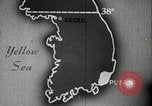
UN landings at Inchon and reoccupation of the capital, Seoul, by UN forces during the first year of the Korean war.
Animated map shows South Korea, from 38th parallel, South, and highlights Pusan, and the advances being made by UN forces after being reinforced. Next, the UN amphibious landings at Inchon (or Incheon) are shown on the map. Flashes of naval gunfire are seen in the blackness of night. Next, a Landing Craft Tank (Rocket), LCT(R), is seen firing barrages of rockets toward shore, at Inchon. On September 15, 1950, U.S. troops are seen landing at Incheon, from boats of the attack transport ship, USS Noble (APA-218). Return to the animated map shows advance of UN forces from Inchon joining with those advancing from Pusan, until they occupy most of the area south of the 38th parallel. UN infantry are seen engaged in urban combat in the city of Seoul, accompanied by M26 Pershing tanks and M46 Patton tanks. Building burning in the city. UN soldiers firing rifles inside damaged building. American soldiers, under fire, carrying wounded on litter. Medical corpsmen tending to casualties, including wounded Korean civilians. Republic of Korea (ROK) infantry following four of their soldiers carrying their flag, stretched out horizonally, between them. (Narrator states they are carrying it back to the liberated capital of Seoul.) ROK troops escorting large number of prisoners of war, marching with hands on heads. UN forces distributing rice and clothing to the Korean inhabitants of Seoul. Soldiers helping little Korean children don clothing. Bodies of men, women, and children who were slain by retreating enemy troops, are laid out on the ground, attended by Grieving relatives. Large quantities of captured North Korean weapons are piled up, including those made in the Soviet Union.
CRITICALPAST.COM: About Us | Contact Us | FAQs - How to Order | License Agreement | My Account | My Lightboxes | Shopping Cart | Advanced Search | Featured Collections | Website Terms & Conditions | Privacy Policy ©2026 CriticalPast LLC.
License Agreement |
Terms & Conditions |
Privacy Policy
©2026 CriticalPast LLC.