


 Francais
 Deutsch
 Italiano
Refine Your Search
Prison physical examination. stock footage and images
- Showing 2365 to 2370 of 3715 results more
more Hide
Hide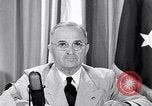
President Harry Truman of United States speaks about peaceful uses of atomic energy, following Potsdam Conference.
President Harry S. Truman of United States addresses the United States people after returning home from the Potsdam Conference, during World War II. President sitting at a desk and speaking into a microphone, talks about atom bombs. He says bombs were dropped against those guilty of the attack on Pearl Harbor, and those who have starved and beaten American Prisoners of Wars. Further he says that the atomic bomb has been used to shorten the duration of war, thereby saving numerous lives. He says the U.S. will continue to use the atomic bomb until Japan surrenders. He notes that the United States, Great Britain and Canada have the technology to produce atomic bomb, but that it will not be revealed until means have been found to control the bomb, so as to protect the world from total destruction. He talks of preventing the misuse of atomic power, and the importance of countries using it for the service and betterment of mankind. He describes it as an awful responsibility, and he thanks God that it has come to the United States and not to its enemies, and that the U.S. prays that God will guide it to use atomic power for His ways and His purposes.
U.S. orientation film for Allied occupation forces, to provide background for understanding Japanese and their society
Background information for United States occupation forces in Japan after end of World War II. At start, the film shows sky filled with U.S. Navy airplanes flying in formations. They include Vought F4U Corsair aircraft, among others, and are seen overhead above the Battleship USS Missouri (BBB-63). Closeup of the USS Missouri with her crew in formation on deck wearing dress whites. Next, General Douglas MacArthur is seen and heard speaking from a podium on the Missouri's deck. He invites the representatives of the Emperor of Japan, and the Japanese Government, and the Japanese Imperial headquarters, to sign the instrument of surrender. The date is September 2, 1945, just after the end of World War 2. Closeups of the Japanese delegation, which includes envoys Foreign Minister Mamora Shigemitsu and General Yoshijiro Umezu, and of MacArthur. Japanese Foreign Minister Mamora Shigemitsu sits at a table. Closeups of him signing the surrender document. Change of scene to Japan, where camera pans over many thousands of Japanese people assembled to learn of their fate. Closeups of Japanese soldiers and family members, as Narrator asks how should the U.S. occupying force treat them. View of soldiers in plain non-military uniforms. Views of Japanese responding en masse to a leader, during World War 2. Views of child victims of the war. Closeup of Japanese soldier firing a short barrel light machine gun. Views of Japanese pedestrians including families, most in western dress. Japanese workers in an office. Film shows artists view of one worker's brain, and then many brains, as Narrator refers to need for reorienting Japanese thinking. View of learned wise Japanese leader at a podium. View of a Japanese soldier posed with his sword above the head of a war prisoner. Japanese mother feeding her baby. Closeups of Japanese babies. Closeups of Japanese school age children, in a group, and some doing things in school, and some at a playground. Group of uniformed Japanese students studying the art of Japanese calligraphy. Students doing artwork, studying nature outdoors, and paying attention to a teacher using a black board to explain how to calculate volumes of different shaped vessels. Students in classes of Geography and of geology. Japanese chemists, architects, and lawyers at work. Telephone switchboard operators at work. Electrified train moving on a track.
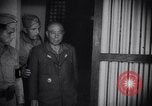
American post War II occupation of Japan.
Documentary depicts job of United States occupation forces in Japan. Opening scene shows Japanese General Tomoyuki Yamashita being escorted by armed American military officer to a room. A woman at an outdoor stand, passing out leaflets to Japanese people during the U.S. postwar occupation of Japan. Camera pans across exterior of prison where Japanese wartime leaders are incarcerated. Japanese read information posted on a telephone pole. Newspaper in English reporting that Emperor Hirohito says he is not a Diety and the Japanese are not a master race. A Japanese broadcaster spreading the new concepts. Loud speakers on city streets carry the news. People visiting news stands, including many Japanese soldiers in uniforms. Several Japanese citizens gathered by a bulletin board to read the latest information. Japanese workers shoveling up debris from bombing during World War 2. View of vast destruction in a Japanese city, where only several concrete and steel buildings can be seen standing. Japanese people going about their normal affairs, walking on paths cleared through the detritus of war. U.S. troops monitoring Japanese travelers boarding a railroad train. A U.S. soldier standing with a Japanese policeman, searches a Japanese cyclist for contraband. Views of the Pacific Ocean, with waves crashing on the shore. Dead American soldiers in the waters at the coasts of various scenes of combat against Japanese forces during World War II. Views of American soldiers helping and tending to wounded during the war. A huge formation of American soldiers marching. The Liberty bell. A closing slate reading: "Our Job in Japan". Music: Beethoven's 9th Symphony is heard.
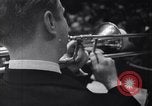
America plunged into World War 2. Montage of various World War II scenes over the span of the war years
American Jitterbug dancers seen at a contest in 1938. View of feet in shoes, as wearers tap their feet and beat time to music. View of drummer using wire brush on drum. Stadium of people cheer for a dancing cinematographer who is using a motion picture camera to film the event. In contrast, Nazi troops seen parading by torchlight. Nazi flags everywhere and Nazi party ceremonies, overseen by Adolf Hitler, in Germany. Nazis burning books. "Attention Jews" with skull and crossbones painted on stores and business establishments. Nazi Storm Troopers intimidating Jewish businesses and advocating boycott. Glimpse of Heinrich Himmler, in foreground, and Hermann Goering, in center of group of Nazi officials. Junkers Ju-87 Stuka dive bombers attacking Poland in 1939. German artillerymen firing heavy guns. A German railroad gun firing. German paratroopers jumping from Ju-52 trimotor transport aircraft. In contrast, patrons are seen descending in parachutes on the Parachute Jump ride at Coney Island Steeplechase Park, in Brooklyn, New York. Life Savers company sponsorship sign seen atop the parachute jump tower. People eating hot dogs, and firing guns at the shooting gallery on Coney Island's boardwalk. Germans march Polish prisoners of war. German troops invading Denmark and Norway. German troops passing a road sign for Chemin des Dames in Picardy, Northern France. Bomb exploding at Pearl Harbor, Hawaii, on December 7, 1941. American forces engaged in war against japan in the Pacific and against the Axis powers in Europe. U.S. soldiers throwing hand grenades. American wounded being carried on litters. People cheering liberating Allied forces in a European town. British soldiers on a vehicle displaying cartoon of Prime Minister Winston Churchill. Soviet forces advancing in snow. U.S. steel and war plants in operation. Men and women war production workers in American defense plants and war materiel factories, using drills, lathes, and power tools in the spirit of "Rosie the riveter." C.I.O. Poster to promote voting, during the war. Closeup of Sidney Hillman, President of Amalgamated Clothing Workers of America. Spectators line sidewalks to get glimpse of President Franklin D.Roosevelt (FDR) in a motorcade. Silhouette of two soldiers helping wounded comrade. FDR's funeral cortege. U.S. troops taking a break, in a war zone. American school children run into a field. An atomic bomb explosion.
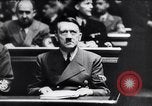
Hitler addresses Reichstag in Berlin, Nazi army advances in Soviet Union, and signing of Atlantic Charter during World War II.
Adolf Hitler addresses the Reichstag in Berlin on December 11, 1941 declaring war operations against the United Kingdom, Soviet Union, and United States. Marshall Hermann Goering, Sharp and other Nazi leaders listen to him. A map shows eastern front with Nazi German Armies advance in Soviet Union. Battle scenes between German and Soviet armies. German soldiers capture a Soviet prisoner of war. German soldiers fire artillery during a battle. View of German tanks advancing and firing on a battlefield. Ruins of a wrecked, smoking Soviet tank. Scene shifts to United States President Franklin Roosevelt and British Prime Minister Sir Winston Churchill at Atlantic Conference aboard ship "Prince of Wales" for signing of Atlantic Charter. The Allied leaders are seen singing "Onward Christian Soldiers" during a service.
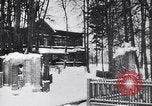
Soviet Army fights back invasion of Nazi forces. Victims of Nazi atrocities during World War II.
Battles fought by Soviet Russians fighting military invasion from Germany during World War II. Home of great artists like Tchaikovsky and Leo Tolstoy burnt and destroyed by Nazi Army. Dead bodies of Russian soldiers killed during battle and civilians brutally murdered by Nazis. Civilians view the atrocity victim corpses in piles with hands tied behind and gunshot in head. People weep at the site. Children murdered. Girls rescued from Nazis. Victims of mass hangings and an infant cries near his dead mother. Russians pledge, of revenge. Fierce battle to force them out of Russia. A map shows German retreat. Captured German soldier prisoners of war (POW) walk under guard of Red soldiers. Red Army marches in Leningrad. A wrecked ship in harbor and the beautiful city before German raid. Workers including women and children with shovels dig trenches, transport food supplies to aid their armies fighting on the front.
CRITICALPAST.COM: About Us | Contact Us | FAQs - How to Order | License Agreement | My Account | My Lightboxes | Shopping Cart | Advanced Search | Featured Collections | Website Terms & Conditions | Privacy Policy ©2026 CriticalPast LLC.
License Agreement |
Terms & Conditions |
Privacy Policy
©2026 CriticalPast LLC.