


 Francais
 Deutsch
 Italiano
Refine Your Search
Prison physical examination. stock footage and images
- Showing 3235 to 3240 of 3715 results more
more Hide
Hide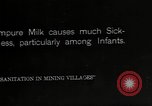
Hygienic conditions maintained at dairies in mining villages
Sanitary and hygienic practices in mining villages in the United States. Impure milk causes sickness. Several mining companies maintain hygienic conditions in dairies. A man milks a cow while another man looks on. Cows enter the cow shed. Cows stand in rows on opposite sides. Men enter with buckets in their hands. They milk the cows. A carriage drawn by two horses passes by a farm building in a rural or farming area. A couple with a child. A boy -- one of the school children of the village -- takes a seat in a dentist's chair to get his teeth examined by a dentist.
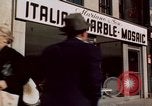
Examples of Italian-American mutuality. Italian restaurants and marble show rooms in New York City, United States
Italian influence in American life. in A showroom of "Italian Marble Mosaic", in New York City. Interior of the showroom. Street level views of Manhattan buildings under construction with Italian marble being used for their exteriors. View of Empire State Building (20 W 34th St, New York, NY 10001, United States). Aircraft from various airlines at New York Idlewild airport. DC-4 and DC-6 aircraft of Eastern Airlines, SAS Scandinavian Airlines and Pan American Airways. Passengers disembark from an Linee Aeree Italiane (also known as Alitalia) aircraft. An orange airport police car on the tarmac. Linee Aeree Italiane office in Manhattan, with prospective tourist travelers. The Italian Ocean liner, "Cristoforo Colombo" in the Hudson River, is passed by the ferry boat "Weehawken" of the New York Central System. The Cristoforo Colombo docking and unloading Italian goods. Men bring Italian fabrics into the Manhattan shop of Italian designer, Anthony Blotto, where they are examined and admired by women. Anthony Blotto and his staff create women’s fashions from the fabrics, which are modeled in his salon. View of Empire State Building. Sign for Toffenetti's Restaurant (151 W 42nd St, New York, NY 10036, United States) is shown. Many neon lighted signs on New York City streets at night.
Various views of Paris under German occupation in World War II
Momentary glimpse of French Regimental flag held by French collaborator militia German officers and civilians at the Longchamps racetrack in Paris, France. German officers examine damaged areas of the city. Closeup of a heavy concrete structure with writing on it reading: "St. Pierre des Corps" and "Entree de La Gare" (This is the severely damaged entrance to a central train station of the city.) Heavy smoke seen rising from a fire in the background. Somewhat blurred views from a vehicle driving through portions of Paris. One apartment building displays a sign reading "Soldatenheim" (Soldiers' Home). Major buildings displaying Nazi Swastika flags. View from overhead of German army truck, covered in foliage camouflage, driving along a boulevard. Posters on a wall lamenting France's suffering. Parisians going about their ordinary activities, walking in a town traffic circle. View from close overhead of another German army truck covered in foliage camouflage with soldiers riding on its rear. Another view of the posters on the wall.
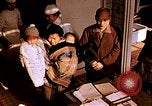
People gather at Red Cross hospital in Hiroshima, Japan to get treatment.
Medical care for victims of atomic bomb explosion and radiation exposure in Hiroshima, Japan. Patients wait for treatment inside Hiroshima Red Cross hospital. Two nurses discuss a patient's chart while a mother holds her baby in the background. Woman lies on the treatment table as a doctor examines her breast. A young boy sits on a stool while doctor applies dressing to the burns. A nurse removes dressing from a sterilizer. A mother and a child wait for treatment.
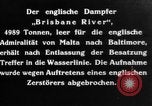
The British Ship "Brisbane River," stopped (and sunk) by German U-Boat, UB-35, in World War I
View from the German U-Boat, UB-35, of the British ship, "Brisbane River," stopped in the Atlantic off the coast of North Africa, in World War 1. U-35 Captain, Lothar von Arnauld de la Periere, with the British ship's officers, aboard the submarine, examines their papers and Registry of Ships. Closeup of a Ship Registry showing the Brisbane River, listed as number 1219. The Captain crosses it off the Registry and pencils in the date: April 17, 1917. (As noted in opening slate, the actual sinking of the Brisbane River was not caught on camera, as filming was suspended due to the approach of British destroyers.) Later, the crew is seen on deck, taking showers, and enjoying themselves, swimming in the ocean.
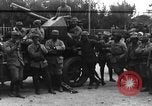
Scenes of Berlin Germany during the Kapp Putsch of 1920
The Kapp Putsch in Berlin during the Weimar Republic period. In opening scene about 20 Freikorps soldiers in uniform, are seen gathered around a motor vehicle on which an anti aircraft gun is mounted. One wears a fez. One soldier cranks a handle to raise the elevation of the gun to a high angle. Civilian spectators watch the demonstration. A warship can be seen in water behind the soldiers. Masts of docked sailing vessels are seen close behind them. Freikorps soldiers walk about. A military band plays as some of the soldiers stop and listen to them and pedestrians and motorists pass by. Flag of Prussia flies over top of a building. Helmeted German soldiers with rifles, stand about, casually, at the gates of a building. Soldiers, loaded onto a Benz truck, pass out newspaper flyers to passersby. People milling about in the street. Freikorps soldiers lined up as an officer inspects their rifles. Their insignia is visible on their left coat sleeves. Crowd of spectators stand behind barbed wire barrier surrounding a cleared square in the city secured by Army soldiers in steel helmets. One of them has Freikorps insignia on his left sleeve. Weimar Republic officials, including Philipp Scheidemann stroll across the square and proceed through the crowd outside the barbed wire barrier. Soldiers examine papers of civilian officials trying to enter the restricted area. One of them is allowed access. Army troops and Freikorps soldiers mingle together as civilians pass by them.
CRITICALPAST.COM: About Us | Contact Us | FAQs - How to Order | License Agreement | My Account | My Lightboxes | Shopping Cart | Advanced Search | Featured Collections | Website Terms & Conditions | Privacy Policy ©2026 CriticalPast LLC.
License Agreement |
Terms & Conditions |
Privacy Policy
©2026 CriticalPast LLC.