


 Francais
 Deutsch
 Italiano
Refine Your Search
Prison physical examination. stock footage and images
- Showing 3307 to 3312 of 3715 results more
more Hide
Hide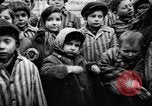
Nazi atrocities at the Auschwitz Concentration Camp in Poland (WW2)
Scenes of Nazi brutality at the Auschwitz Concentration Camp in Poland. View of small children at the camp showing the numbers on their arms. Procession of children moves in barbed wire enclosure. Close up of charred heads and remains of bodied in cremation oven. View of cans of Zyclon gas and other chemicals and drugs in a wooden box used to kill the victims. Bodies in deep trench, one dead woman with an unborn fetus beside her. The Russian commission examines deep grave filled with bodies after surrender of Nazi German SS guards in World War II.
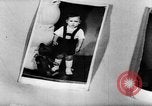
View of the victims of the Nazi Brutality at the Auschwitz Concentration Camp in Poland.
Scenes of Nazi brutality among atrocity victims at the Auschwitz Concentration Camp in Poland. View of picture books of healthy children. Then views of sickly and injured infants and children from atrocities at the hands of Nazi Germans. Doctors examine sickly children. A young girl with leg injuries. A group of men with swollen ankles, all evidences of brutality. A young woman who is emaciated. A young boy with a head wound and walking disability. Film ends with photographs of the Nazi officers and concentration camp personnel who are responsible for conditions at the camp.
Evolution of oil drilling and its various uses since prehistoric times in United States.
Dramatized documentary titled, 'The Evolution Of The Oil Industry'. Shows the evolution of oil drilling and refining in United States. Shows prehistoric man digging a field. An early water wheel in operation. Discovery of crude oil in a field. Babylonians light torches dipped in crude oil. Chinese men manually operate an oil rig in a field. Native American Indian woman applies oil on the back of a boy. A man sells oil bottle to a large crowd. Shows application of oil as axle grease in wheels and in oil lamps. Workers dig oil in a swamp. Hand shows an oil bottle. An early derrick in an oil field in Pennsylvania. Retired railroad constructor in front of the derrick. Shows uncle Billy Smith at work inside the derrick. Steam engines power up the drilling machine. Uncle Billy dips a tester inside the drill oil and discovers oil. Uncle Bill and associates shout in jubilation. View of derricks and other drilling methods to drill oil in United States. Two men examine land near a river. Crude oil being collected at drilling sites. Horse wagons transport crude oil barrels across a river bed. Oil barrels being loaded on a raft. Oil pipelines being laid across a field. View of an oil refinery. Undesired product, gasoline, being discarded by workers. Shows use of oil for light. An early model gasoline driven car. Map shows expansion of oil industries in United States. View of an oil refinery, derricks and oil rigs.
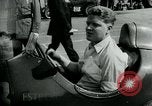
Japanese and French confer in Hanoi; war materiel supplies to China cutoff at Yunnan and Canton; British forces departing Shanhai
Clip opens with unrelated brief two second view of Frank Griswold, winner of 1940 New York World's Fair road race, waving from behind the wheel of his 1934 Alfa Romeo Tipo B after the race. Scene changes to views through the fertile countryside of French Indochina on a trip to Hanoi early in World War II. Narrator notes Hanoi is a principal supply hub for war materiel destined for General Chiang Kai-shek; supplies which the French have now interrupted at the request of Japanese authorities. A train arrives at station in Hanoi. People at the station. Views of downtown buildings of Hanoi and a market place. Street vendors selling foods and goods. A woman carrying a basket on her head. Rickshaw pullers at work behind several people seated at a street-side outdoor cafe. Narrator notes views are proceeding toward the central park where the residence of the head of the new government is located. Views of a couple in formal suit and dress strolling in the park. Major General Nishihara, head of the Japanese mission, is seen exiting a building following talks with the French Governor-General. Scene changes to Lao-Kai (or Lai Cai), a border station between French Indochina and China, where narrator says supply inspectors from Japan have traveled to examine the situation. View of the Yunnan railway with railroad tracks cut off by the French authorities, and guarded by local indigenous soldiers with conical hats (nón lá). Scene changes to the harbor at Canton China. Large ships anchored in harbor. Barrels or drums on the ground near docks, as narrator notes that large quantities of war supplies no lie idle and unusable on the port docks. Scene changes to Shanghai. A procession of forces from Great Britain on parade at a racecourse or stadium, and in the streets of the city, including uniformed bagpipers. Narrator notes it marks the end of British supremacy in China, with the first contingent of British troops departing Shanghai.
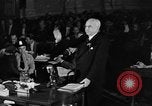
Under Secretary of State George Messersmith gives testimony about the Hans Eisler case and Dorothy Thompson to HUAC commission
Excerpts of testimony by United States Under Secretary of State, George S. Messersmith, to the HUAC (House Un-American Activities Committee) in Washington DC. Ambassador Messersmith raises his hand and is sworn in, and then seated beside his legal counsel, Norman M. Littell. Ambassador Messersmith gives testimony about Hans Eisler and Dorothy Thompson related to his own time in Berlin Germany in the 1930s on behalf of the U.S. State Department. He references his work with U.S. diplomat Sumner Welles. He says that he read the Eisler file to refresh his memory. He says that although they were not involved in the war at the time the responsibility on the State Department had increased. He talks about a case related to columnist Miss Thompson. He looks into his papers He talks about the time when he was posted in Berlin and Austria and she made a number of visits. He laughs. He tells about officers who showed prejudice in examining visa papers.
Damaged buildings, vehicles and aircraft after the Japanese attack on Pearl Harbor in Hawaii, United States.
Aftermath of Japanese attack on Pearl Harbor in Hawaii, United States during World War II. A column of smoke rises from a building after Japanese attack on Hawaii. Japanese aircraft in flight. People on streets of Honolulu during and after attack, responding. Smoke rises from a house after the attack. People carry their belongings out of their homes. Red Cross nurses on a lawn. Wounded victims on litters being carried for medical aid. A doctor examines a victim of Japanese air attack. Women read a newspaper account of the attack on Pearl Harbor. Damaged buildings and cars. Wreckage piled up on street. Damaged buildings. Bomb impact marks on exteriors of a building. Children at an orphanage. A woman holds a child. Damaged hangar and aircraft at Hickam airfield. A Japanese two-man mini or midget submarine, type A Ko-hyoteki-class submarine, No.19, on a Oahu beach. Men hold a rubber suit and a blanket worn by Japanese crew of the Japanese mini sub.
CRITICALPAST.COM: About Us | Contact Us | FAQs - How to Order | License Agreement | My Account | My Lightboxes | Shopping Cart | Advanced Search | Featured Collections | Website Terms & Conditions | Privacy Policy ©2026 CriticalPast LLC.
License Agreement |
Terms & Conditions |
Privacy Policy
©2026 CriticalPast LLC.