


 Francais
 Deutsch
 Italiano
Refine Your Search
Prison physical examination. stock footage and images
- Showing 3301 to 3306 of 3715 results more
more Hide
Hide
Relocation of Japanese Americans in United States during World War II.
Shows Milton S Eisenhower speaking about the threat posed by Nisei or Japanese American people in United States during World War II. Japanese residents along the west coast have direct access to American oil fields and harbors. Views of harbors with boats and ships. This heightens the need to migrate the Nisei to interiors of America. Commander General of Western Command at his office plans the migration (internment) of Nisei people. Signs and notice banners with headlines "Civilian Exclusion Order number 6" and "Instructions to all persons of Japanese Ancestry." The signs inform the people of the compulsory mass migration. Nisei people fill up documents and submit it to war relocation authority. People undergo medical examination. They sell their property through 'Evacuee property department'. Japanese load their belongings onto trucks and buses. Deserted shops and homes of Japanese Americans. Rows of temporary houses at Santa Anita race track in Arcadia, California. People of Japanese ancestry eat in a large dining hall and attend church service. Men prepare houses for the Nisei. Japanese Americans boarding railroad trains at train stations, and boarding buses to be moved to relocation centers (internment centers).
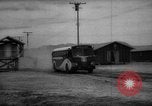
Japanese Americans at relocation center in United States during World War II.
Relocation of Nisei people in United States during World War 2. Japanese Americans arrive at the Manzanar relocation center (internment camp). Family members exit a bus. A young boy looking unsure as he observes the camp. New internees undergo medical examination. They participate in Americanization classes. They train themselves in self government. Block leaders are presented citations at a meeting. Japanese-American children internees are looked after in day care centers as men and women go to work. Young boys and girls seated at a table. Internees at Manzanar working in an experimental laboratory house for extracting rubber from guayule shrubs to increase rubber production during the war. Japanese American internees working in cultivating the guayule shrub. View of a project at the Parker camp where internees were working to irrigate desert land. View of sugar beet fields where internees could work. View of Manzanar war relocation center with mountains behind. War time propaganda narrator promotes the relocation centers as "setting a standard for the rest of the world in the treatment of people who may have loyalties to an enemy nation. We are protecting ourselves without violating the principles of Christian decency."

President's son, James Roosevelt, gets a job with Samuel Goldwyn Corporation in Los Angeles, California.
James Roosevelt, son of Presdient Franklin D Roosevelt, seen in Hollywood, Los Angeles, California, meeting with Samuel Goldwyn, the famous film executive and Hollywood movie business mogul. James Roosevelt examines a motion picture movie camera, with instruction from Samuel Goldwyn. They enter a movie studio office where Roosevelt signs a job contract and gets a film job with the Samuel Goldwyn Productions movie company.
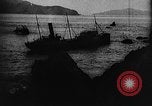
Coast Guardsmen rescue crew of the wecked Union Oil Carrier, "Lyman Stewart" in California and other examples of Coast Guard rescue operations.
Film starts showing the wrecked tanker "Lyman Stewart" off the coast of Land's end outside the Golden Gate, San Francisco. (She was victim of a crash in the fog with the freighter "Walter Luckenbach" and was beached to avoid sinking.) Closeups of the "Lyman stewart." A crew member of the stricken ship is seen being brought ashore by breeches buoy. Spectators gathered on the rocks watching the operation. View from between rocks of the "Lyman Stewart." Another stricken vessel is seen against rocks near San Francisco. It is a large freighter. Half the crew are seen being taken ashore in Coast Guard power life boats. To bring others ashore via breeches buoy, Coastguards men on an overlooking cliff, fire a shot line with a Lyle gun to the ship. Next, a crew member is seen being brought ashore by breeches buoy. A Coast guardsman assists him on the shore. Another crew member is likewise rescued. Several Coast Guard ships and boats are seen underway. A Coast Guard General Aviation PJ search and rescue flying boat seen from above as it flies over a shoreline. Aerial views of several Coast Guard Stations. Coast Guardsmen in lifeboats and patrolling a marine regatta in a power boat. Coast guardsmen firing a warning shot at a vessel being intercepted at sea. Guardsmen from a cutter examine a boat for violations. Persons in distress being helped by Guardsmen. A vessel in rough waters and a burning ship at sea. Coast Guardsmen aboard a cutter with a line to a ship in distress in heavy seas.
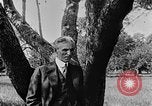
Henry Ford with John Burroughs in United States.
Henry Ford with friends in United States. Henry Ford poses with a tree in the background. He cuts a tree in the forest. Henry Ford with a friend, John Burroughs as they eat their meals outside ' Sugar House'. Ford fires a muzzle loading rifle. John Burroughs examines the gun.
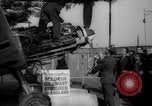
Crashed German Messerschmitt, Me 109, on display in Croydon, London, England.
Visitors to an outdoor display, to look at a crashed German Me 109 fighter plane, during the Battle of Britain in World War 2. The plane is under a camouflage net canopy. A sign in front of the plane reads 'made in Germany and finished in England'. Royal Air Force Sergeants and civilians look at it. Sergeants turn the propeller blades, which are severely bent, and point at bullet holes in the aircraft. A sign on the fence surrounding the display reads: "In Aid of the local Spitfire Fund." An RAF pilot climbs into the cockpit of the Me 109, as another helps close its canopy. Later, the RAF pilots examine the plane's wing flaps and an open wing hatch.
CRITICALPAST.COM: About Us | Contact Us | FAQs - How to Order | License Agreement | My Account | My Lightboxes | Shopping Cart | Advanced Search | Featured Collections | Website Terms & Conditions | Privacy Policy ©2026 CriticalPast LLC.
License Agreement |
Terms & Conditions |
Privacy Policy
©2026 CriticalPast LLC.