


 Francais
 Deutsch
 Italiano
Refine Your Search
Puerto Princesa Island Philippines 1945 stock footage and images
- Showing 1039 to 1044 of 9920 results more
more Hide
Hide
Damaged buildings and casualties after atomic bomb raid over Hiroshima in Japan during World War 2.
U.S. Strategic bombing survey film about the situation in Japan after atomic bombing in World War 2. Film titled 'Effects of Atomic Bomb on Hiroshima and Nagasaki'. Map of Japan. Location of Hiroshima. City of Hiroshima. Camera pans over view of the city of Hiroshima before the atomic bomb destroyed the city. Buildings and huts in city of Hiroshima pre-destruction. Portrayal of events on August 6, 1945: Sentry standing on a platform. Sentry stands near 'bell' air raid alarm. Sentry in dugout cave. Narrator relates that bomb was dropped. Still image of Hiroshima mushroom cloud explosion seen. Views of destroyed Hiroshima (from September 1945). Bomb damage to large concrete building. Ruins of the city. Damaged street cars in street. Hiroshima station. Hiroshima Prefecture office building damaged by blast. Damaged buildings. Statistics of casualty and damage.
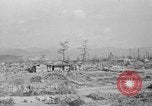
Devastation in Hiroshima and Nagasaki following atomic bomb attacks in World War 2, and view of atomic bomb blast over Nagasaki
Devastated area in north eastern Hiroshima following August 6, 1945 atomic bomb attack in World War 2. Simple shacks and buildings are being built using rubble material after the devastation of Hiroshima. Damage at Higashi station. Newspaper headlines about the atomic bomb attack on Hiroshima, and the warning to Japan by the President of the United States. A map of Japan shows the location of Nagasaki. Scenes of Japanese workers in arms factories building torpedoes and munitions, some wearing kokumin-fuku worker uniform. Workers in an assembly line munitions factory of Mitsubishi. A map shows a torpedo plant in the north and a steel and an arms plant in the south, then plots the center point between them as the U.S. target for the "Fat Man" atomic bomb attack. View of the atomic bomb explosion over Nagasaki on August 9, 1945, as seen from the B-29 bomber "Bockscar" (sometime called Bock's Car or Bocks Car). Mushroom cloud rises up to the sky. Wing of the B-29 bomber in the foreground. An aerial view of rubble and destroyed buildings in Nagasaki following the atomic bomb attack. Destroyed Mitsubishi steel plants beside the sea.
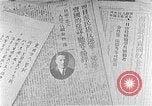
Depicts Korean suffering under Japanese occupation from 1910 through end of World War II
Korean propaganda film depicting suffering of the Korean people under Japanese occupation prior to and through World War 2. Korean citizens answering questions of Japanese civilian officials during period of Japanese occupation before World War 2. Japanese warship carrying Nakajima E4N bi-wing scout plane. Steel truss bridge being bombed. Koreans being forcibly recruited to fight for Japan. Koreans being tortured and imprisoned at hands of Japanese. Aircraft dropping bombs on ground targets. Slate announces August 9, 1945, marking the Soviet invasion of Japanese occupied areas, including North Korea, in World War II. Destroyers dropping depth charges. Battleships firing heavy guns. Soviet infantry rushing from a ship to engage Japanese forces. Soviet soldier offloading an M1910 Maxim Sokolov Machine gun onto a pier. Amphibious assault by Soviet forces. Artillery barrages. Explosions and smoke. Soviet infantry attacking industrial facilities and planting the Red flag on a hilltop in a rural area. Japanese troops surrendering to Soviet soldiers. Fallen Japanese gunner in gun position with shell in his hands. Numerous other fallen Japanese soldiers. Captured Japanese weapons and war materiel, including many swords. Japanese prisoners of war seated in an open area. Various destroyed Korean buildings and temples. Denuded trees in war zone. August 15th, 1945, shows Japanese citizens listening to a loudspeaker broadcast by Emperor Hirohito, announcing the surrender of Japan, and end of World War II. Shackles are removed from Korean prisoners. Koreans celebrate in the streets. The Korean flag flies from houses in a village. Korean people march, sing, and cheer everywhere in the country. A seated band of musicians plays. Scene shifts to the deck of the battleship USS Missouri, where Japanese Foreign Minister Mamoru Shigemitsu in formal attire sits to sign documents of surrender. General Douglas MacArthur, and other senior allied officers, stand nearby as Soviet Lieutenant General Kuzma Nikolaevish Derevyanko sits to sign for the USSR. Japanese civilians living in Korea, during the Japanese occupation, are seen moving with their belongings, to be relocated back in Japan.
German surrender scenes and views from wrecked German cities at end of World War 2
Documentary titled 'Deutschland Erwache' recounts Germany's wartime experiences. Explosion seen as the Nazi Swastika emblem is blown up on top of the Zeppelintribüne (at Zeppelinfeld) at the Nazi party rally grounds in Nuremberg in 1945 by the U.S. Army. Following explosion, the pieces from the destroyed emblem fall from the sky. Montage shows: German Prisoners Of War (POWs) marching; Ratification of the German surrender documents (from surrender two days earlier at Reims) held at Soviet headquarters in Karlshorst, Berlin, Germany on May 9, 1945. German officers present include Colonel-General Hans-Jürgen Stumpff from the Luftwaffe, Field Marshal Wilhelm Keitel as Chief of Staff of OKW, and Admiral Hans-Georg von Friedeburg as Commander-in-Chief of the Kriegsmarine. They are seen entering room and signing documents. View of Keitel signing the surrender document. Soviet Russian General looking at surrender documents. General Eisenhower, General Montgomery and others shown in brief glimpses. Stalin, Roosevelt and Churchill at Yalta. Aerial views of heavily bomb-damaged cities in Germany, including wrecked German cities of Cologne, Nuremberg, Hamburg, and Berlin. View of Brandenburg gate in background and rubble of bombing in foreground as two people carry a stretcher down the street. A wrecked street sign for the Unter Den Linden lies on the ground partially covered in mud. Ground level views of smoking ruined buildings in Berlin and a few German citizens walking on the streets following Battle of Berlin. Views of dead German soldiers on a battlefield. German soldiers helping to carry and tend to wounded and bandaged German soldiers. Large group of German citizens gathered in a public square.
Londoners celebrate VE Day, the end of World war II, in Europe
With the surrender of Germany, World War 2 in Europe ends, on VE (Victory in Europe) Day, May 8, 1945. Scene opens with church bells ringing and view of west front of St. Paul's Cathedral, on Ludgate Hill, in London, England. Crowd is celebrating in the square. around the statue of Queen Anne. Amongst the crowd are men and women in uniform. Here and there Union Jack flags are seen, one held by a little girl hoisted upon a man's shoulder. Camera pans across various parts of the celebrating crowds. View from above, of several couples dancing within a circle of people. Several uniformed U.S. Air Force officers in a jeep celebrate with the crowd. High altitude view of Trafalgar Square in London, England. 'Victory over Germany 1945' banner draped on base of Nelson's Column. Crowd of British citizens celebrating on streets of Whitehall and closeup of the Cenotaph with inscription "The Glorious Dead".

Surrender of Japan after atomic bombings of Hiroshima and Nagasaki, Japan.
Surrender of Japanese Imperial forces leads to end of World War II. V-J Day (Victory over Japan) celebrations in August 1945. Americans celebrate as newspaper headlines announce V-J Day. Close up view of man holding Boston Post with headline "War Is Over." Teeming crowds in New York City's Times Square celebrating the news. Crowd of citizens, soldiers, and sailors in uniform surrounds a newspaper with headline "U.S. Announces Jap Surrender." Happy crowds of people waving, jumping, and smiling in jubilation. People show V signs. U.S. warships underway at sea. U.S. soldiers aboard ship. Japanese troops parading in Japan. Japanese aircraft lined up in flight line ready for take off to defend the Japanese mainland. Japanese amphibian tanks lined up ready for use against a possible allied invasion. Aerial view of actual atomic bomb explosion over Hiroshima as seen from second B-29 aircraft accompanying the Enola Gay on the bombing run on August 6, 1945. Ruins of twisted metal and debris in Hiroshima and Nagasaki and civilians walking among the devastation. Japanese civilians along road. Japanese Generals deplaning and meeting U.S. General MacArthur on an airfield. Troops of 11th Airborne Division land in Japan. Marines reach Japanese shores at Yokosuka Naval Base in Landing crafts. American soldier raises American flag in Japan. American troops aboard Japanese battleship Nagato after Japanese surrender. View of the Nagato (later used as a target ship during Operation Crossroads).
CRITICALPAST.COM: About Us | Contact Us | FAQs - How to Order | License Agreement | My Account | My Lightboxes | Shopping Cart | Advanced Search | Featured Collections | Website Terms & Conditions | Privacy Policy ©2026 CriticalPast LLC.
License Agreement |
Terms & Conditions |
Privacy Policy
©2026 CriticalPast LLC.