


 Francais
 Deutsch
 Italiano
Refine Your Search
Puerto Princesa Island Philippines 1945 stock footage and images
- Showing 1525 to 1530 of 9920 results more
more Hide
Hide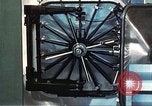
A scientist examines the internal organs of a dead animal at the Plum Island Animal Disease Center in Long Island, New York.
A film based on the Plum Island Animal Disease Center in Long Island, New York which is dedicated to study of foreign animal diseases. Incoming supplies and equipment needed to carry out research are admitted through autoclaves to achieve sterilization. Technicians at different machines handle glassware and other equipment to be used for the research. Scientists expose research animals to foot and mouth disease virus in an isolated room. The virus is injected below the tongue of the animals. A man takes out the internal organs of a humanely destroyed cattle. The scientist lays down his knives and wears rubber gloves. He examines the internal organs of the cattle during the post-mortem. The animal carcass is placed into an incinerator. A technician wearing red clothing operates the incinerator. The carcass burns in the incinerator.

Equipment being unloaded with the help of a crane in the Aleutian Islands, Alaska during the Aleutian Islands Campaign.
The Aleutian Islands Campaign of World War II. U.S. Army Service Force (ASF) provides logistical support to fight the enemy. A flag of the United States. A United States Army Air Forces B-25 Mitchell bomber flies. Various goods like timber, vehicles being unloaded from a cargo ship with the help of a crane. A ship carries troops. Soldiers disembark from a ship. A soldier carries a guitar.

Scenes of U.S. Army Air forces operations on Adak Island during the Aleutian Islands Campaign of World War II
As film begins, organ music is heard. Camera pans across tops of tents showing sky above. Scene shifts to a Chaplain conducting Sunday services in the open. A soldier plays a field organ as soldiers and airmen participate in the service. Closeup of the Chaplain kneeling before a makeshift altar where objects are placed to facilitate communion in a mass or service. Complete change of scene shows airmen arranging bombs for loading aboard an open truck that then backs up to an airplane, into which they are loaded. Narrator notes that these are all purpose bombs weighing 250, 500, and 1000 lbs, respectively. Closeup of a 1000 lb bomb in foreground marked "GP 1000 lb AN-M44." Airmen arnorers install fins and fuses before loading the bombs aboard the aircraft. An airman loads belts of machine gun ammunition at a gun turret of the airplane. others load guns elsewhere on the aircraft. Closeup of pilots being given final briefing about the mission, before departure. Narrator notes that the mission will involve two flights of B-24s and one of B-17s. Planned altitudes and routes of the bombers are drawn on a map in colors. They are to attack a Japanese installation on Kiska Island. Fighter support is described. A Flight crew assembles near their B-24 Liberator bomber. Closeups of individual crew members waiting on the airfield ramp. Scene shifts to fighter pilots who will be accompanying the bombers. They converse in front of a row of fighter aircraft. They are wearing flotation gear over their flight suits. The area is paved with Marsden matting (pierced steel planking). Closeups of men in the group, including: Lieutenant George I. Rudell, Lieutenant Holy P. Mail, Lieutenant Lial A. Bean, Major Willson Aston, Lieutenant Henry J. Strencops and Colonel Jackson.
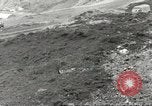
Aftermath of Japanese air attacks on Dutch Harbor, Unalaska Island, Aleutian Islands, in World War II
The aftermath of the Japanese bombing of Dutch Harbor, June 3 & 4 1942, during World War 2. Scenes include the bombed ship, S.S. Northwestern, which was being used as housing for construction crews. The docked steamer was damaged by bombs from "Val" dive bombers launched by the Japanese aircraft carrier "Junyo". Smoke rises from an oil tank as it burns. Bombed & wrecked trucks at the island. Also shown are bomb damage and fires at Fort Mears, Dutch Harbor.
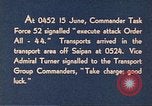
Pictures and animation show U.S. fleet advancing towards Japanese acquired Saipan island in the Mariana Islands.
Animated map shows U.S. forces acquiring Saipan, Mariana Islands from the Japanese during World War II. Pictures of U.S. fleet underway. Aircraft drop bombs on target areas. Fire and explosions on a beachhead. Pictures of boats being lowered for soldiers to advance on the beachhead. Animation shows forces arriving at Tanapag Harbor. U.S. troops in landing crafts. Activity at a line of departure. Fire and explosions on a beach as aircraft drop bombs.
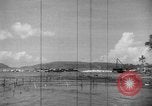
Japanese occupy Corregidor during World War II
Japanese forces occupying Corregidor fortress following a siege that effectively cut off water,food and ammunition from its U.S. and Filipino defenders. during in World War 2. Camera pans across the waterfront of Corregidor Island as Japanese forces occupy it.Japanese boats at their beachhead. American soldiers standing at attention around bunkers as Japanese officers ascend side of hill toward them. Americans being marched down the hill under guard. Japanese officers look at destroyed buildings and inspect the rest of the Corregidor fortifications, including its 12 inch guns at Batteries Hern and Smith. Small and medium U.S. arms and ammunition in a pile. Views of rail cars at tunnel entrance and views inside the tunnels of the Fort. Desks of U.S. officers inside the Fort. One is identified by name plate reading "Major F.F. Kriwanek." Several U.S. officers seen sitting in another office. View from defensive position in the fort.
CRITICALPAST.COM: About Us | Contact Us | FAQs - How to Order | License Agreement | My Account | My Lightboxes | Shopping Cart | Advanced Search | Featured Collections | Website Terms & Conditions | Privacy Policy ©2026 CriticalPast LLC.
License Agreement |
Terms & Conditions |
Privacy Policy
©2026 CriticalPast LLC.