


 Francais
 Deutsch
 Italiano
Refine Your Search
Puerto Princesa Island Philippines 1945 stock footage and images
- Showing 1705 to 1710 of 9920 results more
more Hide
Hide
Protective measures taken by Americans in Hawaii, after the Japanese attack on Pearl Harbor.
Aftermath of Pearl Harbor attack. People in Oahu, Hawaii, prepare to deal with more air attacks by Japanese. Armed U.S. soldier in sandbagged position, in Hawaii. The territorial governor of Hawaii, Joseph Poindexter, signing a declaration of Martial Law. Four thousand members of Oahu's Civil Defense Committee, dressed in dark bottoms and white tops, wearing steel helmets with "W" on them, standing at attention in formation on grounds of a stadium. Windows in all downtown shops taped to prevent flying glass. Sand bags surrounding a power substation. Huge quantities of barbed wire in a storage yard and strung along the beaches, along highways, around schools, and public buildings of Oahu. A man pushing a lawn mower between sandbagged defense positions in a residential neighborhood. Construction machinery digging defensive trenches. Bomb shelters being constructed of precast concrete. Air raid sirens installed and school children leaving their building and sheltering in deep trenches during a test. Very small children taking shelter in zig-zag trenches and donning gas masks. Huge assemblies of children, and of grownups, all donning gas masks. Little children being dressed in capsule-like "bunny mask" protective gear.One of them crying inside the covering. Crowds of women and children lined up on a veranda waiting to receive these "bunny masks." Military personnel, civilians, and school children, all carrying personal gas masks with them at all times. Innumerable old rubber tires saved in an open yard. Japanese-Americans donating blood to the American Red Cross and lined up to buy war bonds. Soldiers arresting a Japanese resident known to be an enemy agent. Boarded up shops of Japanese-Americans, who had been interned. Japanese-Americans removing all Japanese language signs from their areas. Language school buildings with closed signs. An empty and boarded-up Shinto temple. One Japanese-American replacing his cafe sign with one reading: "Keep 'Em Flying Cafe." U.S. Army troops posted on roadways. The Aloha Tower in camouflage paint. A Lurline steamship leaving port, and being replaced by warships. Prewar view of people enjoying Waikakee beach, and current view of two boys playing in sand near barbed wire barriers. City streets deserted at twilight, as blackout procedures take effect at dusk. Views of darkened homes and palm trees silhouetted against sky at dusk. The "ghost" of a sailor killed in World War II, stands in front of Arlington cemetery, Washington, DC, and converses with the ghost of a soldier killed in World War I. They discuss idealistic notions about ending wars for good. Displays of flags is seen, including: Australia; Belgium; Brazil; Canada; China; Costa Rica; Cuba; Czechoslovakia; Dominican Republic; England; Ethopia; Greece; Guatemala; Haiti; Honduras; India; Yugoslavia; Luxembourg; Mexico; The Netherlands; New Zealand; Nicaragua; Norway; Panama; The Philippines; Poland; Russia; El Salvador; South Africa; and the U.S.A. "V" created in the sky by a skywriting airplane.
The Pacific War Council and British and American General staffs meet at the White House in Second Washington Conference in World War II
Allies of the Pacific War Council met at the White House on June 25, 1942 Pictured with President Franklin D. Roosevelt and British Prime Minister Winston Churchill (both seated) and Canadian Prime Minister, Mackenzie King, standing immediately behind and between them. Others, standing behind are: Dutch Minister of Foreign Affairs, Eelco N. van Kleffens, Australian representative, Stanley Melbourne Bruce. The tall man behind Prime Minster King, is British Vicount Halifax (Edward Wood). To his left is Chinese Foreign Minister T.V. Soong, and Manuel L. Quezon, President of the Commonwealth of the Philippines. The last person standing at the right, is Walter Nash, New Zealand's minister to the United States. Scene shifts to military leaders of the combined British and American General Staffs, meeting in the so-called Second Washington Conference (Code named Argonaut). Closeup of U.S. Army Chief of Staff, General George S. Marshall, conversing with lieutenant General Henry H (Hap) Arnold, Commanding General of the U.S. Army Air Forces. Another closeup shows U.S. Navy Chief of Naval Operations, Admiral Ernest King, conversing with Admiral William D. Leahy, personal Chief of Staff to President Roosevelt. Glimpse of British Military General Staff members.
Six locomotives given to Korea by American Korean Foundation, to rehabilitate the nation's ravaged transportation system.
Ship at harbor in Los Angeles, California. Letters on side of ship read 'Philippine Bear'. An American official hands over a document to a Korean official. Engine of railroad train loaded onto ship. Men assist in loading.
Blood donated in United States for wounded soldiers in Pacific Theater.
United States troops receive whole blood from home in Pacific Theater. An animated map shows boxes of blood flown from San Francisco to Pearl Harbor, Guam, and Leyte. Vehicles parked outside a Red Cross center. A woman donates blood. A nurse sits near her. Blood is kept in portable refrigerators. 'Human blood' written on the boxes. Plane lands in Pearl Harbor, Hawaii. The boxes are unloaded. The crew loads the boxes onto another plane. The boxes arrive in planes Guam. The blood boxes arrive at Base Hospital and are kept in refrigerators. Wounded soldier receives blood in Leyte, Philippines. (World War II period).
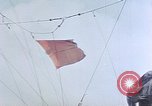
U.S. Navy jet aircraft F9F Panther towed by tractor on flight deck of the aircraft carrier in Korea.
USS Philippine Sea (CV-47) in Korean War Theater. Signal flag (Baker) raised. A man on a jet wing. The man refuels wing tank. Helicopter lands on flight deck. U.S. Navy jet aircraft F9F Panther coming up ship's elevator. Jet aircraft towed by tractor on flight deck of the aircraft carrier. Helicopter takes off from flight deck.
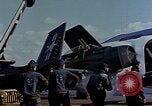
F4U Corsair and F9F Panther aircraft on the flight deck of the aircraft carrier in Korea.
USS Philippine Sea (CV-47) in Korean War Theater. AD-1 Skyraider aircraft warming up on flight deck of the carrier ship. United States aircraft F4U Corsair on flight deck. F4U Corsair aircraft unfolds wings. Pilots seated in the cockpit. U.S. Navy aircraft F9F Panther on flight deck. F9F Panther aircraft with wings folded. Planes in flight.
CRITICALPAST.COM: About Us | Contact Us | FAQs - How to Order | License Agreement | My Account | My Lightboxes | Shopping Cart | Advanced Search | Featured Collections | Website Terms & Conditions | Privacy Policy ©2026 CriticalPast LLC.
License Agreement |
Terms & Conditions |
Privacy Policy
©2026 CriticalPast LLC.