


 Francais
 Deutsch
 Italiano
Refine Your Search
Puerto Princesa Island Philippines 1945 stock footage and images
- Showing 295 to 300 of 9920 results more
more Hide
Hide
2nd Sino-Japanese war, precursor to World War II in the Pacific. Pearl Harbor attack. Early phase of Pacific conflict between Japan and the U.S.
The film 'Sea power in the Pacific' showing Japanese dominance in China and at start of World War 2. Then it chronicles U.S. efforts to build Navy and fight back on sea and in the air. Opening scene shows Japanese Mitsubishi G3M (Type 96) bombers high overhead, and then closeup in formation. View from bomber of bomb bays open with bombs falling and view from ground of explosions and destruction. Overlay on film says: "China---1931." (This is not correct. The G3M bomber was not yet in service.) This film depicts Japanese attacks during second Sino-Japanese War, commencing 1937, Chinese civilians running to escape Japanese bombing of Singapore. Buildings destroyed and on fire. Next, Japanese troops, carrying the Rising Sun flag, are seen establishing a beachhead in an Amphibious assault. More scenes of Japanese infantry advancing through Singapore, ad it is being destroyed and burned. Soldiers charging along an alleyway, with pagoda in background. Next, Japanese soldiers are seen attacking Nanking, and committing atrocities and killing Chinese during the so-called "Rape of Nanking," in December, 1937. Chinese civilians being summarily shot and dumped into a large open grave after execution. Two Chinese prisoners with hands bound, being executed by rifle fire. Jubilant Japanese troops celebrating their victory. Map shows areas of China occupied during second Sino-Japanese war and the East Indies to the South. View of oil tanks; an open pit tin mine; a native cutting rubber tree bark to collect latex. Flags on map show regions of English, French, and Dutch colonial interest. It also shows Islands to the East, fortified by the Japanese. Cartoon shows Japanese soldier opposed by and American sailor (representing U.S. Sea Power). Next, famous images of the Japanese attack on Pearl Harbor, Hawaii, December 7, 1941, are shown, including the USS Arizona burning and sinking. Hawaii, Midway, Wake, and the Philippines Islands, are highlighted on a map and Japanese control of the Pacific is illustrated. Japanese soldiers are seen displaying a captured American flag. U.S. Lieutenant General Jonathan M. Wainwright is seen surrendering the garrison at Corregidor, on May 6, 1942. View of Japanese General Masahara Homma discussing surrender terms with Wainright. Map shows interlocking web of Japanese fortified bases in Pacific and need for seapower to oppose it. View of American shipyard with hundreds of workers, employed to build ships for the war effort, in World War 2. Views welding, metal fabrication, and other shipbuilding activity. A new ship going down the ways and a woman christening a new ship with splash from bottle of champagne. A new "Liberty Ship," the Richard Bassett, going down the ways at Bethlehem-Fairfield Shipyard Inc. Baltimore, Maryland. Closeup view as the stern of another ship enters the water upon launching. View of it from a distance. Shipyard workers knock supports from under what may be a landing craft, as it is launched. Japanese warships underway in the Pacific and firing their naval guns. Explosions on a shoreline from naval bombardment. Japanese infantry wading ashore during an amphibious assault. Map shows where Japanese forces attempt an amphibious assault on Southern New Guinea, thwarted by the U.S. Navy in the battle of the Coral Sea of May, 1942. In June, 1942, a Japanese attempt against Midway Island, was again checked by the U.S. Navy in the Battle of Midway. View of USS Wasp (CV-7) carrier deck filled with airplanes, including Grumman F4F Wildcats. A Douglas SBD Dauntless dive bomber being cleared for takeoff from the Wasp. Gun camera film showing Japanese airplanes being shot down by pursuing U.S. aircraft.
Film tracing activities of General Douglas MacArthur from defeat of Japan in World War II through Korean War (1950)
Highlights covering General Douglas MacArthur, from 1945 through 1950. The Imperial Palace in Tokyo, Japan. Several Japanese bowing towards the Palace. General Douglas MacArthur exits a car in Tokyo and walks up steps to enter his headquarters in Japan. Emperor Hirohito walks between two U.S. sentries, as he leaves a building and enters his limousine. Japanese citizens form lines on streets to cast ballots in election.Several Japanese women voting. Exterior of the Japanese National Diet building. Interior with representatives seated. A farmer behind a cultivator, pulled by an ox, in a rice paddy. Japanese school children waving American and Japanese flags together, as MacArthur leaves his Tokyo headquarters, walks down steps, and enters car. MacArthur saluting at a military ceremony, where his wife, Jean MacArthur, and son Arthur are spectators. Explosions in hills, from American Patton tank shelling North Korean positions in Korean War. American soldiers firing a mortar; infantry advancing along sides of road; and American tank commander rendering first aid to wounded comrade. United States Air Force (USAF) C-47 transport aircraft ferrying American troops into Korea, from Japan. American infantry marching across a bridge; firing mortars and rifles; and advancing on foot across fields. American troops on trucks followed by a Patton medium tank. MacArthur meeting troops on river boat; riding in a jeep; being briefed by U.S. officer in the field; examining a knocked out tank; and decorating U.S. troops in winter. Closeup of MacArthur in winter gear with his circle of five stars pined into a fur cap. Views of U.S. amphibious landing at Inchon (or Incheon) in Korean War. MacArthur watching from a ship offshore. Syngman Rhee, President of South Korea, reading message of appreciation to General MacArthur and shaking hands with him at the podium. U.S. President Harry S. Truman, pinning a medal on General MacArthur,on Wake Island in October, 1950.
Worldwide operations of United States Coast Guard in World War 2
Overseas activities of United States Coast Guard in World War II. U.S. Landing Craft Infantry, LCI(L) 617, part of LCI Flotilla 22 in World War 2. She is seen underway in rough waters of the Pacific ocean during 1945. Coast Guardsman ordered to Battle stations. A Coast Guardsman observes approaching enemy aircraft through binoculars. Coast guard gunner fires Antiaircraft guns using foot trigger. Enemy aircraft crashes in ocean. A Coast Guardsman signals using semaphore flags. Beachhead supply operations. Coast Guard Picket Boat, CG-42022, seen patrolling around U.S. transport ships in a Persian port, while they carry lend lease supplies to the Soviet Union. Coast Guard combat patrol in jungle using canines (dogs). The Cactus (A) Class 180 foot buoy tender, USCGC Tupelo placing a buoy at sea. Releasing a weather balloon. A Coast Guard wooden 83 foot cutter ("83 footer"). Loading a Coast Guard B-24 aircraft on Guam. The plane takes off. Invasion task force of U.S. warships underway. Coast Guard crews at various duty stations aboard their ships during the war. The former luxury ocean liner, SS Manhattan underway, her decks crowded with troops, following her conversion into the U.S.Coast Guard-manned USS Wakefield (AP-21). U.S. Navy attack transport USS Arthur Middleton (APA-25) at sea in the Pacific. Coast Guard operating transport ships unloading cargo for Allied invasion forces and running inter-island shipping service in the Pacific, during World War II.Landing Ship Tank (LST-788) arriving at the beach next to Landing Ship Medium, LSM-242, on Iwo Jima. A Landing Vehicle Tracked (LVT) being driven off LST-760. USS LCI(L)-87, Flagship of LCI Flotilla 10. Her Captain, M. E. Imlay, USCG, is seen on her bridge, before departing from England for the Normandy invasion. U.S. Landing Craft Infantry, LCI(L)-668 at beach and troops wading ashore.
Views of the United States. Farms, cities, highways, and beaches. Destruction in Japan by atomic bomb. U.S. infantry in combat
Farmers harvesting grain and corn with machinery on American farms with a narrow tractor harvester. Steel mills and heavy industry and cargo railroads in the United States. Industrial views with smokestacks releasing much smoke and smog (also pollution scenes). Scenes of New York City with busy streets filled with cars, buses, and truck traffic, together with pedestrians. Many varied 1940s and 1950s cars on the roads. Elevated and also aerial views of U.S. highway networks busy with 1940s and 1950s cars. Views of Jones Beach, on Long Island, New York. Scenes of destruction in Japan from the atomic bomb, with sweeping views of destroyed city in Hiroshima or Nagasaki circa 1945 or 1946. U.S. Army infantrymen engaged in house-to-house fighting in Europe during World War II, firing rifles and moving between points of cover in a city filled with rubble.
Reconstruction work underway in North Korea after World War II
Views of North Korea during 1945 through 1950. Reconstruction going on in North Korea, new buildings being built. Korean country side and small islands in the bay as waves break on the shore. A group of North Koreans arrives at diamond mountain resort and look at Koo Rong Hun falls, they pose for pictures. Men and women in a reading room.
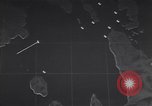
Animation outlines timeline of battle for the Surigao Strait starting with PT boat contacts with the enemy.
Animation shows Allied naval battle for the Surigao Strait in the Philippine islands during the Battle for Leyte Gulf. Segment begins with PT boats making radar contact and then physical contact with the Japanese naval-air forces during October 1944. (World War II period).
CRITICALPAST.COM: About Us | Contact Us | FAQs - How to Order | License Agreement | My Account | My Lightboxes | Shopping Cart | Advanced Search | Featured Collections | Website Terms & Conditions | Privacy Policy ©2026 CriticalPast LLC.
License Agreement |
Terms & Conditions |
Privacy Policy
©2026 CriticalPast LLC.